





Antoninianus Emperor Aurelian (270-275 AD | Age of the Imperial Crisis)
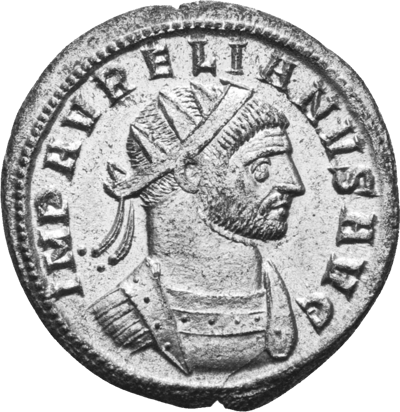











- Genuine Original: 1,750 years old
- Restitutor Orbis: Restorer of the Empire
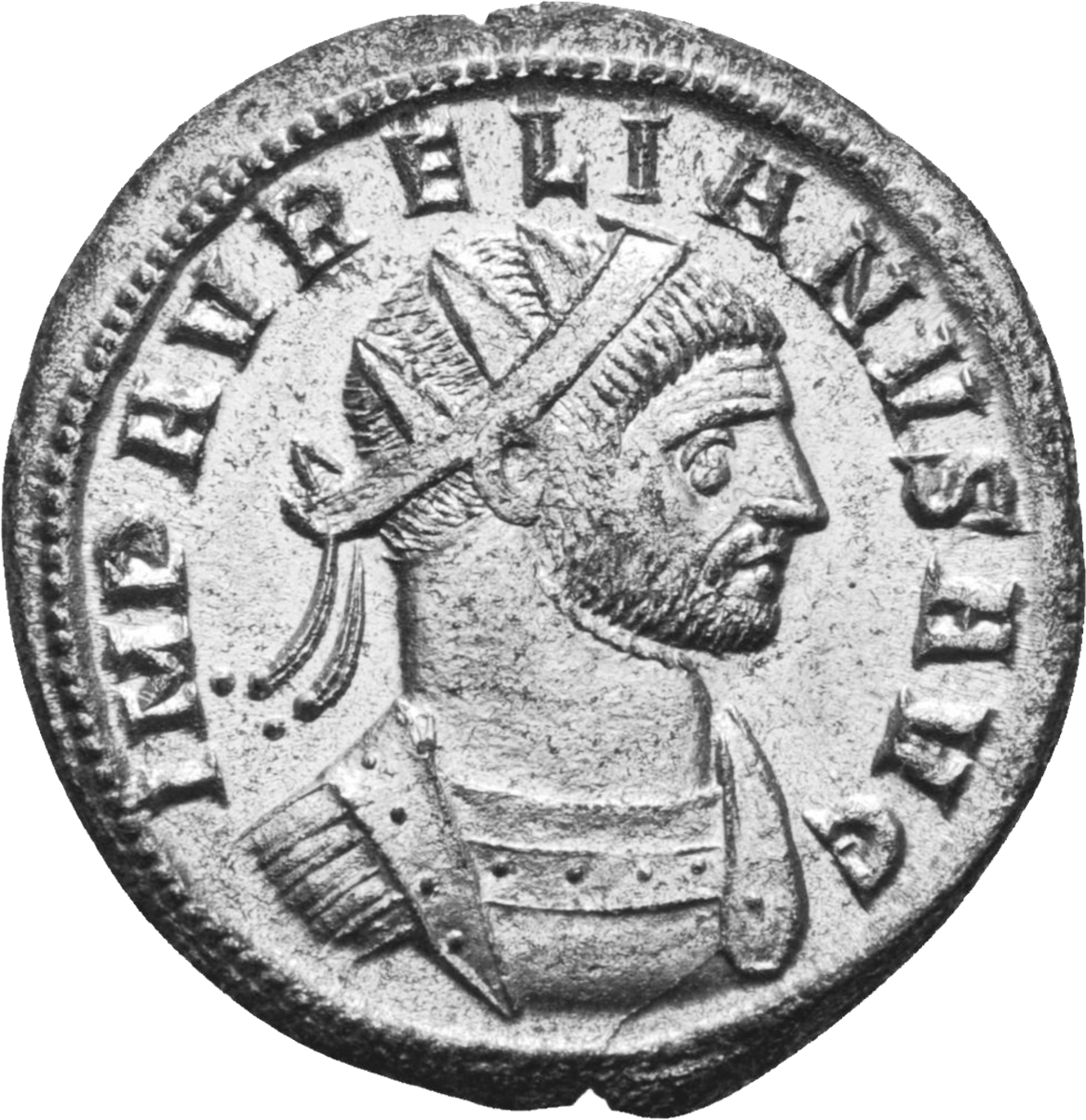
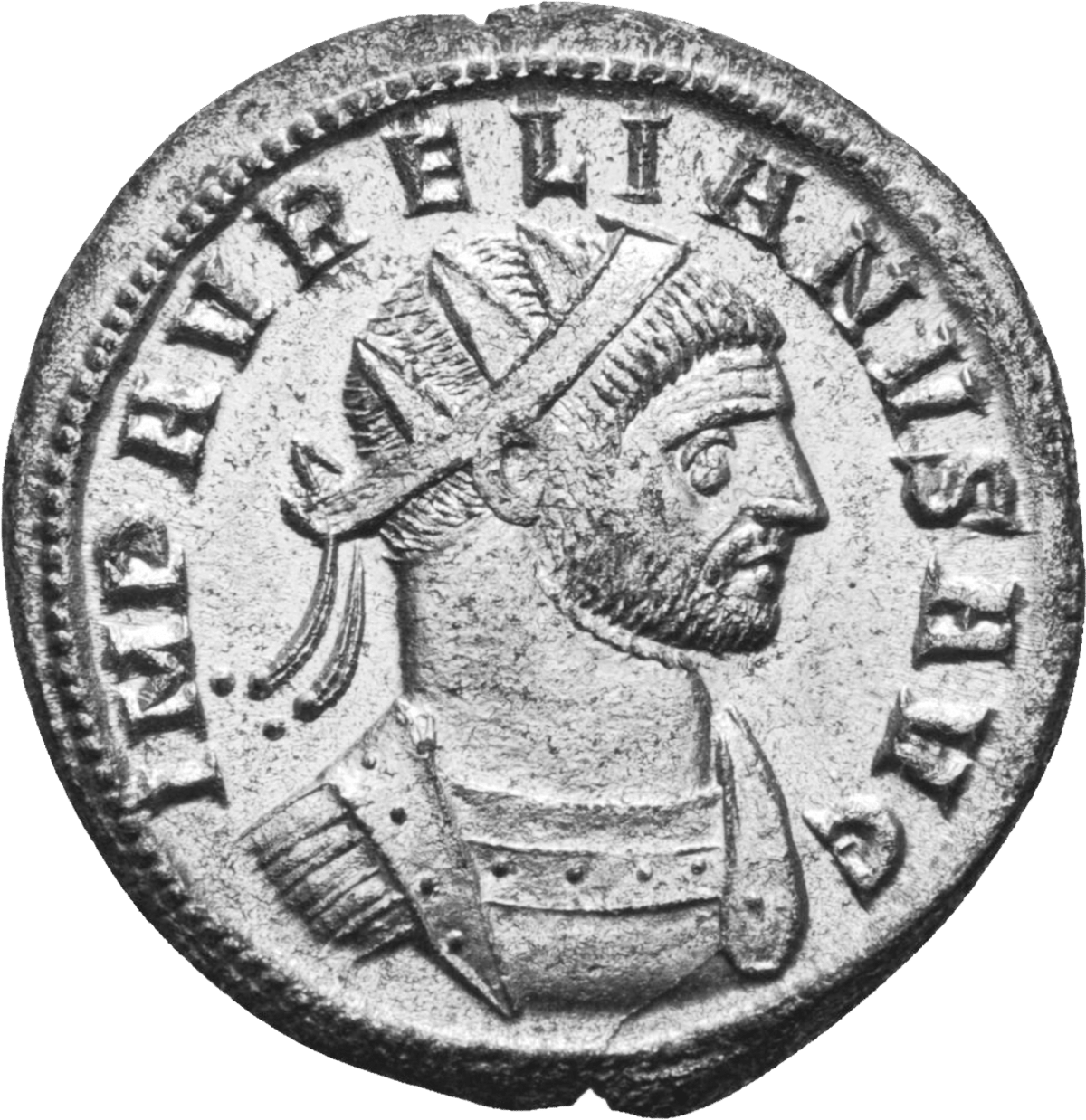
- Imperial Portrait: with radiate crown
- Genuine OriginalGenuine, circulated currency from the Roman imperial era
- Restitutor OrbisHe reunited the empire and reclaimed Zenobia's Palmyra
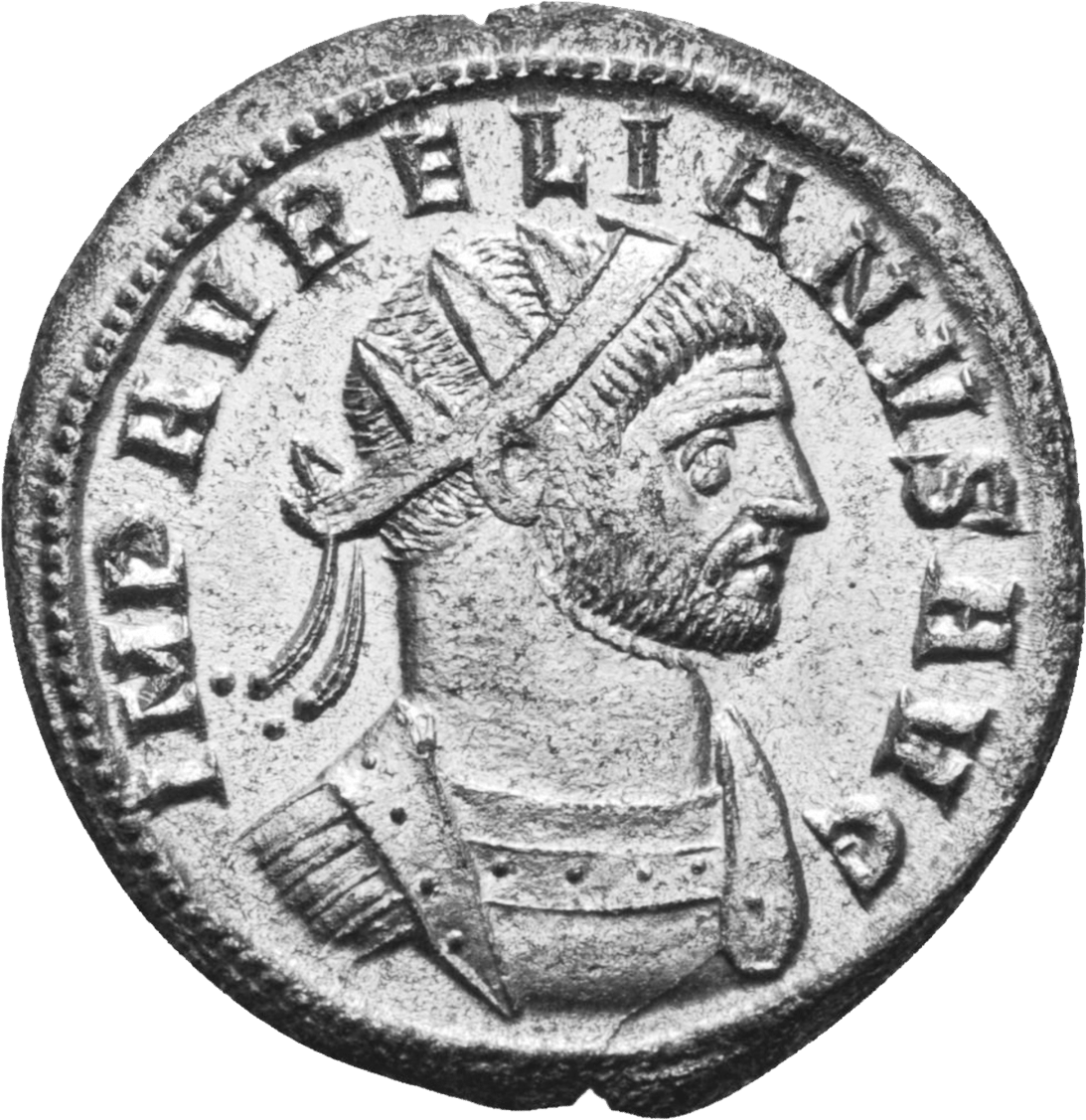
- Imperial PortraitBust in armor, encircled by the emperor's name and title
 Price alert
  Share
Share
Ancient original · Crisis of the third century
Antoninianus of AurelianAbout 1,750 years old.
Caracalla introduced the antoninianus in the year 215. The radiate crown of the emperor marks it as a double denomination.
- Ruler
- AurelianAD 270 to 275
- Diameter
- 22 mm
- Weight
- c. 3.9 g
Caracalla introduced the antoninianus in the year 215. The radiate crown of the emperor marks it as a double denomination.
- Ruler
- AurelianAD 270 to 275
- Diameter
- 22 mm
- Weight
- c. 3.9 g

Crisis of the third century · AD 235 to 284
Silver that turned into bronze.
In fifty years at least 26 men claimed the imperial title. At the same time the money decayed: the antoninianus began as a silver coin, probably worth two denarii, and ended as a bronze piece with a thin wash of silver. Hold a coin from these decades and you are holding an inflation.
The picture shows an example. The piece you receive may differ in detail.
At the same scale
Denarius, antoninianus, follis and solidus at the same scale
Three sizes are called follis here: about 27 mm in the tetrarchy, 20 mm under Constantine and his sons, 28 mm under Justinian.
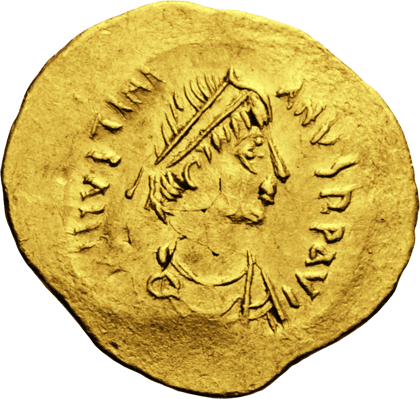 TremissisJustinian I
16 mm
TremissisJustinian I
16 mm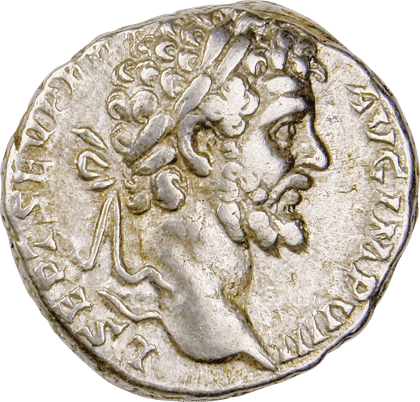 DenariusSeptimius Severus
c. 18 mm
DenariusSeptimius Severus
c. 18 mm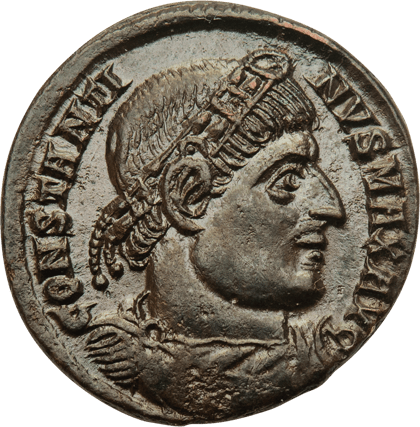 FollisConstantine I
20 mm
FollisConstantine I
20 mm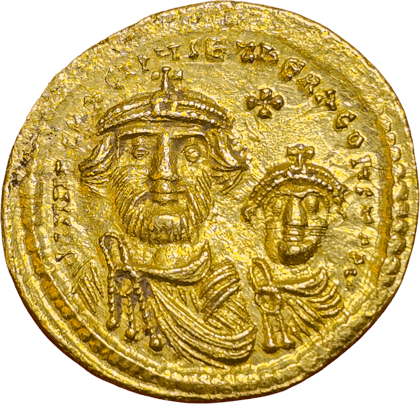 SolidusHeraclius
20 mm
SolidusHeraclius
20 mm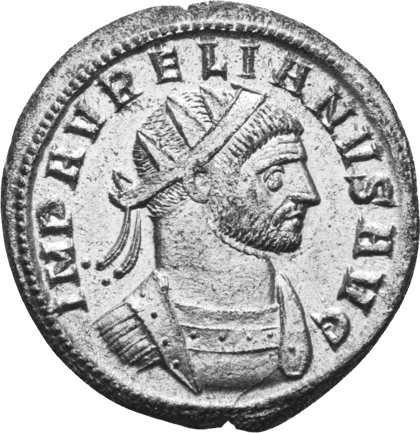 AntoninianusAurelian
22 mmthis page
AntoninianusAurelian
22 mmthis page 1 eurofor comparison
23.25 mm
1 eurofor comparison
23.25 mm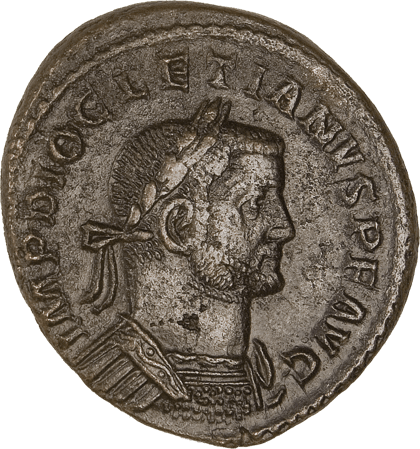 FollisDiocletian
27 mm
FollisDiocletian
27 mm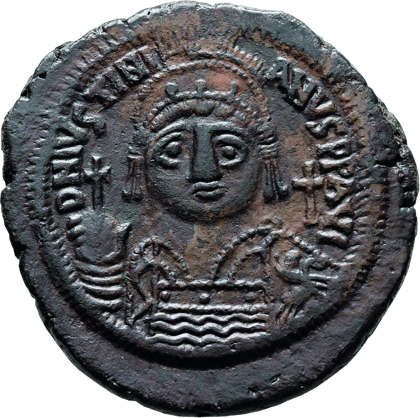 FollisJustinian I
28 mm
FollisJustinian I
28 mmWhere it belongs
31 originals from about 1,100 years
Each piece stands at the years of its ruler or of its type. The era of this piece is highlighted; choose another one to see its originals.
Crisis of the third century AD 235 to 284 · 8 originals
 Antoninianus of Philip I the ArabAD 244 to 249
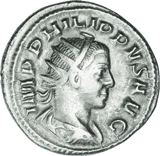 Antoninianus of Philip IIAD 247 to 249
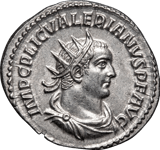 Antoninianus of Valerian IAD 253 to 260
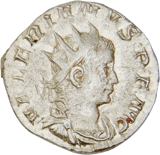 Antoninianus of Valerian IIAD 256 to 258
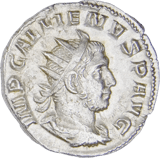 Antoninianus of GallienusAD 260 to 268
 Antoninianus of Claudius II GothicusAD 268 to 270
 Antoninianus of AurelianAD 270 to 275this page
 Antoninianus of ProbusAD 276 to 282

Keeping it
First things first: do not clean it.
The dark layer on bronze and the matte grey on silver are called patina. It has grown over centuries and protects the surface. Polishing it away takes that protection from the piece.
- Hold it by the edgeSkin oil can etch itself permanently into the surface. Take the piece by the rim between thumb and forefinger, over a soft surface.
- Store each piece on its own, and dryKeep each piece on its own in a dry place, in a capsule or an acid-free case. PVC sleeves do not belong there, they attack the surface.
- No agents, no polishing clothNo vinegar, no silver cloth, no ultrasound. According to the Bank of Canada Museum, almost any attempt at cleaning without a conservator leaves damage, mostly from abrasion.

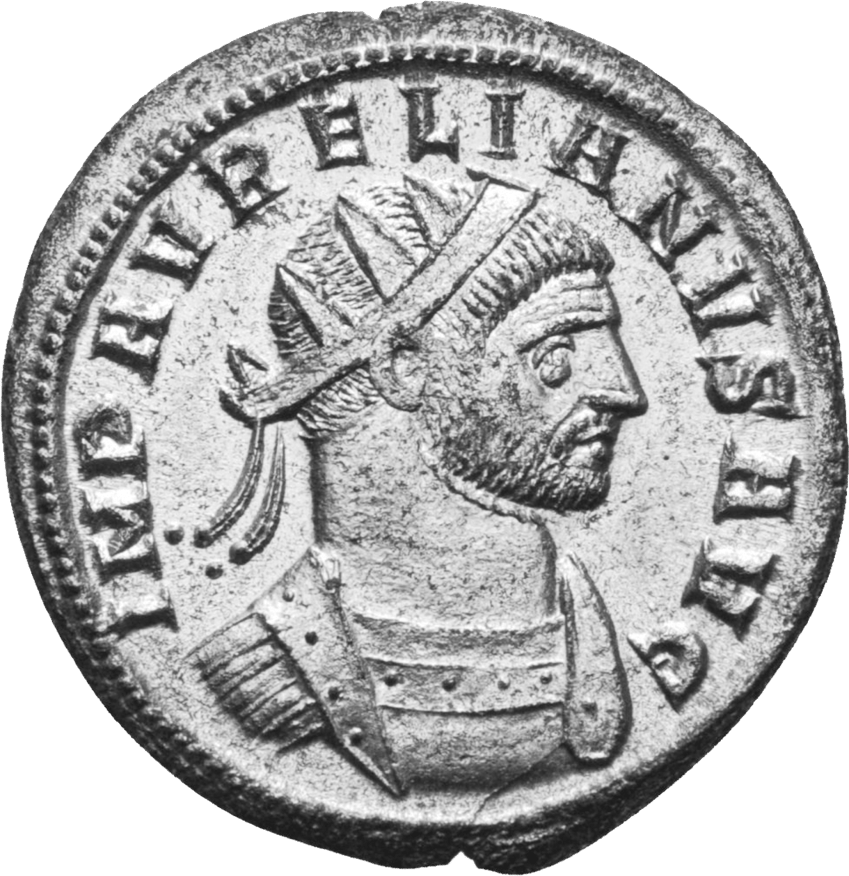
Struck about 1,750 years ago.
Aurelian and his world are long gone. The piece has remained, with the traces of its circulation.
Antoninianus of Emperor Aurelian – Rome shortly before collapse, in your hand
Some coins are beautiful. This one is more: it is a witness. The Antoninianus of Emperor Aurelian (270–275 AD) was minted in a time when the Roman Empire was burning at every edge – usurpers, border wars, seceded provinces, a currency in free fall. And in the midst of this chaos stood a soldier-emperor who achieved the impossible: he reclaimed Zenobia's Palmyrene Empire, ended the Gallic Empire, and earned the honorary title Restitutor Orbis – "Restorer of the World." What you hold here is not a mass-produced item, but genuine, circulated legal tender from the Roman imperial era.
Design and imagery: Sol Invictus, the unconquered sun
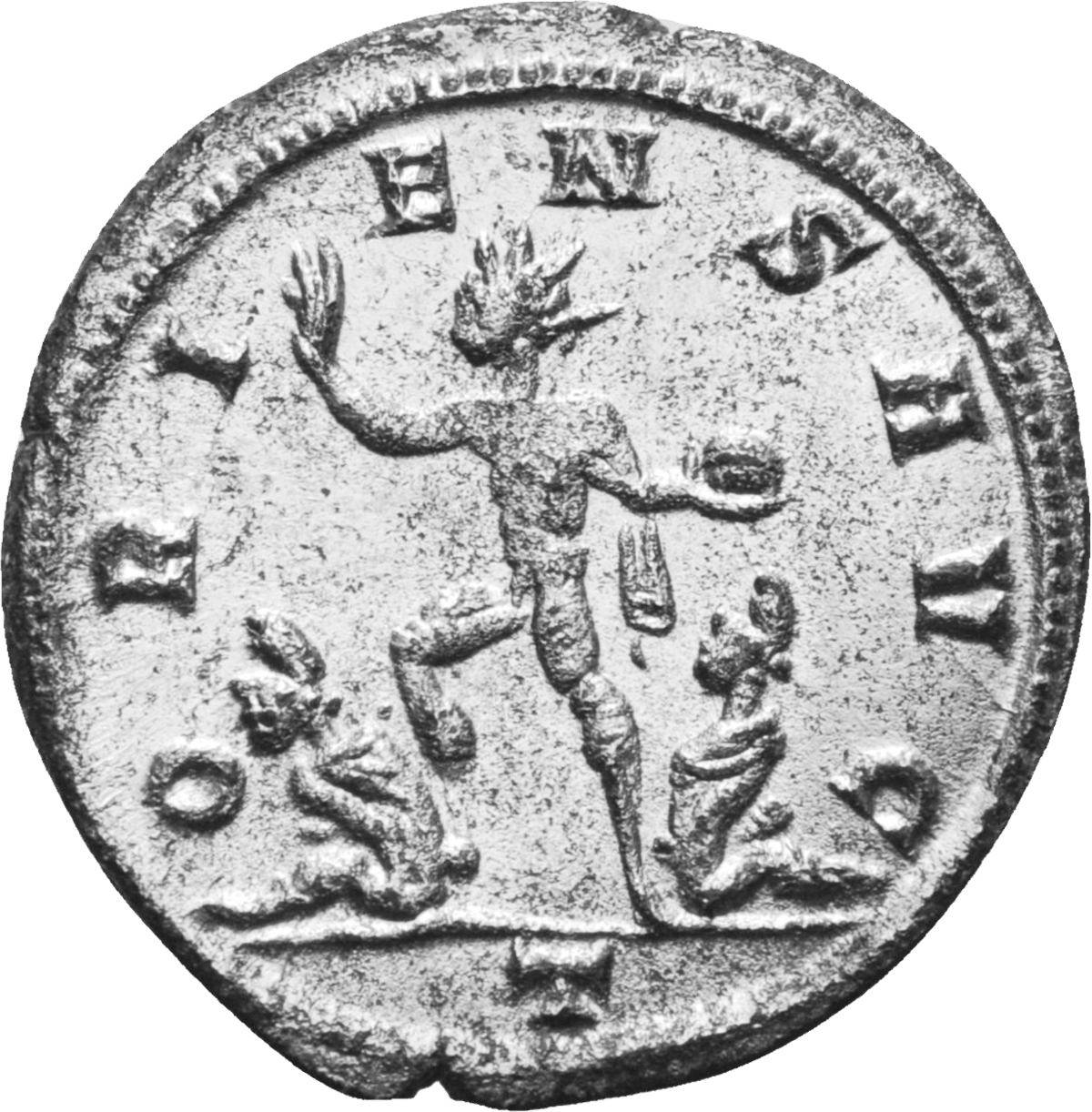
The obverse shows the bust of the emperor with a radiate crown and cuirass, surrounded by the legend of his name and title. The reverse of this type frequently bears the inscription ORIENS AVG: Sol, the sun god, with raised right hand and globe, with subdued captives at his feet. Aurelian massively promoted the cult of Sol Invictus – the message to the people was clear: the divine sun stands behind this emperor, the empire will not fall. Propaganda in metal, 1,750 years old and still legible today.
The Antoninianus – the crisis currency of the 3rd century
The Antoninianus, as a double-denarius, replaced the classical denarius. Over the decades, its fine silver content dropped dramatically, until in the end only a copper-alloy core remained with a thin, whitened silver surface. In 274 AD, Aurelian intervened and noticeably improved the weight and silver content of the coin; since then, many pieces bear the marks XXI or KA in the exergue, whose exact meaning is still debated by researchers today. This is precisely where the historical appeal lies: this coin tells the story of a currency's debasement – and the attempt to stop it.
Whoever holds this Antoninianus in their hand holds proof that paper money, trust, and imperial dynasties pass away. Precious metal endures.
The facts at a glance
Face value: Antoninianus
Precious metal: Silver (silver-containing alloy of the imperial era, fineness not specified)
Gross weight: approx. 3.9 g – fine weight varies
Diameter: 22 mm
Year of issue / mint / denomination: varies
Country of origin: Roman Empire
Series: History · Investment purpose: collector's item
Condition: circulated coin, grade varies · shipped as insured value shipment
Condition: traces that cannot be faked
These pieces are circulated legal tender and bear corresponding traces: darker patina, individual centering, nicks, wear, and in some cases weaker portions of the legend. This is exactly what makes them appealing. Since the year of issue, mint, and reverse variant may vary, the piece delivered will differ from the image shown – you receive an original, not a mass-produced item. We therefore ask for your understanding that the image in the shop is expressly a sample image and may individually differ from the delivered item in terms of appearance and condition due to historical circumstances.
For collectors and those seeking tangible value
Ancient coinage such as this Antoninianus is an entry point into numismatics that makes history tangible – and it endures independently of any paper currency. Silver has been used across millennia and cultures as coinage metal, a symbol of wealth, and a medium of trade; its intrinsic value derives from its physical properties and worldwide demand, including from electronics, solar, and medical technology. Unlike fiat money, which rests solely on trust in governments, it possesses substance. This makes classic silver coins a popular building block for inflation hedging and crisis protection, for cross-generational wealth preservation, and – in small denominations – as a divisible medium of exchange.
Comparison: Antoninianus, denarius, and modern bullion coin
Antoninianus vs. denarius: The denarius (for example under Trajan or Hadrian) contains significantly more silver and is accordingly more sought after. The Antoninianus, by contrast, is the more honest document of the crisis – and generally the more affordable entry point into original ancient coins.
Antoninianus vs. late Roman bronze: Compared to pure bronze coinage such as the follis, the Antoninianus scores with its silver-containing alloy and the striking radiate-crown bust.
Antoninianus vs. modern silver coin: A current bullion coin offers defined fineness and full liquidity tied to the silver price. The Antoninianus offers something no mint can produce: age, patina, and a history that happened only once.
A note that will please collectors: profits from the sale of silver are generally tax-free in Germany, provided the minimum holding period of one year is observed. The emperor himself was assassinated in 275 AD on his way to a campaign against the Sassanids – but his coin is still here. And it may soon find its place in your collection.
Product depiction may differ from the final product.
