





Silver Tetradrachm Antiochus I Soter (280-261 BC | Heir of Alexander the Great)
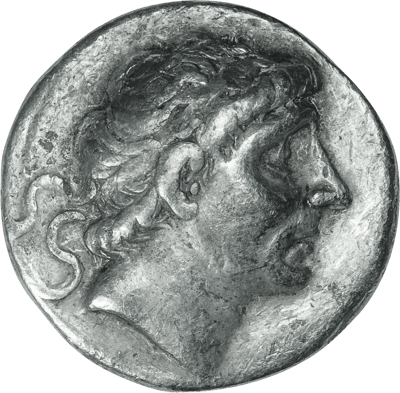










- Genuine Original: over 2,250 years old
- Royal Portrait: realistic and striking
- One of a Kind: with its own history
- Genuine OriginalHand-struck and once actually in circulation
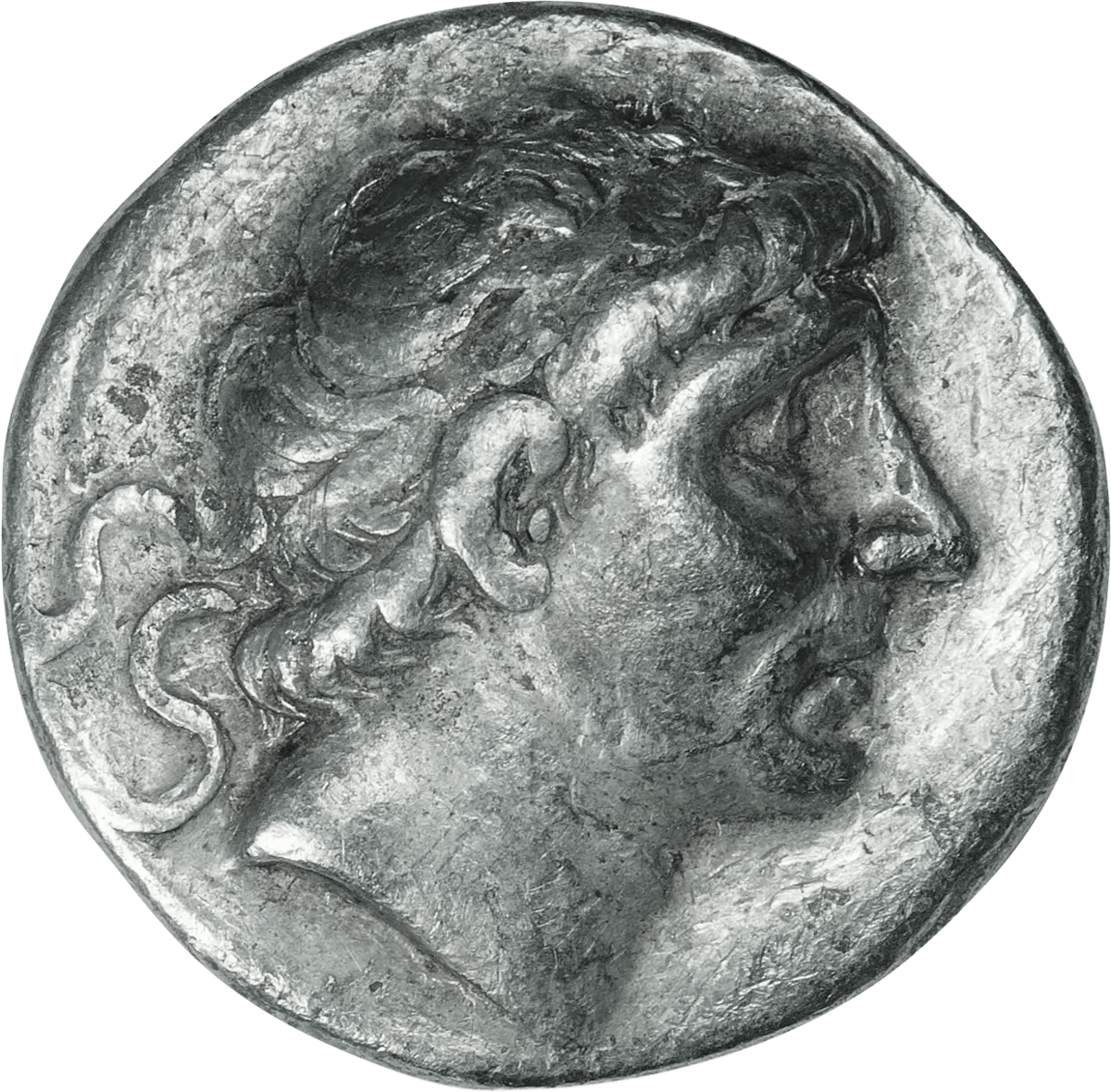
- Royal PortraitNo deity, but a real person wearing a diadem
- One of a KindEach piece has its own patina and centering
 Price alert
  Share
Share
Ancient original · The hellenistic age
Tetradrachm of Antiochos I SoterAbout 2,300 years old.
According to the Metropolitan Museum, Alexander saw himself as a descendant of Herakles. That is why his silver shows the hero, together with Zeus, the king of the gods, who meant something to all Greeks.
- Ruler
- Antiochos I Soter281 to 261 BC
- Diameter
- c. 26 mm
- Weight
- c. 17 g
According to the Metropolitan Museum, Alexander saw himself as a descendant of Herakles. That is why his silver shows the hero, together with Zeus, the king of the gods, who meant something to all Greeks.
- Ruler
- Antiochos I Soter281 to 261 BC
- Diameter
- c. 26 mm
- Weight
- c. 17 g

The hellenistic age · 336 to 30 BC
From Macedonia to the Indus.
With Alexander the coin became a mass medium. His type, Herakles in the lion skin on one side and Zeus enthroned on the other, ran from Macedonia to the Indus and went on being struck long after his death. His generals divided the empire and soon put their own heads on the coins.
The picture shows an example. The piece you receive may differ in detail.
At the same scale
Greeks, Persians, Carthaginians: coins side by side
From the diobol of Teos at 9 mm to the tetradrachm at about 26 mm. Under each piece you see its diameter as our product data give it.
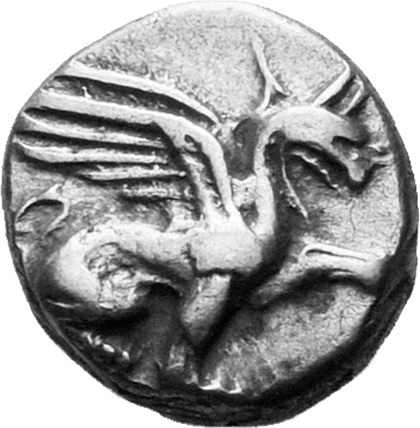 DiobolTeos
9 mm
DiobolTeos
9 mm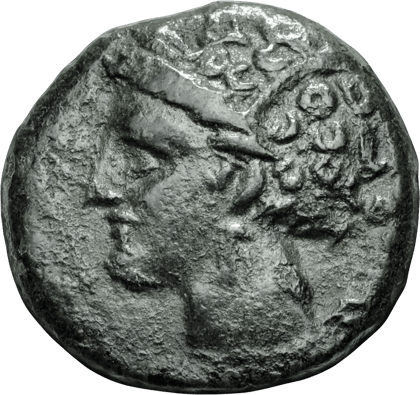 Bronze coinCarthage
16 mm
Bronze coinCarthage
16 mm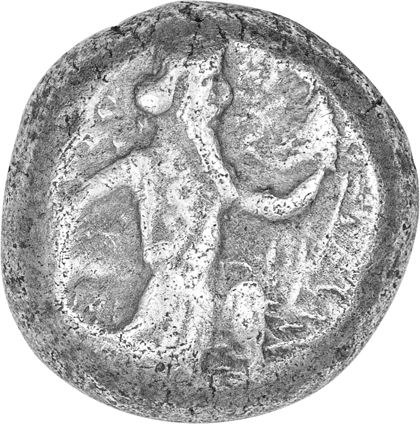 SiglosAchaemenids
18 mm
SiglosAchaemenids
18 mm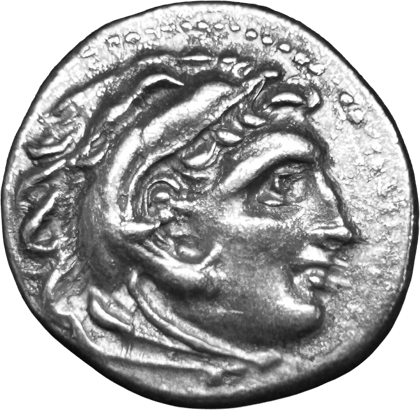 DrachmAlexander the Great
18 mm
DrachmAlexander the Great
18 mm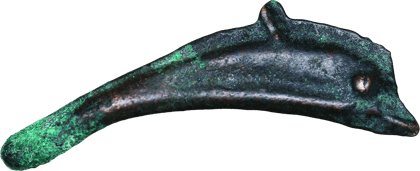 Dolphin moneyOlbia
c. 20 mm long
Dolphin moneyOlbia
c. 20 mm long 1 eurofor comparison
23.25 mm
1 eurofor comparison
23.25 mm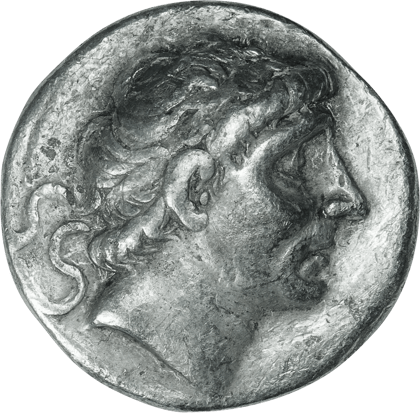 TetradrachmAntiochos I Soter
c. 26 mmthis page
TetradrachmAntiochos I Soter
c. 26 mmthis pageWhere it belongs
31 originals from about 1,100 years
Each piece stands at the years of its ruler or of its type. The era of this piece is highlighted; choose another one to see its originals.
The hellenistic age 336 to 30 BC · 3 originals
 Drachm of Alexander the Great336 to 323 BC
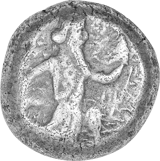 Set for the battle of Gaugamela336 to 323 BC
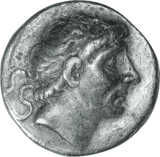 Tetradrachm of Antiochos I Soter281 to 261 BCthis page

Keeping it
First things first: do not clean it.
The dark layer on bronze and the matte grey on silver are called patina. It has grown over centuries and protects the surface. Polishing it away takes that protection from the piece.
- Hold it by the edgeSkin oil can etch itself permanently into the surface. Take the piece by the rim between thumb and forefinger, over a soft surface.
- Store each piece on its own, and dryKeep each piece on its own in a dry place, in a capsule or an acid-free case. PVC sleeves do not belong there, they attack the surface.
- No agents, no polishing clothNo vinegar, no silver cloth, no ultrasound. According to the Bank of Canada Museum, almost any attempt at cleaning without a conservator leaves damage, mostly from abrasion.

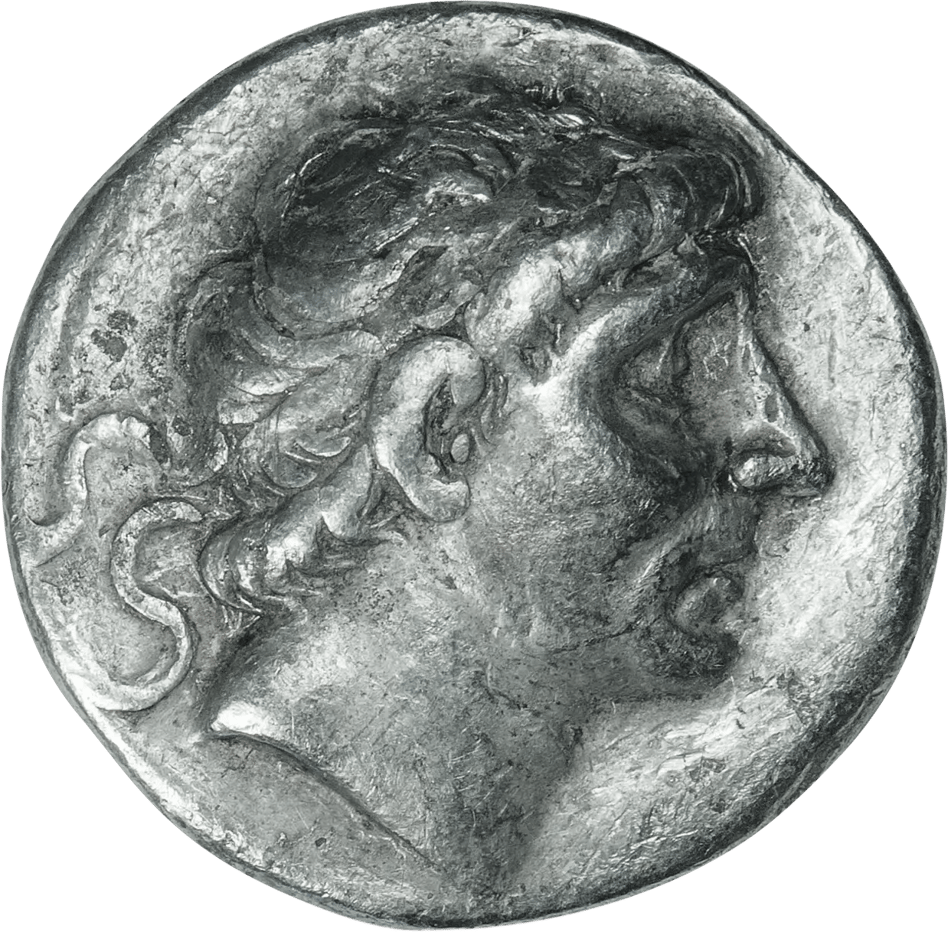
Struck about 2,300 years ago.
Antiochos I Soter and his world are long gone. The piece has remained, with the traces of its circulation.
Silver Tetradrachm of Antiochus I Soter – an Original from the Age of the Diadochi
More than 2,250 years old, hand-struck from genuine silver and once actually in circulation: this tetradrachm of the Seleucid king Antiochus I Soter is one of the most impressive testimonies of the Hellenistic world. No modern mass-produced item. No restrike. Rather, a piece of lived monetary history that passed through ancient hands before Rome rose to become a world power.
The Design: Royal Portrait and Apollo on the Omphalos
Obverse – the Gaze of a Ruler
The obverse shows the diademed head of the king facing right, framed by a border of dots. Not an idealised image of a god, but a realistic portrait: a striking nose, a heavy brow, an expression somewhere between severity and melancholy. It is precisely this individuality that makes Hellenistic ruler portraits so fascinating for collectors.
Reverse – Apollo, the Progenitor
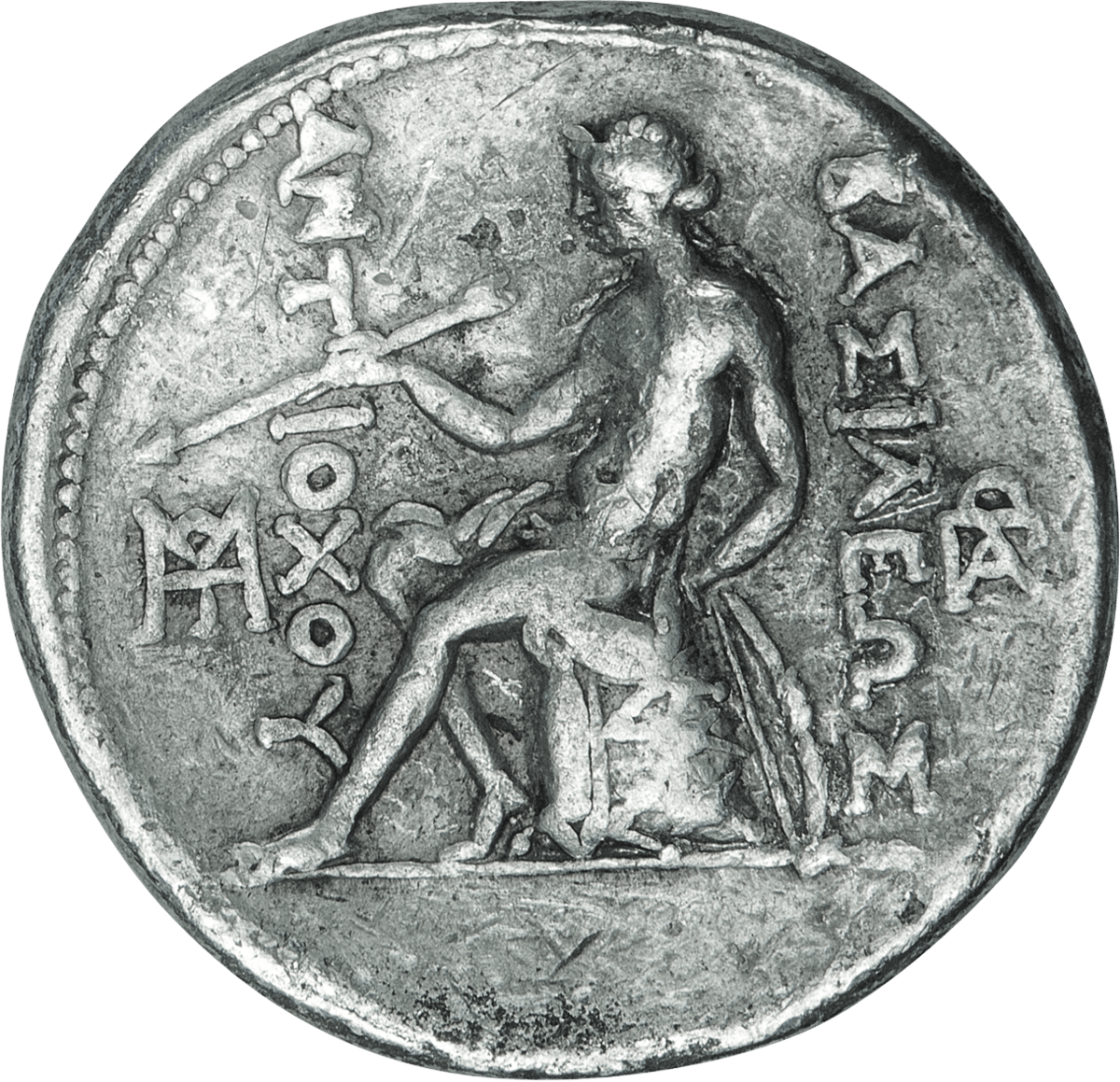
The reverse bears the Greek legend ΒΑΣΙΛΕΩΣ ΑΝΤΙΟΧΟΥ – "of King Antiochus". Depicted is Apollo, seated to the left on the omphalos of Delphi, testing an arrow with his right hand, his left resting on the propped bow. The omphalos, a sacred stone covered with a woollen net, was regarded by the Greeks as the "navel of the world". Apollo was worshipped as the divine progenitor of the Seleucid house – this reverse type remained the standard of Seleucid coinage for over a century. Monograms and control marks in the field point to the mint, officials, and issue series; for connoisseurs, they represent the real trail to follow.
Antiochus I Soter – Heir of Alexander the Great
Antiochus was the son of Seleucus I Nicator, a general and companion of Alexander the Great, and of Princess Apama, whom Alexander had married to Seleucus during the mass wedding at Susa. As king, Antiochus ruled from 281/280 to 261 BC over a vast, multilingual empire stretching from Asia Minor to Central Asia. He received his epithet Soter – "Saviour" – after decisively defeating the Galatians who had invaded Asia Minor in the famous Battle of the Elephants. The deployment of his war elephants gave the event its name; the liberated Greek cities honoured him with cultic honours.
The Tetradrachm: Leading Currency of Hellenism
- Face value: Tetradrachm – four drachms, the major silver denomination of the Greek world
- Gross weight: approx. 17 g, struck according to the Attic standard
- Diameter: approx. 26 mm
- Precious metal: silver, hand-struck between dies
- Origin: Hellenistic world, Seleucid Empire
- Mints (various): including Antioch on the Orontes, Seleucia on the Tigris, Magnesia on the Sipylus, Tarsus, or Ecbatana
- Cataloguing: recorded in the specialist literature under "Seleucid Coins" (SC)
A coin such as this was used to pay mercenaries, settle caravan transactions, and make offerings to temples. It was the trade currency of half a continent – comparable in significance to the Alexander tetradrachm or the Athenian owl, which many collectors choose as an entry point. The appeal of Seleucid pieces lies in their portrait artistry: while the owl bears a strictly standardised emblematic image, here a real human being looks back at you.
Condition: A Circulated Means of Payment with Character
These pieces are circulated means of payment and bear corresponding traces: darker patina, individual centring, nicks, wear, and in some cases weaker areas of the legend. This is precisely what constitutes their charm. Since the year of striking, mint, and reverse variant may vary, the specimen delivered will differ from the illustration – you receive an original, not a mass-produced item. Please understand that the image shown in the shop serves as an example and may differ individually from the delivered item in terms of appearance and condition due to historical circumstances.
Silver as a Tangible Asset – Then as Now
Silver was the money of antiquity, long before there were banknotes. The very substance that fostered trust between foreign peoples over two millennia ago is today traded worldwide as a commodity and used in electronics, solar technology, and medical technology. Unlike fiat money, whose value rests on trust in institutions, silver possesses an inherent, physical value.
- Preservation of value: limited availability, worldwide tradability, high liquidity
- Tax framework: profits from the sale of silver are generally tax-free if held for at least one year
- Durability: silver is long-lasting and retains its physical properties over centuries – this coin proves it
- Generational value: a tangible asset that can be inherited and passed on
For Collectors, Historians, and Lovers of Tangible Assets
Anyone who collects classic modern-strike silver coins is familiar with consistent years of issue and exact fine weights. Here, everything is different. Each specimen is a one-of-a-kind item with its own biography – and precisely for this reason, an ancient tetradrachm complements an existing collection so effectively. It serves equally well as the centrepiece of a historical collection or as an extraordinary gift for anyone passionate about history.
Gold is humanity's oldest currency and has outlived all others – silver has always been its most faithful companion in people's everyday lives.
As a tangible asset you can hold in your hand, this coin represents inflation hedging and crisis protection in its most original form: precious metal that has outlasted empires. Shipping is, of course, carried out as insured value shipping.
Product depiction may differ from the final product.
