





Silver 18 Gröscher King Frederick II the Great (1751-1765 | with Crown)











- Genuine Original: Legal tender from Prussia
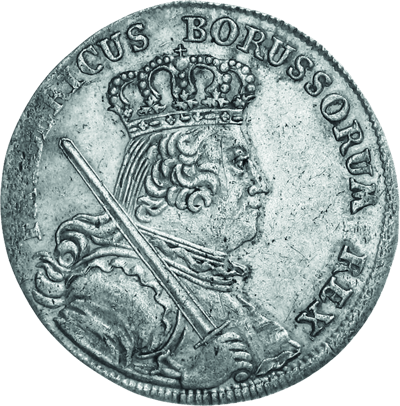
- Noble Portrait: Armor and sword
- Witness to History: Seven Years' War
- Genuine OriginalChanged hands in markets over 250 years ago
- Noble PortraitReverse shows the Prussian eagle with monogram FR
- Witness to HistoryMinted when Old Fritz kept all of Europe on edge
 Price alert
  Share
ShareSilver 18 Groschen Frederick II the Great (1751–1765, with crown) – Circulating currency from the era of Old Fritz
This coin was everyday currency. Not a piece that went straight from the minting press into a display case, but genuine circulating money in the Kingdom of Prussia. The 18-Groschen changed hands at weekly markets, in trading offices and in military camps – at a time when Frederick II, popularly known as "Old Fritz," held all of Europe in suspense. Whoever holds one of these originals today holds over two and a half centuries of Prussian history in silver.
The design: crowned head and Prussian eagle
The obverse shows the bust of Frederick the Great facing right – in this variant explicitly with crown, along with armor, drapery folds and sword. The Latin legend names him FRIDERICUS BORUSSORUM REX, King of the Prussians. On the reverse, the crowned Prussian eagle spreads its wings, bearing the interwoven monogram FR on its breast. Below is the large denomination figure 18, surrounded by the inscription MONETA ARGENTEA along with the year, and at the very bottom the mint mark of the issuing mint.
Tympf, Ort, Achtzehngröscher: a denomination with an eventful history
The Achtzehngröscher goes by many names. Colloquially it was called Tympf – after the mint lessee Andreas Tympf, whose 1663 proposal established this coin type; in the 17th century the denomination was also commonly known as "Ort" (quarter taler). It was struck at several Prussian mints, identifiable by their letters: A for Berlin, B for Breslau, E for Königsberg. The Seven Years' War (1756–1763) literally left its mark on this denomination; production finally ceased in 1765. The coins remained in circulation for generations afterward – it was not until the Imperial Law of September 21, 1875, that they were withdrawn from legal tender. To this day, collectors classify Frederick II's coinage according to the standard reference catalogs by Olding and Kluge.
Key facts at a glance
- Issuing country: Kingdom of Prussia
- Face value: 18 Groschen
- Minting period: 1751 to 1765 (various years of issue)
- Material: Silver, fineness 750/1,000
- Gross weight: 6 g
- Diameter: 26 mm
- Manufacturer/Mint: various
- Condition: circulated coin, condition grade varies
- Shipping: as insured value shipment
Condition: signs of wear are history in this case
These pieces were in genuine circulation – and they look the part. Darker patina, individual centering, small nicks, wear, and in places weaker-struck areas of the legend: these are not flaws but biography. Every trace comes from hands that, centuries ago, used these coins to settle payments for goods, freight, or debts. Since the year of minting, mint, and reverse variant can vary, the coin delivered may differ from the image shown.
Please understand the photo in the shop explicitly as a representative image: appearance, exact weight and condition vary from piece to piece for historical reasons. You are purchasing an original.
Historic silver as a tangible asset
Silver has been coinage metal, trading medium and store of value for thousands of years – a tangible asset with intrinsic value, unlike any pure paper currency, which relies solely on trust. This is exactly what makes historic silver coins appealing both to collectors and to buyers focused on tangible assets:
- Dual substance: numismatic appeal plus physical precious metal in hand.
- Robust tangible asset: silver is durable, traded worldwide and liquid.
- Industrial demand: electronics, solar and medical technology need silver – amid limited supply.
- Tangible asset character: precious metal traditionally serves as an inflation hedge and for crisis protection.
- Tax aspect: profits from the sale of silver are generally tax-free for private individuals, provided the holding period of at least one year is observed.
- Generational value: a tangible heirloom that can be passed down.
Comparison: 18-Groschen, Sechsgröscher and Taler
Within the Fridericianic small coinage, the Achtzehngröscher occupies a pleasant middle ground. The Sechsgröscher is smaller and more affordable as an entry point, but offers less surface area for the portrait. A Reichstaler appears more impressive with its wide planchet, but as a collector's piece costs considerably more and is rare in good condition. With a diameter of 26 mm and a gross weight of 6 g, the 18-Groschen delivers a clearly legible portrait of Frederick the Great on moderate terms – ideal as an entry point into a Prussia collection, as a historical building block alongside modern bullion coins, or as a gift with substance. Gold is considered humanity's oldest currency and has outlived every paper currency; silver has accompanied this history as the money of everyday life. This is precisely the story this piece tells.
Product depiction may differ from the final product.
