





Silver 1 Kreuzer Free Imperial City of Regensburg (1623-1753 | Payment Money of the Cathedral City)
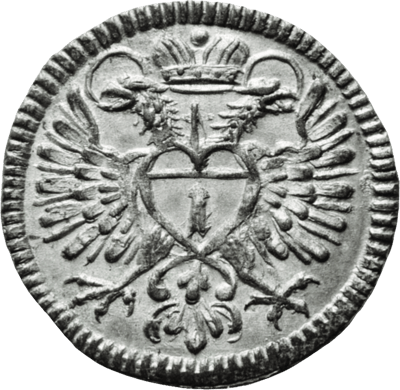











- Emperor and City: Eagle and coat of arms
- Rarely preserved: often melted down
- Stage of Europe: City of the Diet
- Emperor and CityCrowned imperial eagle and the keys of Apostle Peter
- Rarely preservedMany pieces were lost, making them sought after today
- Stage of EuropeThe Perpetual Diet met here from 1663 to 1806
 Price alert
  Share
Share1 Kreuzer of the Free Imperial City of Regensburg (1623–1753) – Currency of the Cathedral City
A tiny piece of silver, scarcely larger than a fingernail – and yet an original from the Holy Roman Empire of the German Nation. The 1 Kreuzer of the Free Imperial City of Regensburg was part of everyday life along the Danube for generations. It changed hands in the marketplace, found its way into alms boxes, and paid for bread, cartage and ferry fares. Whoever holds it today holds the historical small change of a city that was far more than a Bavarian provincial town within the Old Empire.
Crossed Keys and Double Eagle: the Design
One side bears the city's coat of arms in an ornate Baroque cartouche: two crossed keys, along with the year of issue and the mint master's mark. The keys are the attribute of the Apostle Peter – the saint to whom Regensburg Cathedral is dedicated. This is precisely the origin of the nickname "Cathedral City". The other side shows the crowned imperial double eagle, its breast bearing a shield with the denomination 1. Emperor and city on a coin weighing less than a gram: imperial history has rarely been more compact.
- City coat of arms: two crossed keys, Regensburg's emblem of sovereignty since the 14th century
- Imperial eagle: crowned double eagle as a sign of immediate imperial status
- Denomination 1 in the heart-shield, or imperial orb shield, on the eagle's breast
- Mint master's mark: depending on the year of issue, for example I M F for Johann Michael Federer or B for Johann Christoph Busch
- Production: small coins of this era were often produced using the roller-minting process – hence the typical, slightly oval appearance of some pieces
Technical Data at a Glance
- Face value: 1 Kreuzer (60 Kreuzer equalled one Gulden)
- Material: silver, fineness varies depending on the minting period
- Gross weight: approx. 0.75 g
- Diameter: 16–17 mm
- Minting period: 1623–1753, years of issue and variants vary
- Mint: Regensburg
- Country of issue: Holy Roman Empire of the German Nation
- Condition: circulated coin, grade of preservation varies
Regensburg: Imperial City, Episcopal See, Political Stage of Europe
In 1245, Regensburg was granted the right to appoint its own mayor and council and became a Free City. In 1492, the emperor confirmed its immediate imperial status – the city was now an Imperial City. From 1663 to 1806, the Perpetual Imperial Diet convened here: envoys from across the Empire negotiated matters of war, peace and imperial law in the city on the Danube. By then, the Stone Bridge from the 12th century had long stood, and the Gothic Cathedral of St. Peter had been rising since 1275. Regensburg's coinage did not come to an end until 1803, when the city and its bishopric fell to Karl von Dalberg; a few years later, Regensburg became part of the Kingdom of Bavaria. Today, the old town is a UNESCO World Heritage Site.
It is against this backdrop that the Kreuzer belongs. It is no showpiece for princely cabinets, but everyday currency – and that is precisely what makes it so tangible. Alongside it, hellers, pfennigs, half-batzen worth two Kreuzer, batzen, as well as heavy Reichstaler and gold ducats, all circulated in the cathedral city of Regensburg. The small denominations vanished in everyday use: lost, melted down, worn smooth. This is why Regensburg coinage is considered a sought-after testimony in the numismatics of old Germany – from the Middle Ages to the end of the Old Empire.
Condition: Circulated Coinage with a History
These pieces are circulated coinage – and they look the part. A darker patina, individual centring, small nicks, wear, and, in places, weaker impressions of the lettering: these are not flaws, but history. Every trace originates from hands that, centuries ago, used it to settle payment for goods, freight or debts.
Since the year of minting, mint and reverse variant may vary, the piece supplied may differ from the image shown. Please understand the photo in our shop explicitly as a representative example: appearance, exact weight and condition vary from piece to piece for historical reasons. You are purchasing an original.
Historical Silver for Collectors and Investors
For centuries, silver was the monetary metal of everyday life, while gold secured great fortunes. This Kreuzer is impressive proof of that. Historical silver coins combine two appeals: the joy of history and the concept of tangible assets. Physical precious metal cannot be printed. Its intrinsic value arises from the metal itself and from worldwide demand – in electronics, solar and medical technology as well as in the jewellery trade. And silver is durable: it retains its physical properties over centuries, as this piece proves.
Gold is humanity's oldest currency and has outlasted every paper money system – silver accompanied it as the people's money. A Regensburg Kreuzer serves as a reminder that precious metal has outlasted currency reforms, wars, and the downfall of entire empires.
For beginners, small historical denominations hold particular appeal, as they keep the entry into numismatics affordable – silver is, in any case, the more accessible gateway into the world of precious metals compared to gold. Collectors seek out years of issue, variants and mint master's marks; investors value physical silver as a building block for inflation hedging and crisis protection, as a medium of exchange for smaller transactions, and as a tangible asset that can be passed down from generation to generation. For tax purposes: profits from the sale of silver are generally tax-free, provided a minimum holding period of one year is observed.
Unlike modern bullion coins minted in the millions, this Kreuzer draws its value from provenance, age and scarcity. A modern silver bar impresses with precisely defined fine weight and a flawless finish, whereas this original impresses with a history you can see and feel. This is precisely where its charm lies: a witness to its time from the Free Imperial City, fitting for any collection devoted to the history of Germany and the Old Empire.
Product depiction may differ from the final product.
