





Ancient Persian Silver Coin Great King Darius III (336-330 BC | Opponent of Alexander the Great)
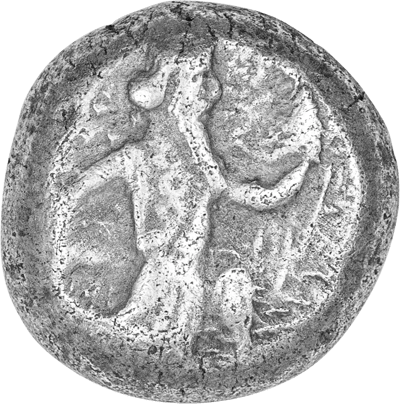











- Genuine Original: over 2,300 years old
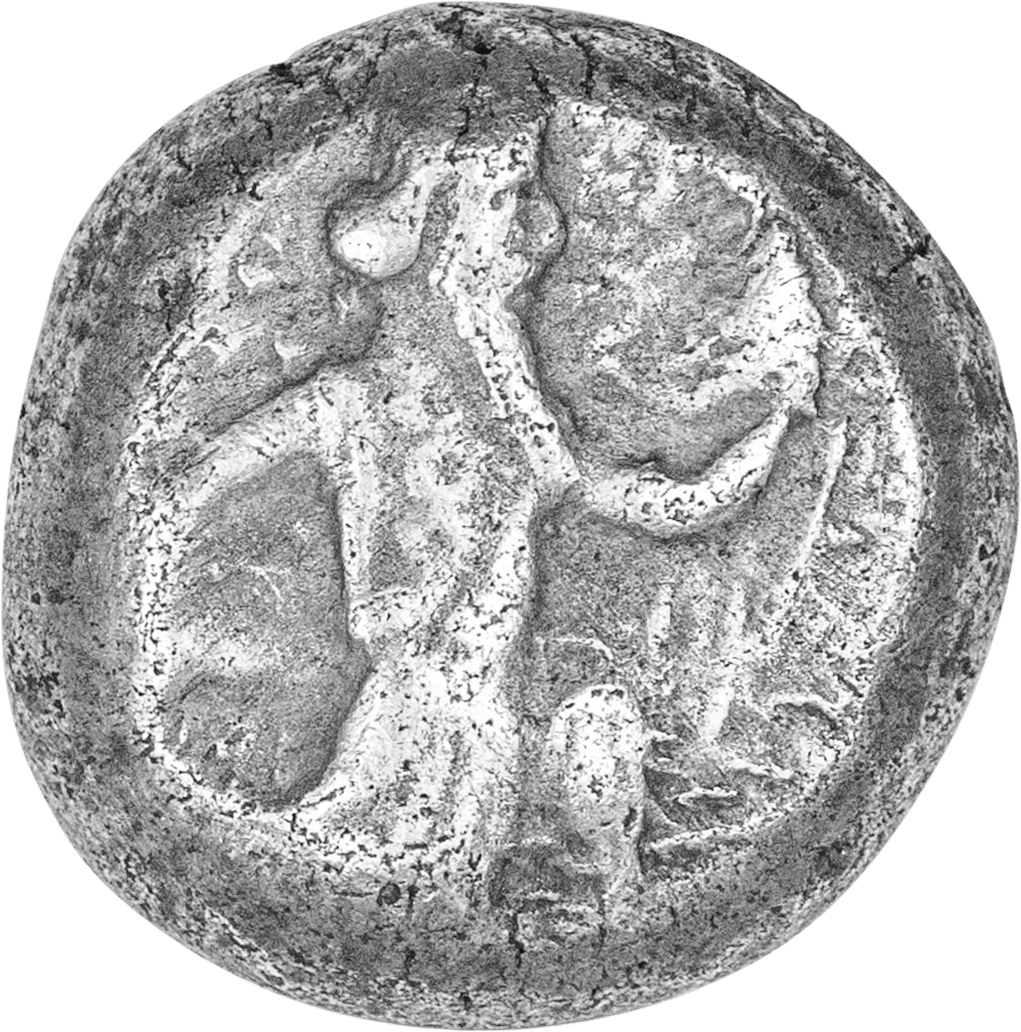
- Ruler's Image: Great King in kneeling stride
- Hand-Struck: each piece a unique item
- Genuine OriginalSurvived the fall of antiquity's first world power
- Ruler's ImageThe Great King with bow and spear in archaic force
- Hand-StruckEach specimen bears its own patina and traces
 Price alert
  Share
Share
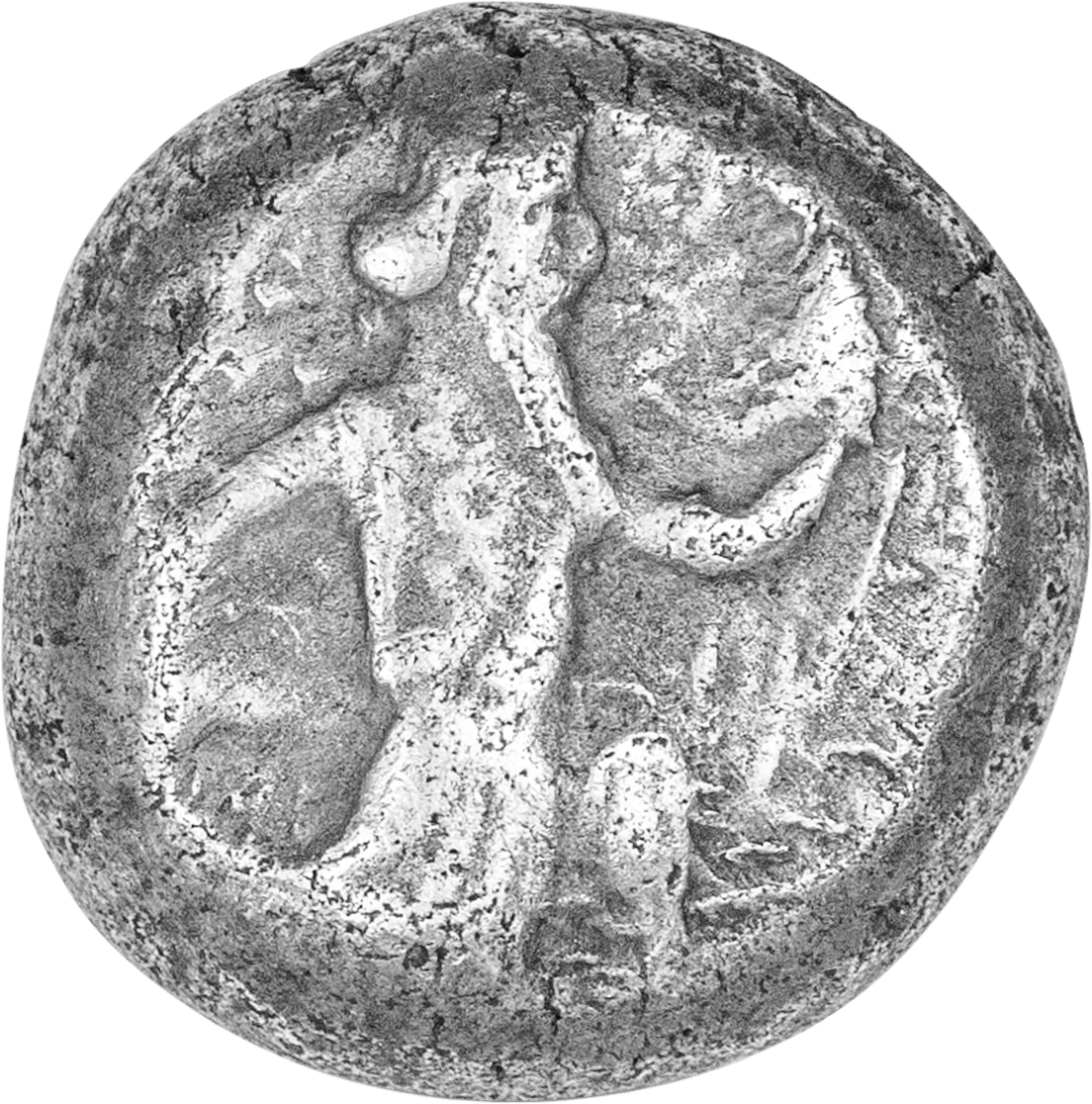
Ancient original · Achaemenid Persia
Siglos of the AchaemenidsAbout 2,350 years old.
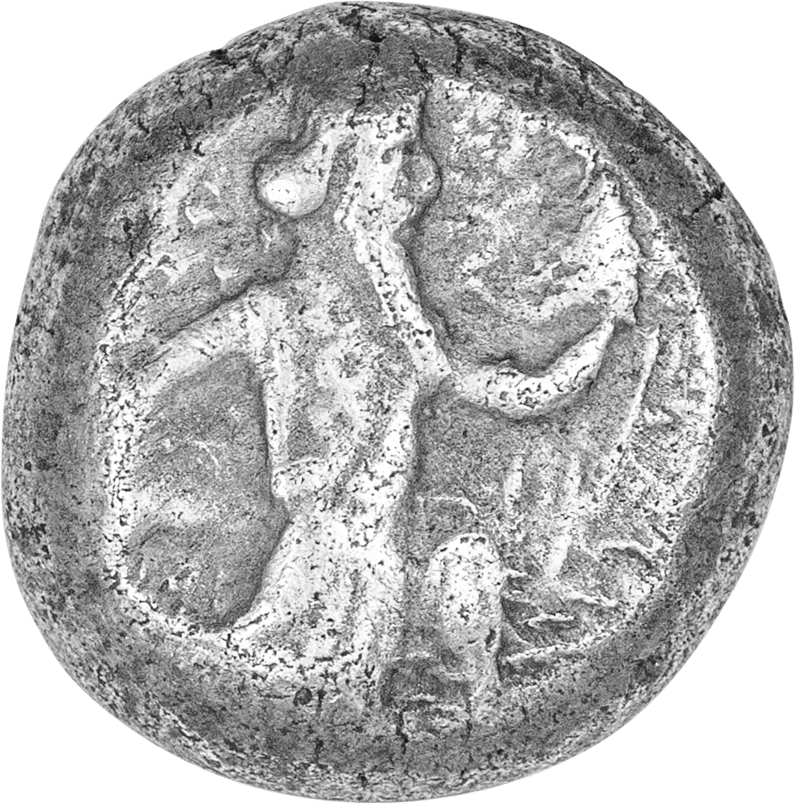
The Achaemenids showed the king on their coins as a type, running with his bow, but never as the portrait of a particular ruler.
- Dynasty
- Achaemenids336 to 330 BC
- Diameter
- 18 mm
- Weight
- c. 5.4 g
The Achaemenids showed the king on their coins as a type, running with his bow, but never as the portrait of a particular ruler.
- Dynasty
- Achaemenids336 to 330 BC
- Diameter
- 18 mm
- Weight
- c. 5.4 g
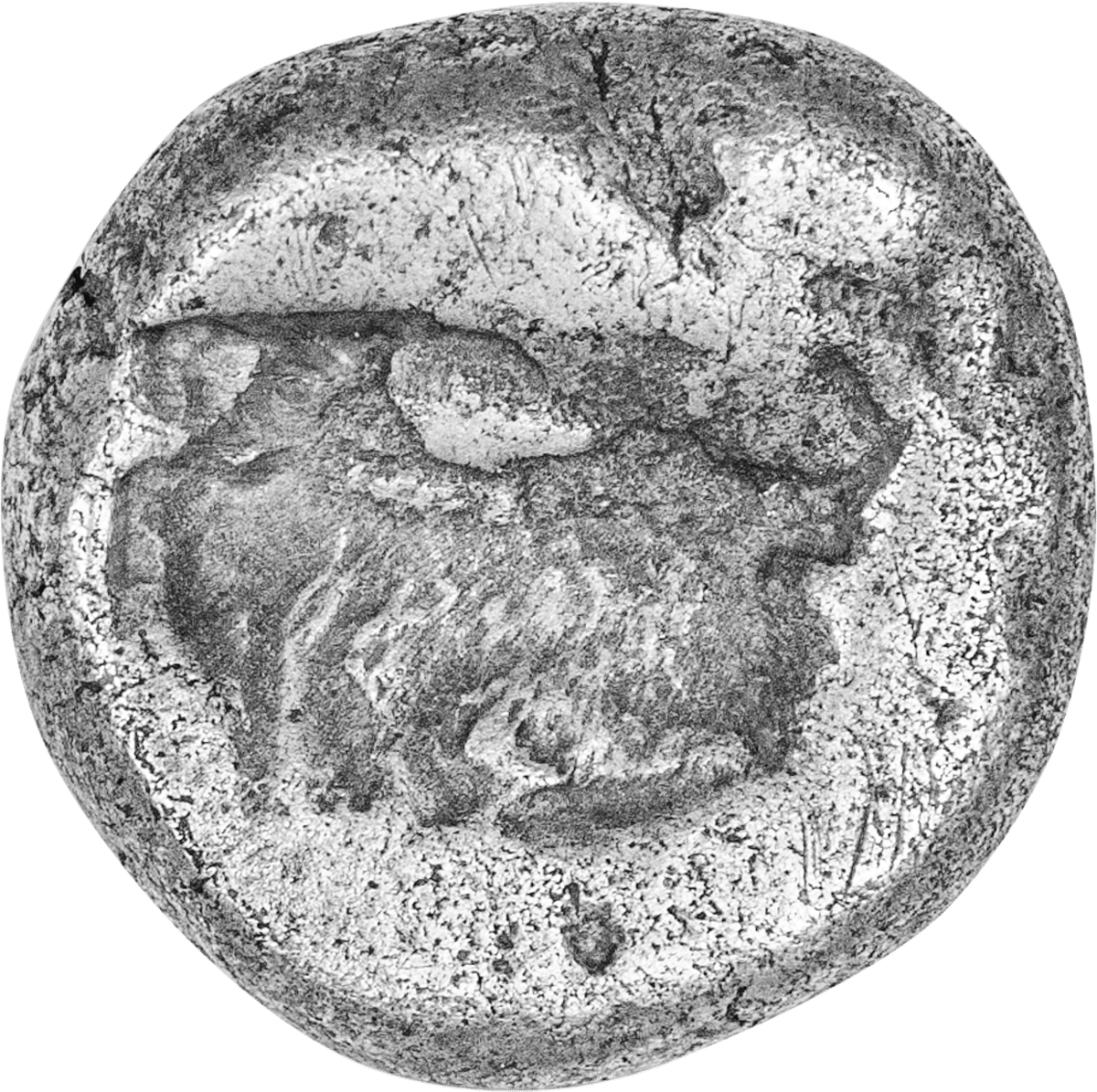
Achaemenid Persia · 6th century to 330 BC
Thirty thousand archers.
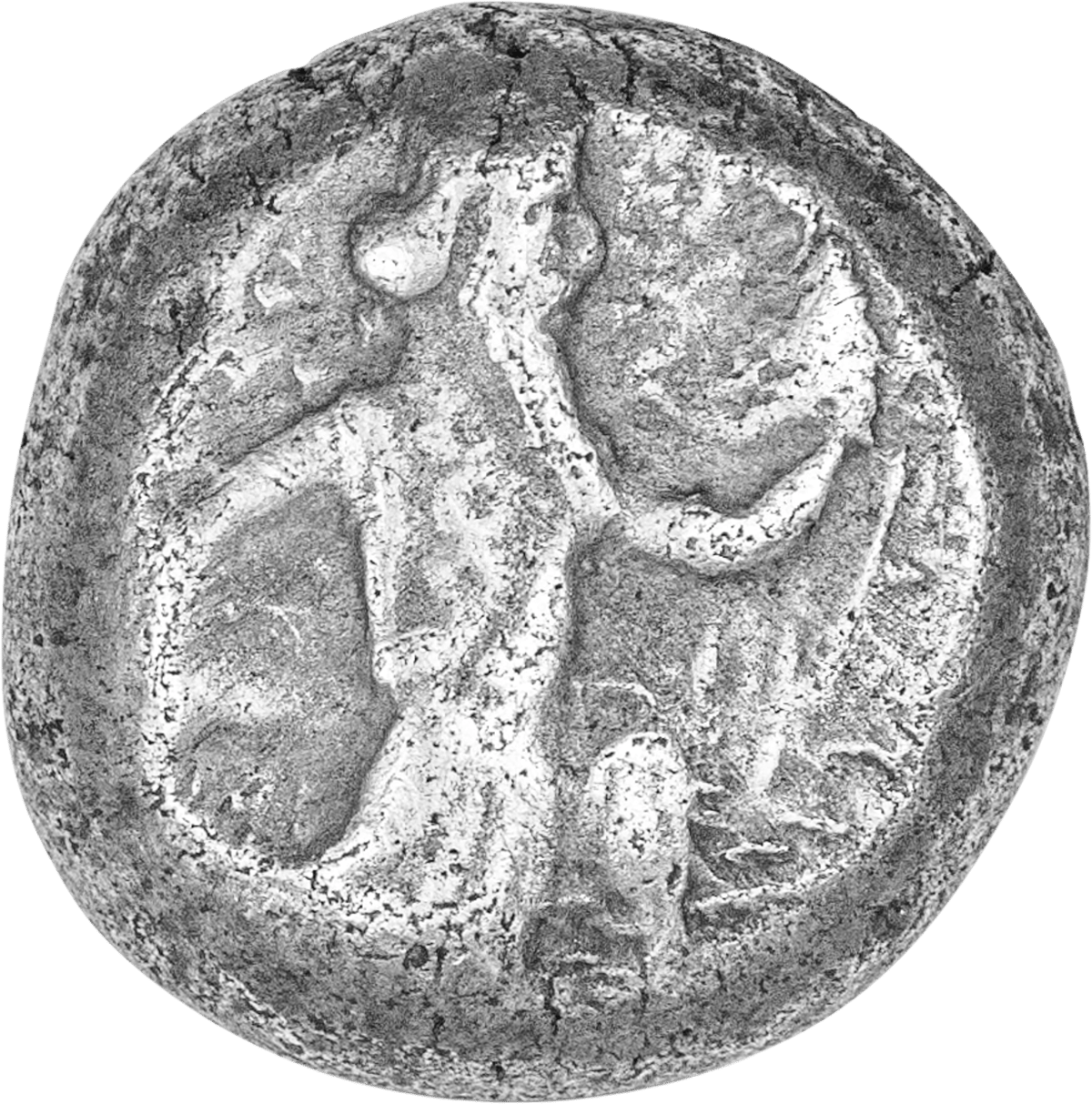
The largest empire of its time struck the same image for almost two hundred years: the great king kneeling with bow and spear. The Greeks simply called the coins with this image archers. When the Spartan king Agesilaos had to withdraw from Asia Minor because Persia had paid his enemies, he said, according to Plutarch, that thirty thousand archers had driven him out.
The picture shows an example. The piece you receive may differ in detail.
At the same scale
Greeks, Persians, Carthaginians: coins side by side
From the diobol of Teos at 9 mm to the tetradrachm at about 26 mm. Under each piece you see its diameter as our product data give it.
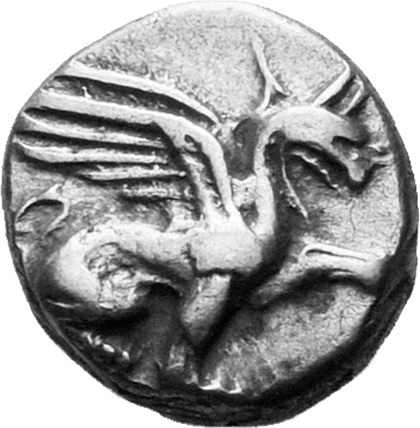 DiobolTeos
9 mm
DiobolTeos
9 mm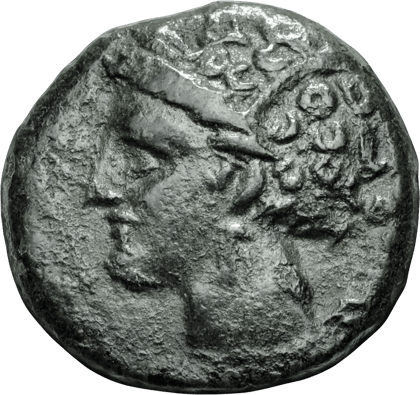 Bronze coinCarthage
16 mm
Bronze coinCarthage
16 mm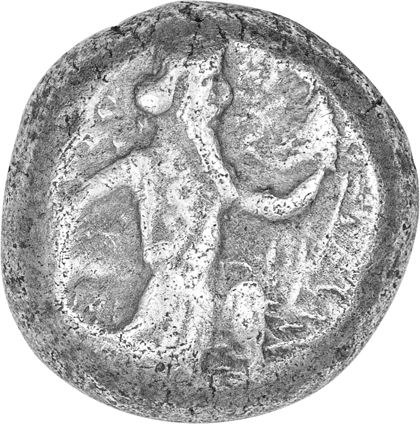 SiglosAchaemenids
18 mmthis page
SiglosAchaemenids
18 mmthis page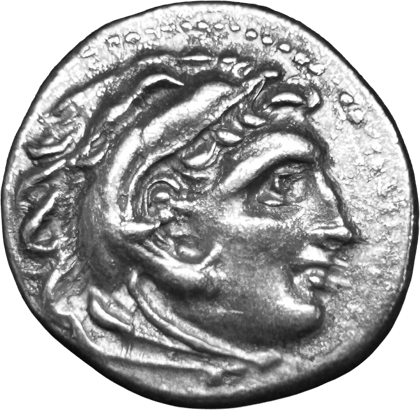 DrachmAlexander the Great
18 mm
DrachmAlexander the Great
18 mm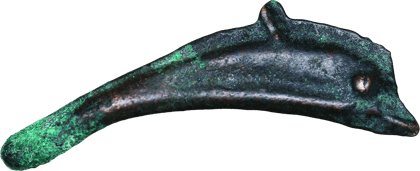 Dolphin moneyOlbia
c. 20 mm long
Dolphin moneyOlbia
c. 20 mm long 1 eurofor comparison
23.25 mm
1 eurofor comparison
23.25 mm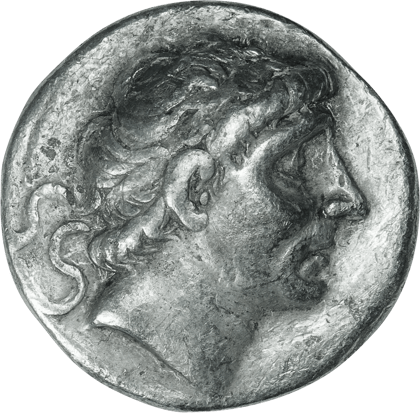 TetradrachmAntiochos I Soter
c. 26 mm
TetradrachmAntiochos I Soter
c. 26 mmWhere it belongs
31 originals from about 1,100 years
Each piece stands at the years of its ruler or of its type. The era of this piece is highlighted; choose another one to see its originals.
Achaemenid Persia 6th century to 330 BC · 1 original
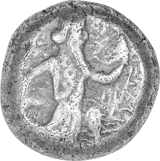 Siglos of the Achaemenids336 to 330 BCthis page

Keeping it
First things first: do not clean it.
The dark layer on bronze and the matte grey on silver are called patina. It has grown over centuries and protects the surface. Polishing it away takes that protection from the piece.
- Hold it by the edgeSkin oil can etch itself permanently into the surface. Take the piece by the rim between thumb and forefinger, over a soft surface.
- Store each piece on its own, and dryKeep each piece on its own in a dry place, in a capsule or an acid-free case. PVC sleeves do not belong there, they attack the surface.
- No agents, no polishing clothNo vinegar, no silver cloth, no ultrasound. According to the Bank of Canada Museum, almost any attempt at cleaning without a conservator leaves damage, mostly from abrasion.

Struck about 2,350 years ago.
The Achaemenid great kings and their world are long gone. The piece has remained, with the traces of its circulation.
A Piece of World History in Your Hand: Siglos from the Time of Darius III
Some coins are beautiful. This one is something else: it is a witness. Struck in the Achaemenid Empire during the reign of Great King Darius III (336–330 BC), this piece survived the fall of antiquity's first world power – and now, more than 2,300 years later, rests in the palm of your hand. Anyone fascinated by ancient coins and by silver coins with genuine history will find here an original that no modern coinage can compare to.
The Siglos: Silver Money of a World Power
Persian coinage dates back to Darius I, who introduced the first unified currency of the Persian Empire: the golden daric and the silver siglos. The two stood in a fixed ratio to one another – 20 siglos equalled one daric. This gave the empire, stretching from the Aegean to the Indus, a functioning bimetallic system of gold and silver, long before banknotes or bank accounts existed. Payment was made with the metal itself.
The iconic coin design remained almost unchanged across generations of Great Kings and continued to be struck with the same motif:
- Obverse: the Persian Great King in the so-called kneeling-running pose facing right, armed with bow and spear – a ruler's image of archaic power.
- Reverse: an irregular, elongated incuse mark. This indentation was created during striking and held the blank in place.
- Manufacture: a thick, bean-shaped blank, hand-struck – each specimen a one-of-a-kind piece.
- Mint: Sardis in Lydia is considered the most important mint for these royal silver coinages.
The piece offered here weighs approximately 5.4 g with a diameter of about 18 mm, corresponding to the classic siglos standard, whose weight is cited in the literature as roughly 5.4 to 5.6 grams. Relevant catalogues state a high silver content for the fineness; however, due to their production, the fineness, denomination, and year of issue of ancient circulating coinage vary from specimen to specimen.
Darius III – The Opponent of Alexander the Great
Around May 336 BC, Artashata ascended the throne as Darius III, just a few months before a man nearly 25 years his junior seized power in Macedonia: Alexander the Great. What followed is standard school curriculum. Granicus in 334. Issus in November 333, where Darius' family fell into Macedonian captivity. Gaugamela on 1 October 331, lost despite scythed chariots and war elephants. Fleeing eastward, the last Achaemenid was captured and stabbed to death in 330 BC by a group of nobles led by the satrap Bessus – Alexander had him buried with honour at the royal tombs.
An empire perished. The silver remained. That is precisely the message of this coin.
Condition: Circulated Currency, Not a Mass-Produced Item
These pieces are circulated currency and bear corresponding traces: darker patina, individual centring, nicks, wear, and in some cases weaker legend areas. This is exactly what makes them appealing. Since the year of issue, mint, and reverse variant can vary, the specimen delivered will differ from the image shown – you receive an original, not a mass-produced item. Please understand that the image in the shop serves as an example and may differ individually from the delivered item in terms of appearance and condition due to historical circumstances.
Why Silver – and Why This Particular Piece?
Precious metal outlasts dynasties. Gold is humanity's oldest currency and has outlived every paper currency; silver has accompanied it for millennia as the everyday monetary metal. This siglos demonstrates both impressively: trust in the Persian Great King ended in 330 BC – yet the metal in his coin is still traded worldwide as a commodity today.
- Tangible asset with intrinsic value: Unlike fiat money, silver does not depend on trust in governments but on its physical properties.
- Industrial demand: Electronics, solar technology, and medical technology all require silver – while supply remains limited.
- Crisis protection and inflation hedge: Silver has always been a proven store of value and is well suited as a medium of exchange for smaller transactions.
- Tax aspect: Profits from the sale of silver are generally tax-free, provided the holding period is at least one year.
- Generational value: durable, divisible, liquid – and in this form, also a historical heirloom.
For Collectors and Tangible-Asset-Oriented Investors
Compared to a modern bullion coin made of fine silver, this siglos offers no exact fine weight and no standardised minting quality – but instead something no mint can newly produce: authenticity and age. Conversely, anyone who primarily values weight and standardisation will happily supplement their holdings with classic bullion coins. Together, both create an exciting combination of ancient collector's item and modern crisis protection.
This piece from the "History" series is supplied as a collector's product from Persia and shipped via insured value shipping. A gift for history enthusiasts, a conversation piece in any collection – and tangible proof of how enduring precious metal has remained across the millennia.
Product depiction may differ from the final product.
