





Antoninianus Emperor Probus (276-282 AD | Age of Germanic Invasions)
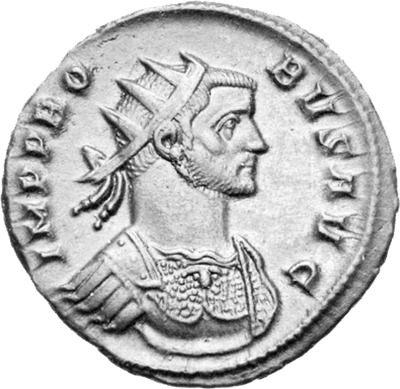
- Genuine Original: around 1,750 years old
- Soldier Emperor: promoter of winemaking
- Each one unique: not a mass product
- Genuine OriginalNo replica, but real money from ancient Rome
- Soldier EmperorDefeated the Goths and Burgundians and promoted winemaking
- Each one uniqueReverse and mint vary with every specimen











- Genuine Original: around 1,750 years old
- Soldier Emperor: promoter of winemaking
- Each one unique: not a mass product
 Price alert
  Share
Share
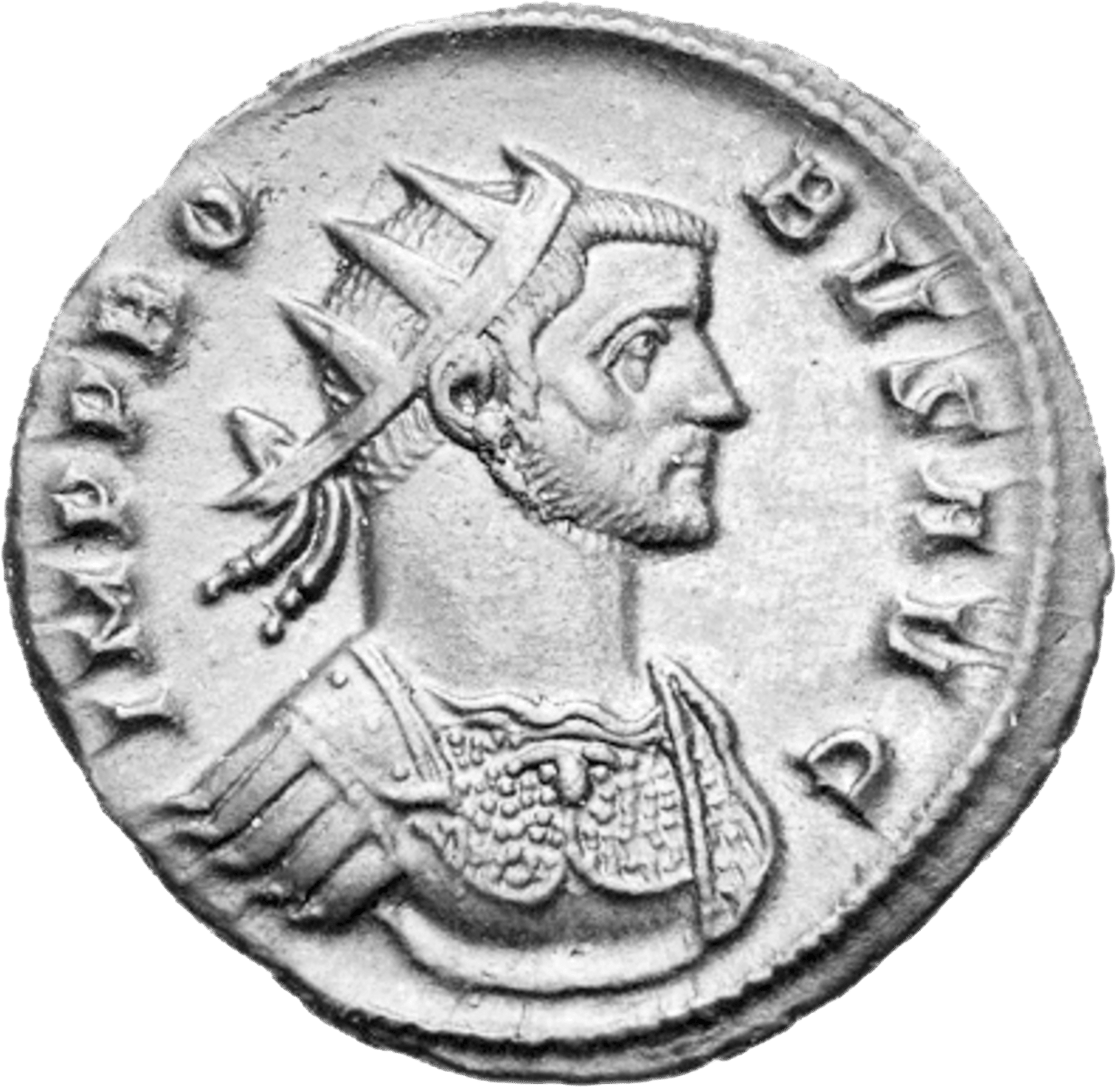
Ancient original · Crisis of the third century
Antoninianus of ProbusAbout 1,750 years old.
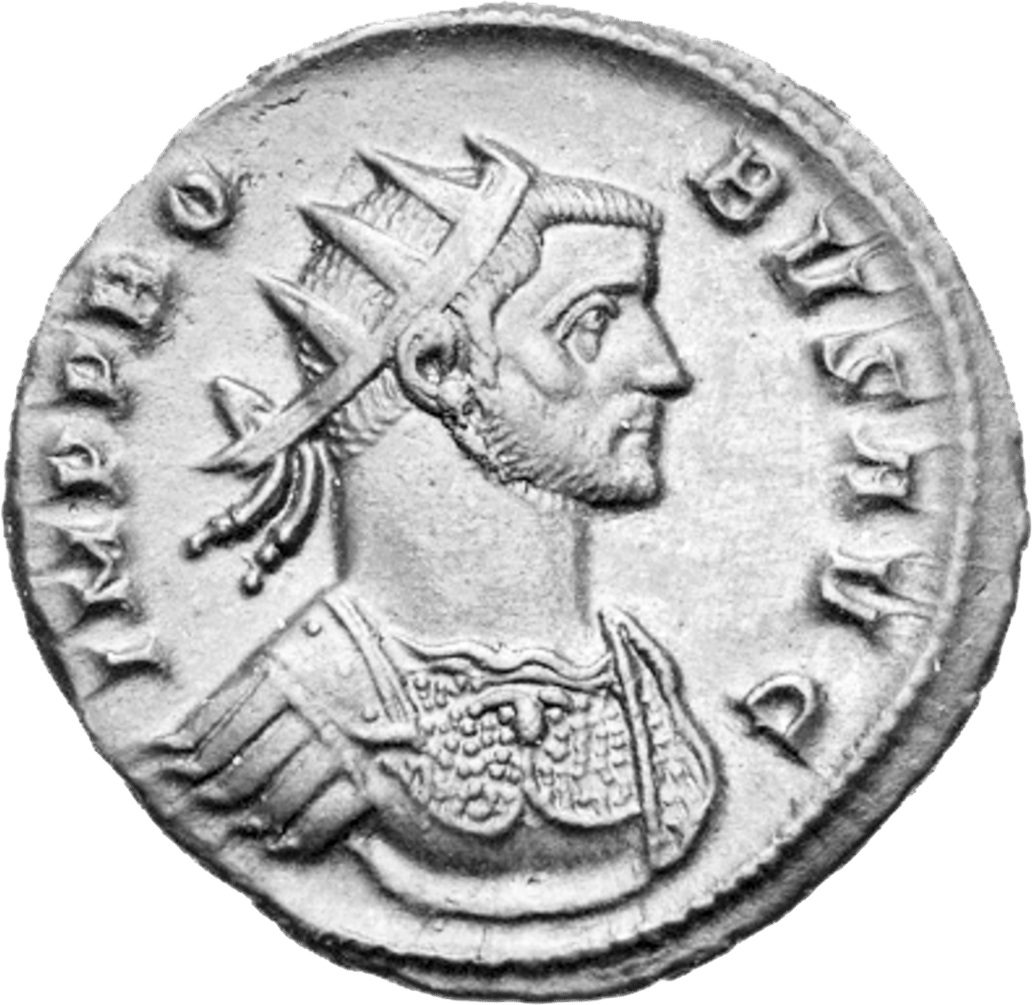
Caracalla introduced the antoninianus in the year 215. The radiate crown of the emperor marks it as a double denomination.
- Ruler
- ProbusAD 276 to 282
- Diameter
- 18 mm
- Weight
- c. 3.9 g
Caracalla introduced the antoninianus in the year 215. The radiate crown of the emperor marks it as a double denomination.
- Ruler
- ProbusAD 276 to 282
- Diameter
- 18 mm
- Weight
- c. 3.9 g
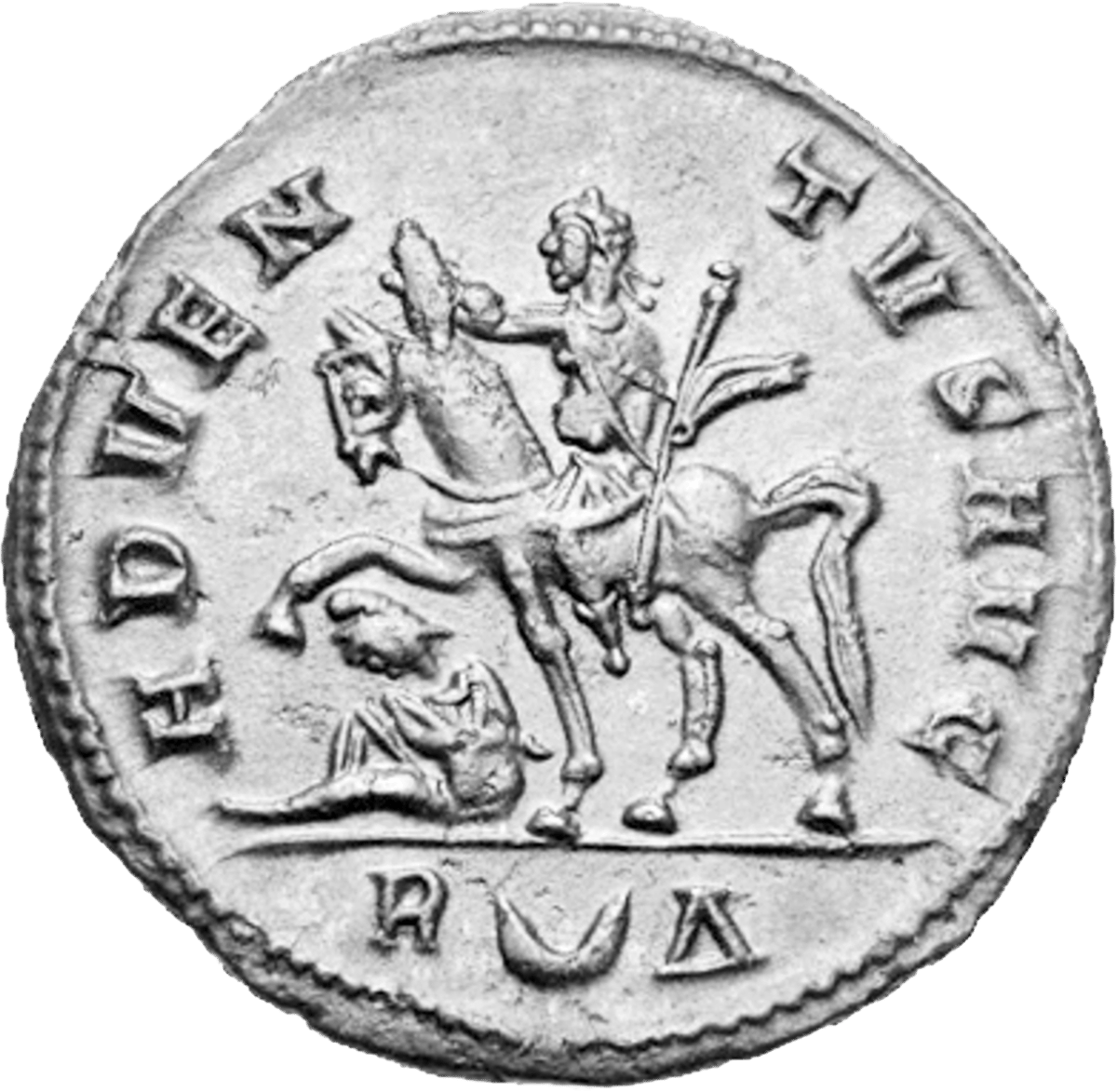
Crisis of the third century · AD 235 to 284
Silver that turned into bronze.
In fifty years at least 26 men claimed the imperial title. At the same time the money decayed: the antoninianus began as a silver coin, probably worth two denarii, and ended as a bronze piece with a thin wash of silver. Hold a coin from these decades and you are holding an inflation.
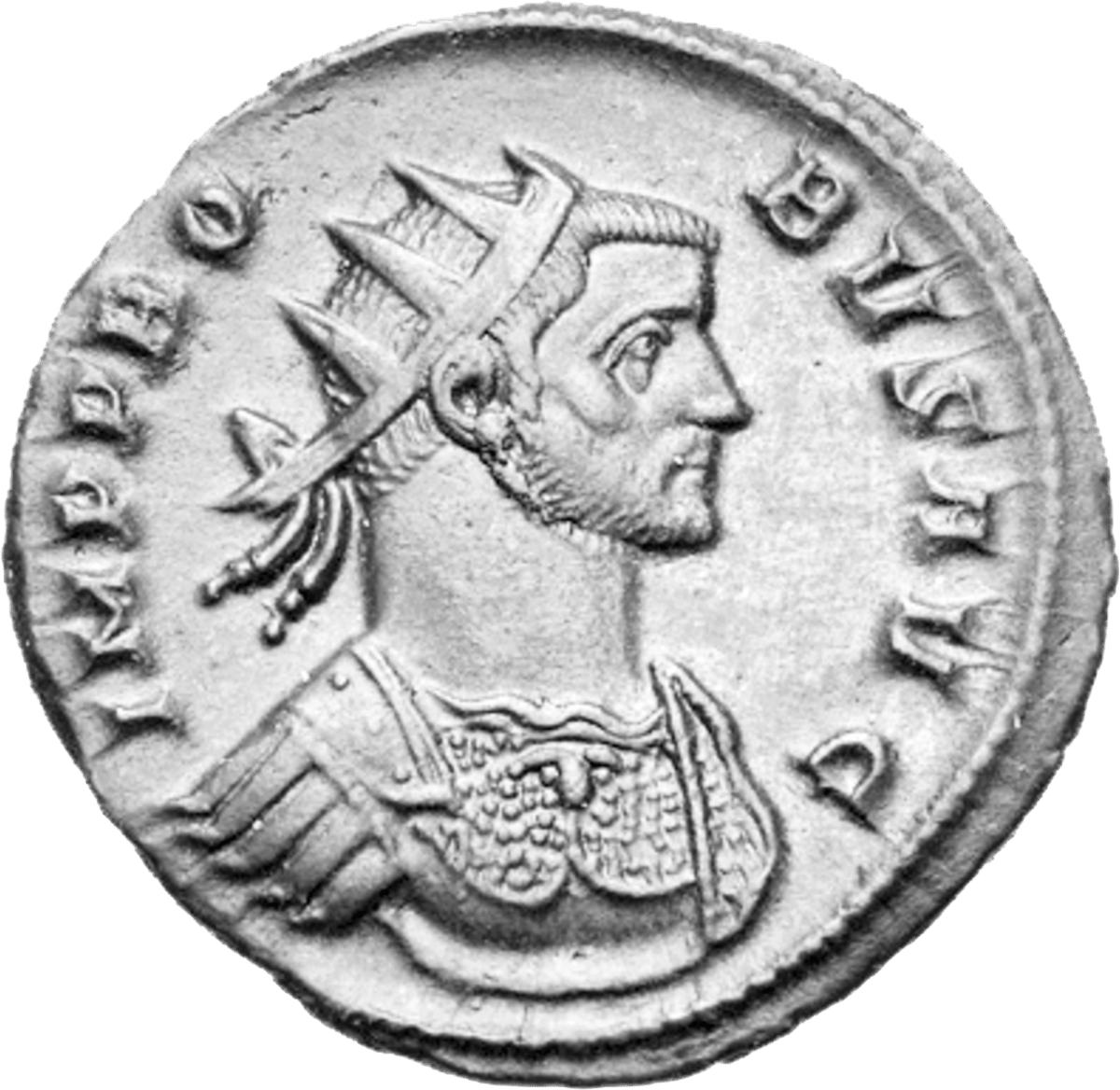
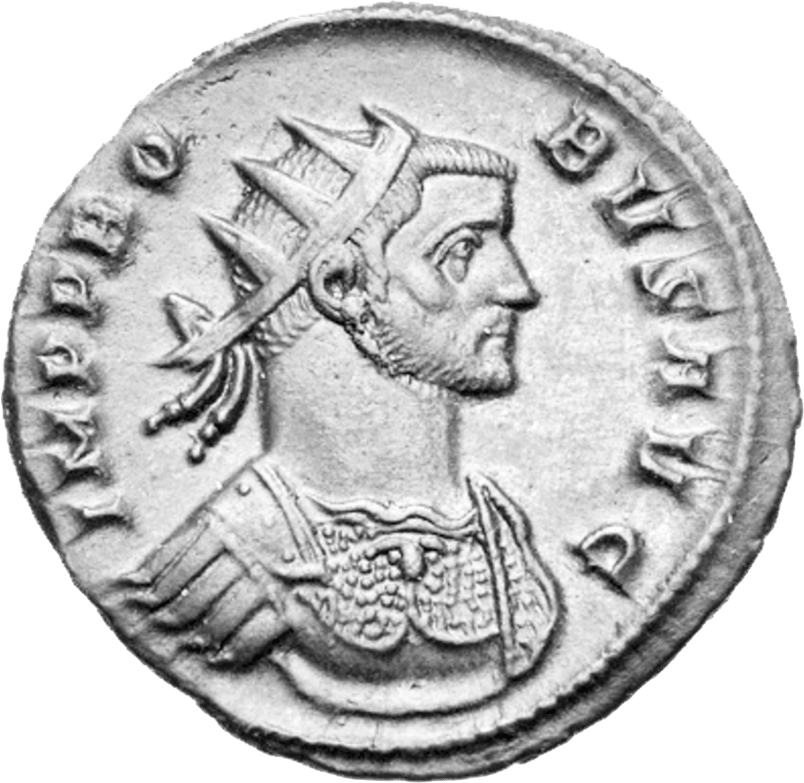
The picture shows an example. The piece you receive may differ in detail.
At the same scale
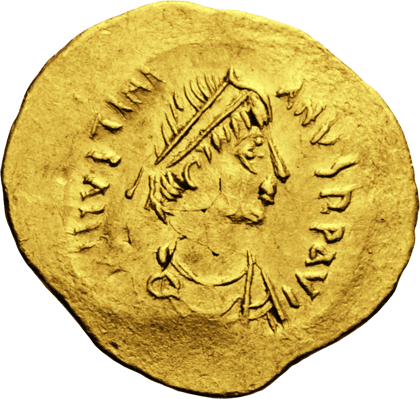
Denarius, antoninianus, follis and solidus at the same scale
Three sizes are called follis here: about 27 mm in the tetrarchy, 20 mm under Constantine and his sons, 28 mm under Justinian.
 TremissisJustinian I
16 mm
TremissisJustinian I
16 mm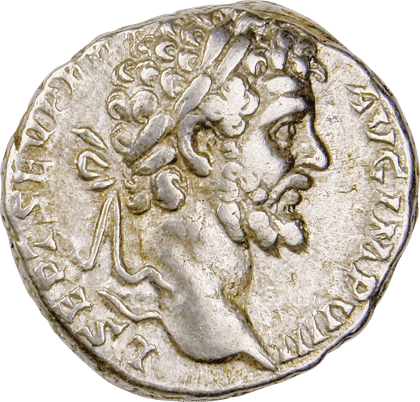 DenariusSeptimius Severus
c. 18 mm
DenariusSeptimius Severus
c. 18 mm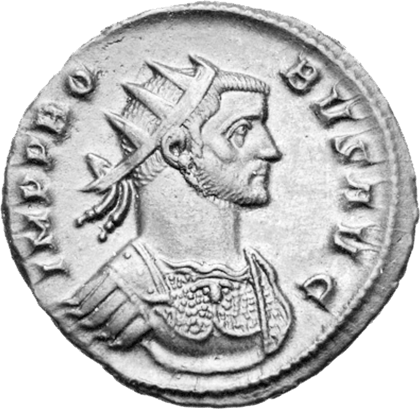 AntoninianusProbus
18 mmthis page
AntoninianusProbus
18 mmthis page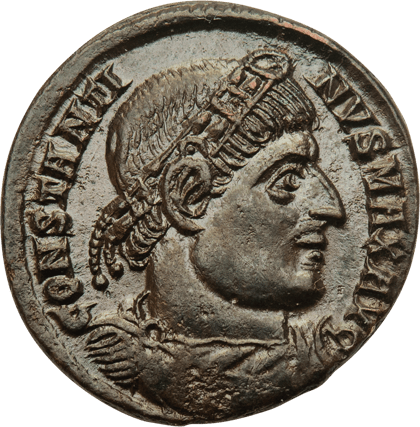 FollisConstantine I
20 mm
FollisConstantine I
20 mm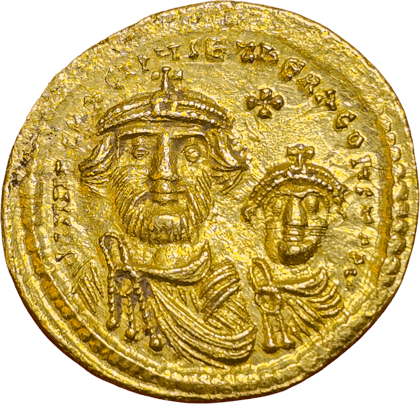 SolidusHeraclius
20 mm
SolidusHeraclius
20 mm 1 eurofor comparison
23.25 mm
1 eurofor comparison
23.25 mm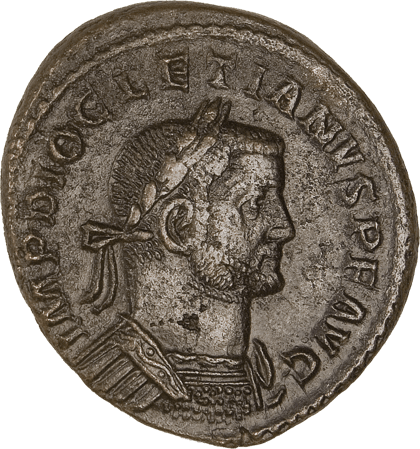 FollisDiocletian
27 mm
FollisDiocletian
27 mm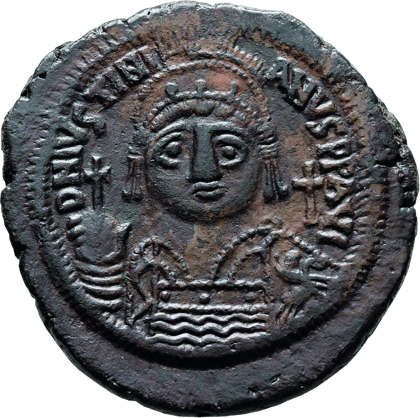 FollisJustinian I
28 mm
FollisJustinian I
28 mmWhere it belongs
31 originals from about 1,100 years
Each piece stands at the years of its ruler or of its type. The era of this piece is highlighted; choose another one to see its originals.
Crisis of the third century AD 235 to 284 · 8 originals
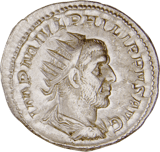 Antoninianus of Philip I the ArabAD 244 to 249
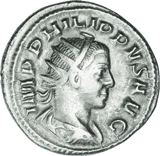 Antoninianus of Philip IIAD 247 to 249
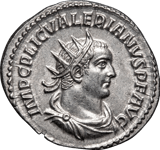 Antoninianus of Valerian IAD 253 to 260
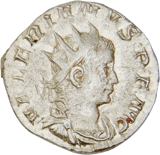 Antoninianus of Valerian IIAD 256 to 258
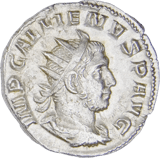 Antoninianus of GallienusAD 260 to 268
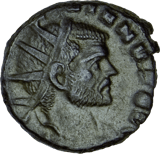 Antoninianus of Claudius II GothicusAD 268 to 270
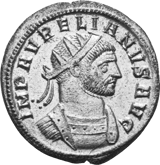 Antoninianus of AurelianAD 270 to 275
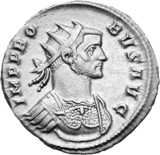 Antoninianus of ProbusAD 276 to 282this page

Keeping it
First things first: do not clean it.
The dark layer on bronze and the matte grey on silver are called patina. It has grown over centuries and protects the surface. Polishing it away takes that protection from the piece.
- Hold it by the edgeSkin oil can etch itself permanently into the surface. Take the piece by the rim between thumb and forefinger, over a soft surface.
- Store each piece on its own, and dryKeep each piece on its own in a dry place, in a capsule or an acid-free case. PVC sleeves do not belong there, they attack the surface.
- No agents, no polishing clothNo vinegar, no silver cloth, no ultrasound. According to the Bank of Canada Museum, almost any attempt at cleaning without a conservator leaves damage, mostly from abrasion.

Struck about 1,750 years ago.
Probus and his world are long gone. The piece has remained, with the traces of its circulation.
Antoninianus of Emperor Probus – a Witness to the Age of Germanic Invasions
Whoever holds genuine silver from the Roman imperial era in their hands is holding world history. This antoninianus was minted under Emperor Marcus Aurelius Probus, who ruled the Roman Empire from 276 to 282 AD – in an era when Germanic tribes pressed across the Rhine and the Empire fought for its borders. Roughly 1,750 years later, this ancient coin lies before you as an original: no recast, no modern commemorative issue, but real money from ancient Rome.
Emperor Probus: Soldier Emperor, Border Defender, Pioneer of Viticulture
Probus was born on 19 August 232 in Sirmium in the Pannonian Danube region, the son of a military tribune. His career was that of a soldier – already under Aurelian he defended Germania against the Alamanni. When Emperor Tacitus died in 276, his troops proclaimed him emperor.
What followed was a tremendous military effort. In 277, Probus first defeated the Goths and took the honorary title Gothicus Maximus. He then turned to Gaul, which Germanic tribes had invaded across the Rhine. He pushed the Franks back across the river, crossed the Neckar himself, and drove out the Alamanni and Longiones; he captured their leader Semno but granted him freedom. At the Ligys – likely today's Lech – he defeated the numerically superior Burgundians. For these successes he bore the title Germanicus Maximus. In 278 came victories over the Vandals in Illyricum and Raetia, celebrated with the coin legend Restitutor Illyrici. In Rome, he had the construction of the Aurelian Walls completed.
To this day, however, Probus is also famous for a more peaceful reason: ancient sources report that he allowed the inhabitants of several provinces – among them Gaul, Hispania, Britannia, and Pannonia – to own vines and produce wine. In many wine-growing regions north of the Alps, he is therefore regarded as a promoter of viticulture. In the autumn of 282, he was killed by discontented soldiers in his birthplace of Sirmium.
The Antoninianus – Leading Coin of the 3rd Century
The antoninianus was introduced as official currency around 214 AD under Caracalla and was nominally worth two denarii. Its ancient name has not survived; today's designation derives from Caracalla's actual name, Marcus Aurelius Antoninus. The most striking feature of the coin's design is the ruler's radiate crown – an old Roman symbol for double denominations.
Over the course of the century, weight and fineness gradually declined: around 238, the average silver content was still about 40 percent; by 270 it had fallen below 3 percent. Under Probus, the antoninianus nevertheless remained the dominant denomination – struck as billon, i.e. an alloy with a high copper or bronze content and a thin silver coating applied through the so-called boiling process. Only Diocletian's coinage reform replaced it. This piece is thus a tangible document of one of the first well-documented currency devaluations in history – and a very compelling argument for genuine tangible assets.
Key Facts at a Glance
Face value: Antoninianus, denomination of the Roman Empire
Ruler: Emperor Probus, 276–282 AD
Year of minting and mint: various
Material: silver (billon with silver coating), fineness various
Gross weight: approx. 3.9 g
Diameter: approx. 18 mm
Country / origin: Roman Empire
Condition: circulated coinage. These pieces are used currency and bear corresponding traces: darker patina, individual centring, nicks, wear, and in some cases weaker sections of the legend. This is precisely what gives them their appeal. Since the year of minting, mint, and reverse variant may vary, the piece delivered will differ from the image shown – you receive an original, not a mass-produced item. We therefore ask for your understanding that the image in the shop serves as an example and may differ individually from the delivered item in terms of appearance and condition due to historical circumstances.
Series: History
Obverse, Reverse, Mint Marks: Every Specimen a Unique Piece
The obverse shows the emperor's portrait with a radiate crown, often as a cuirassed bust, accompanied by legends such as IMP PROBVS AVG or IMP C M AVR PROBVS P F AVG. The reverses are remarkably diverse: from ADVENTVS AVG with the emperor on horseback above a captive to VICTORIA GERM with a trophy and bound Germanic prisoners, along with types such as SOLI INVICTO or CLEMENTIA TEMP. Probus had coins struck at many mints – including Rome, Lyon, Ticinum, Siscia, Serdica, Cyzicus, Antioch, and Tripolis. The small mint marks in the exergue, such as R and A separated by a crescent for Rome, served to control the emissions. For building a collection, these are a particularly exciting identifying feature, as coins from the Roman imperial era can be attributed to specific workshops and officinae through them.
For Collectors and Investors: Ancient Substance with the Character of a Tangible Asset
Ancient coins are collectors' items; their appeal lies in history, rarity, and individuality. At the same time, they embody the principle that precious metals have carried for millennia: value that does not rest on trust in governments, but lies in the metal itself. Gold is humanity's oldest currency and has outlived all paper currencies. Silver has accompanied humanity for just as long as a monetary, trade, and coinage metal – in many cultures a symbol of wealth and prestige.
Tangible asset: physical metal with intrinsic value, independent of fiat money
Proven inflation hedge: silver has long been known as a store of value
Solid crisis protection: precious metal retains its value when paper promises falter
Industrial demand: electronics, solar, and medical technology require silver, while supply remains limited
Generational value: silver is durable, retains its physical properties, and can be passed on
Tax-attractive: in Germany, profits from the sale of physical silver are generally tax-free after a minimum holding period of one year
An antoninianus of Probus is not a bar and not a standard product – it is a piece of monetary history that can be held, passed on, and told about.
In Comparison: Antoninianus, Denarius, and Modern Coinage
Compared to the older denarius, the antoninianus of the Probus era offers greater variety of designs and a larger coin image, but a lower fineness; denarii from the early imperial period are richer in silver but more conservative in their range of designs. Anyone who buys modern silver coins such as the Maple Leaf or Vienna Philharmonic today receives high fineness and a clearly stated weight – the ancient antoninianus, on the other hand, impresses with history, rarity, and distinctiveness. Together, both combine substance with the joy of collecting.
This makes the antoninianus an ideal entry point into the numismatics of the Roman imperial era: historically significant, visually characterful, and a gift that remains memorable for a long time.
Product depiction may differ from the final product.
