





Silver Denarius Empress Julia Domna (187-211 AD | Oriental Elegance in Rome)











- Genuine Original: around 1,800 years old
- Great Empress: Mother of the camp
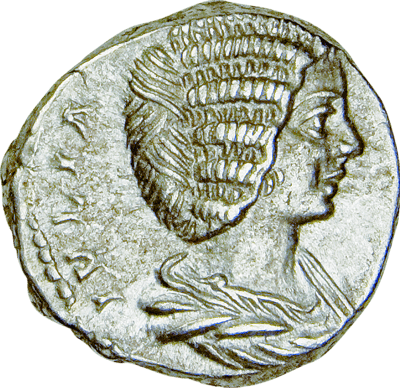
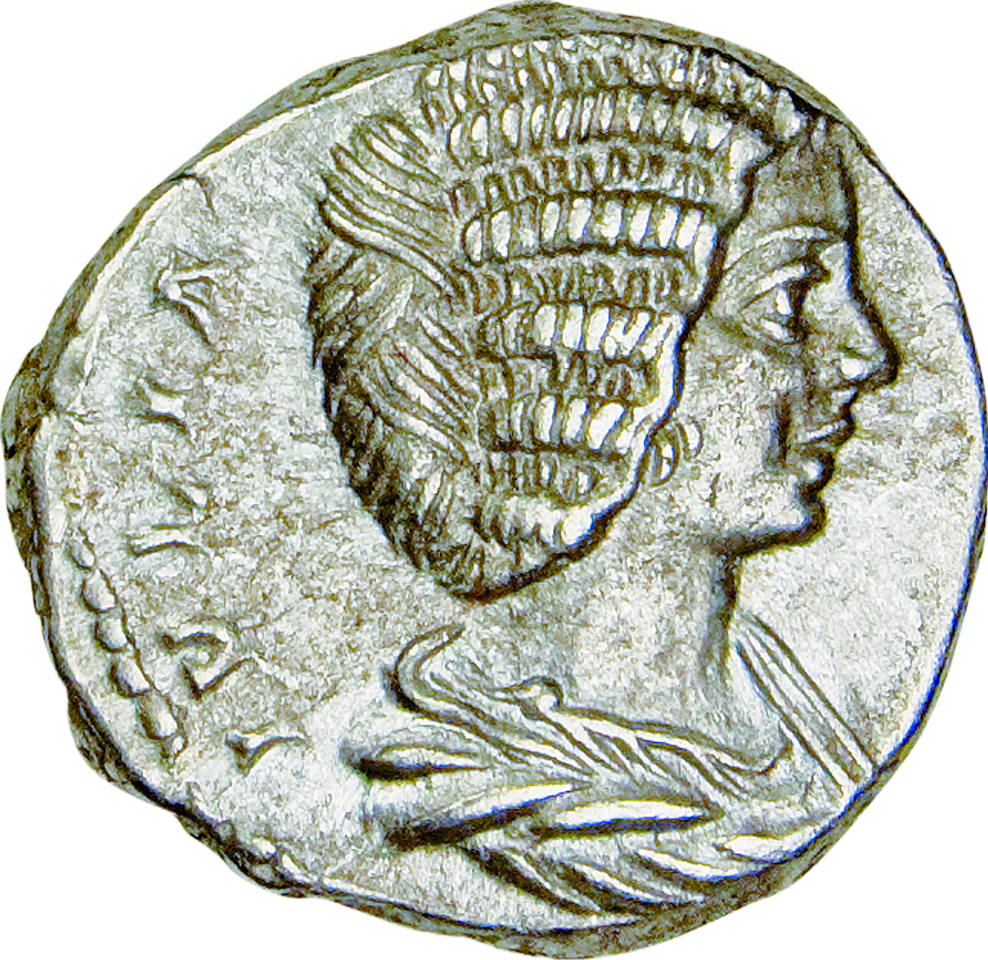
- Noble Portrait: Hair styled in fine waves
- Genuine OriginalOnce money in Rome, now a unique piece with its own patina
- Great EmpressNo empress of Rome has more honorary inscriptions attested
- Noble PortraitA hallmark of Roman portrait art of her time
 Price alert
  Share
Share
Ancient original · The Roman empire
Denarius of Julia DomnaAbout 1,800 years old.
In the 1st and 2nd centuries, 25 denarii were worth one gold aureus. It was about the same size as a denarius.
- Empress
- Julia DomnaAD 193 to 211
- Diameter
- 17 mm
- Weight
- c. 3.1 g
In the 1st and 2nd centuries, 25 denarii were worth one gold aureus. It was about the same size as a denarius.
- Empress
- Julia DomnaAD 193 to 211
- Diameter
- 17 mm
- Weight
- c. 3.1 g

The Roman empire · 27 BC to AD 235
The leading currency of the Mediterranean.
For more than two hundred years the denarius was the leading currency of the Mediterranean and paid for the army and administration of an empire reaching from Britain to the Euphrates. Under Augustus a legionary received, according to Tacitus, ten asses a day, about 225 denarii a year. On the reverse the emperor advertised himself: his victories, his piety, his wife.
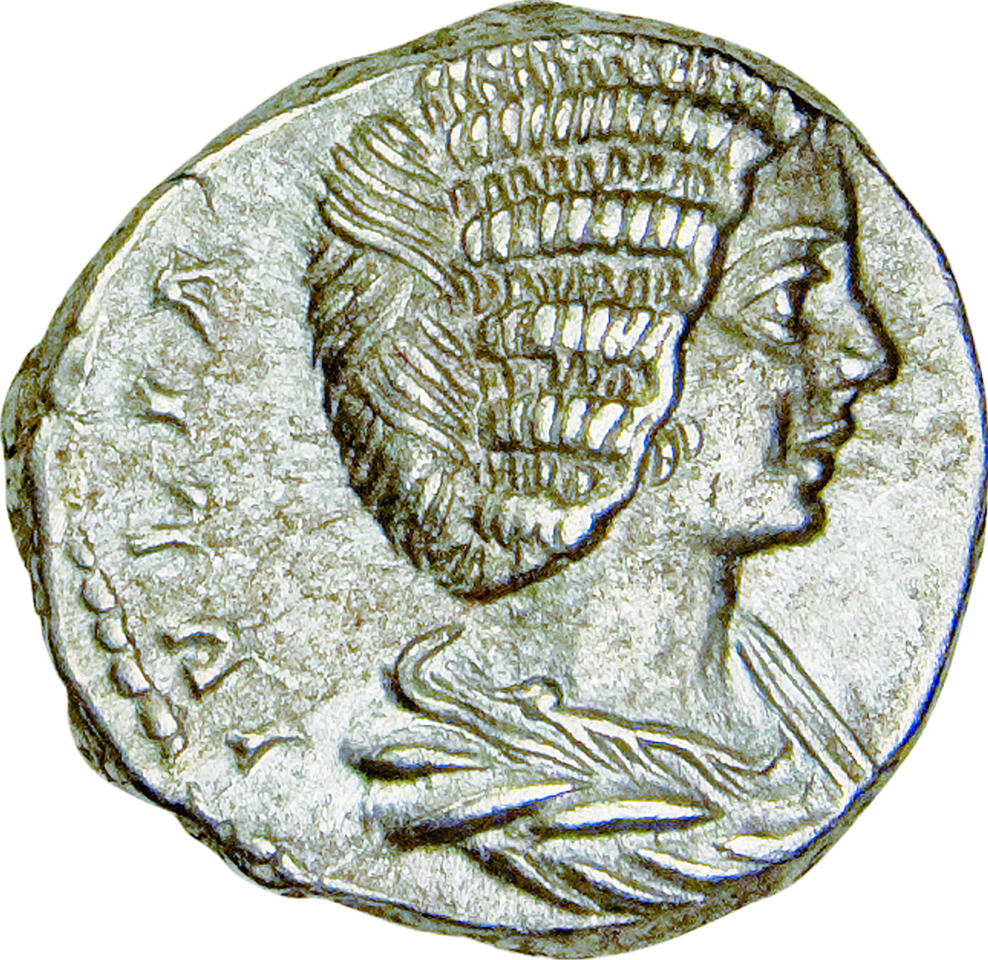
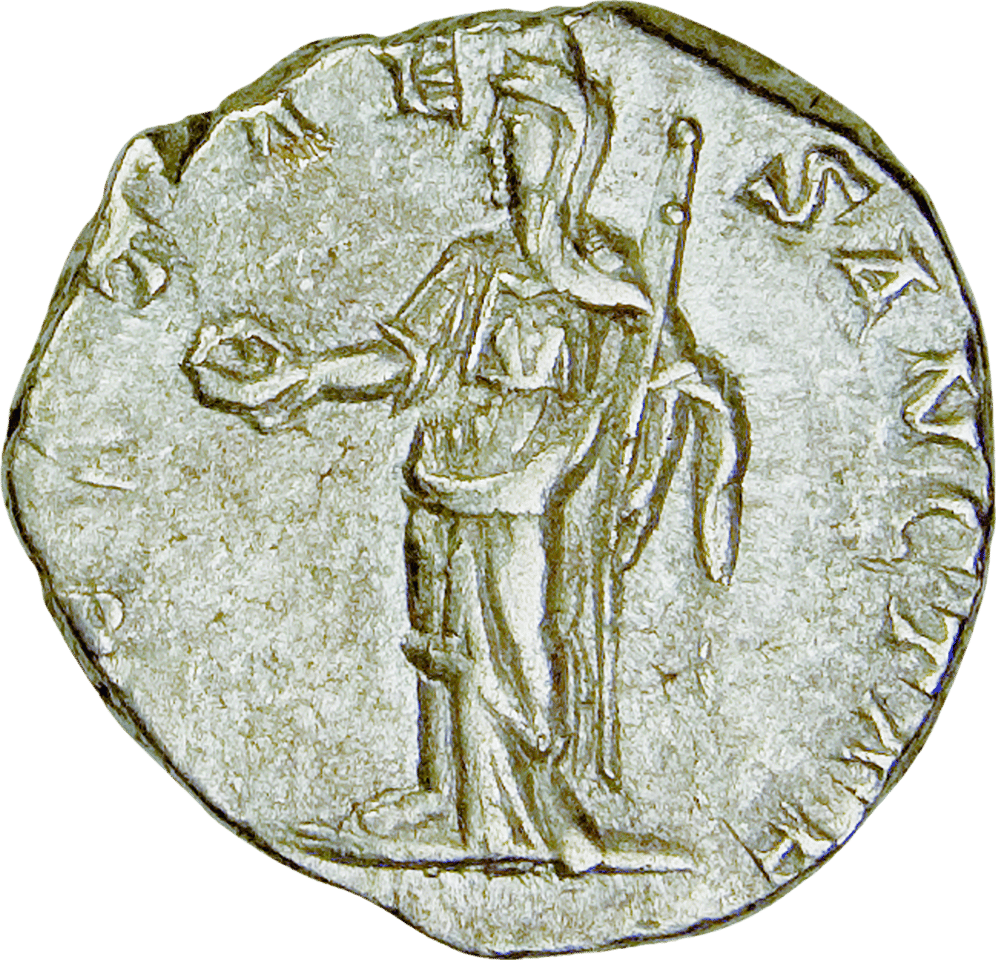
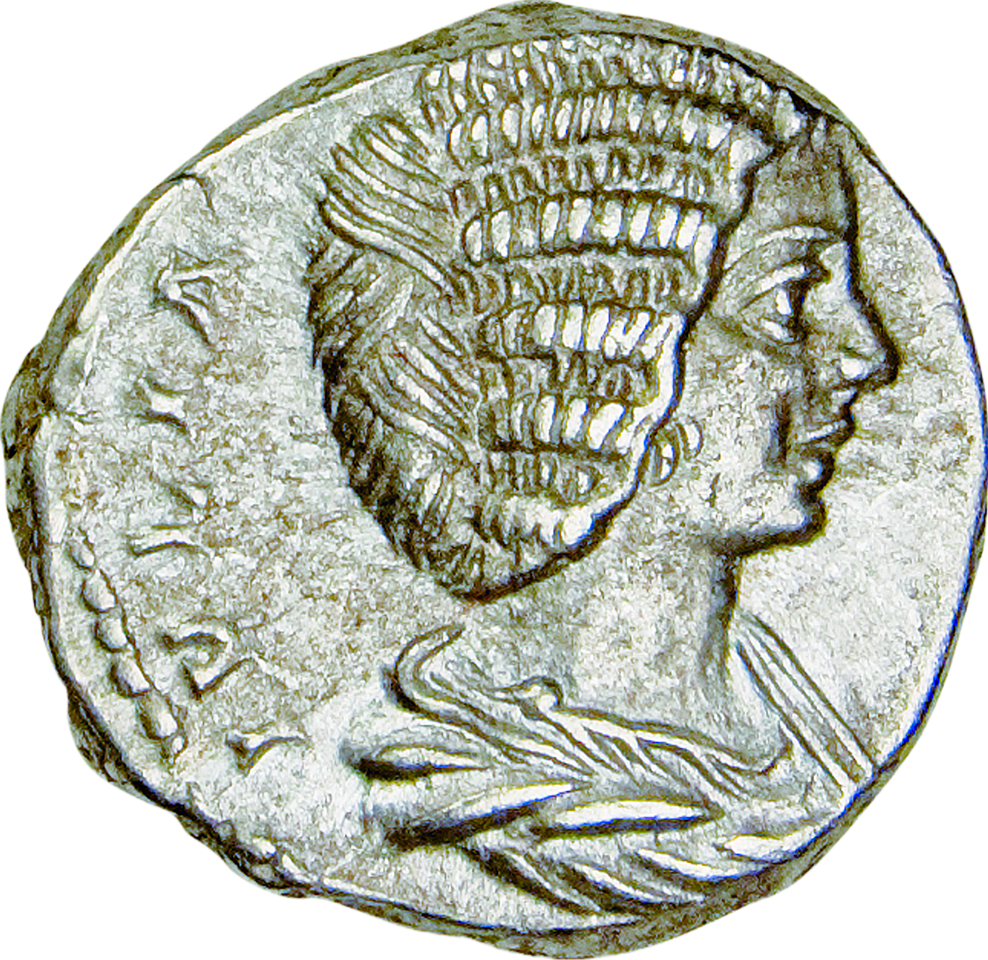
The picture shows an example. The piece you receive may differ in detail.
At the same scale
Denarius, antoninianus, follis and solidus at the same scale
Three sizes are called follis here: about 27 mm in the tetrarchy, 20 mm under Constantine and his sons, 28 mm under Justinian.
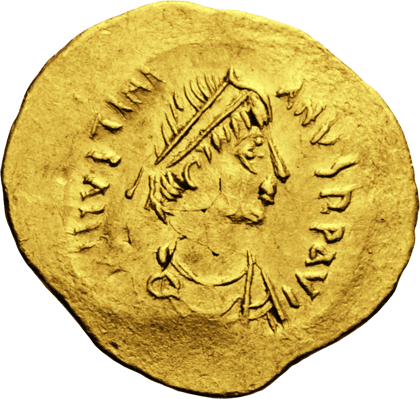 TremissisJustinian I
16 mm
TremissisJustinian I
16 mm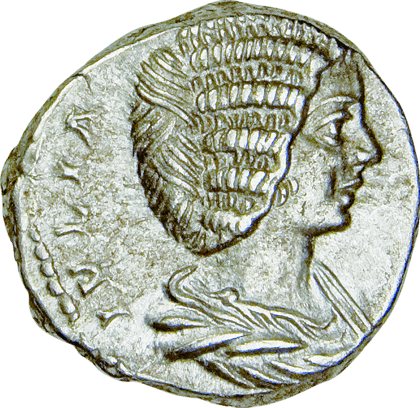 DenariusJulia Domna
17 mmthis page
DenariusJulia Domna
17 mmthis page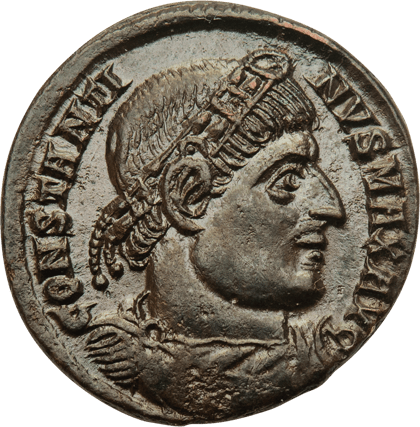 FollisConstantine I
20 mm
FollisConstantine I
20 mm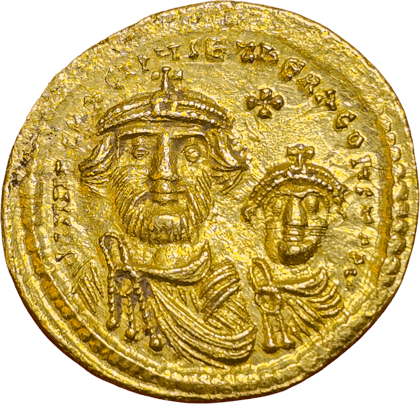 SolidusHeraclius
20 mm
SolidusHeraclius
20 mm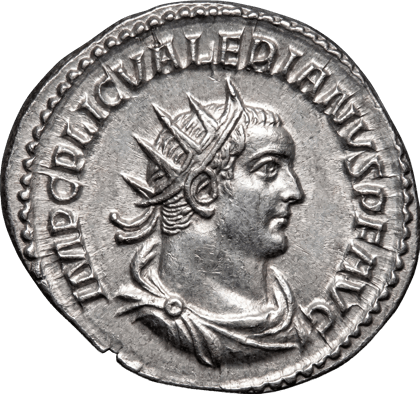 AntoninianusValerian I
21 to 23 mm
AntoninianusValerian I
21 to 23 mm 1 eurofor comparison
23.25 mm
1 eurofor comparison
23.25 mm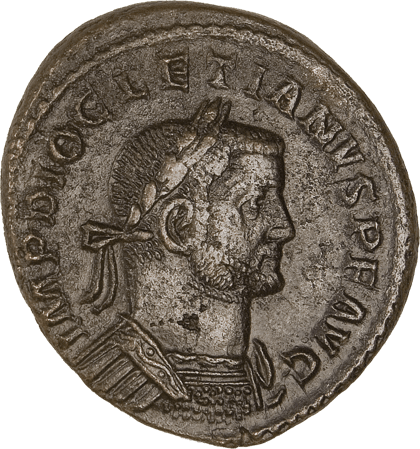 FollisDiocletian
27 mm
FollisDiocletian
27 mm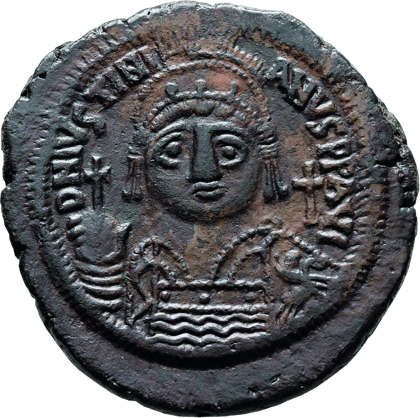 FollisJustinian I
28 mm
FollisJustinian I
28 mmWhere it belongs
31 originals from about 1,100 years
Each piece stands at the years of its ruler or of its type. The era of this piece is highlighted; choose another one to see its originals.
The Roman empire 27 BC to AD 235 · 5 originals
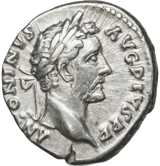 Denarius of Antoninus PiusAD 138 to 161
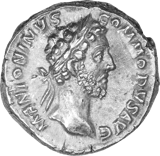 Denarius of CommodusAD 180 to 192
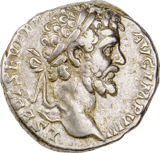 Denarius of Septimius SeverusAD 193 to 211
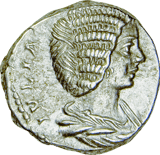 Denarius of Julia DomnaAD 193 to 211this page
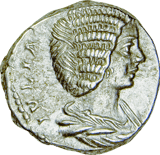 Denarius pair, Severus and Julia DomnaAD 193 to 211

Keeping it
First things first: do not clean it.
The dark layer on bronze and the matte grey on silver are called patina. It has grown over centuries and protects the surface. Polishing it away takes that protection from the piece.
- Hold it by the edgeSkin oil can etch itself permanently into the surface. Take the piece by the rim between thumb and forefinger, over a soft surface.
- Store each piece on its own, and dryKeep each piece on its own in a dry place, in a capsule or an acid-free case. PVC sleeves do not belong there, they attack the surface.
- No agents, no polishing clothNo vinegar, no silver cloth, no ultrasound. According to the Bank of Canada Museum, almost any attempt at cleaning without a conservator leaves damage, mostly from abrasion.

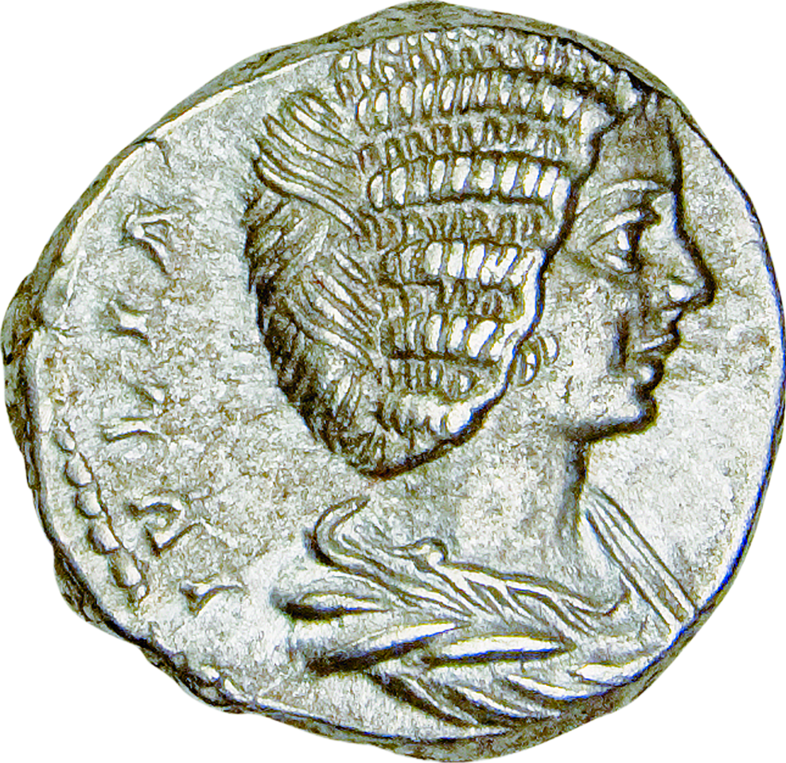
Struck about 1,800 years ago.
Julia Domna and her world are long gone. The piece has remained, with the traces of its circulation.
Silver Denarius of Empress Julia Domna – World History That Fits in the Palm of Your Hand
Some coins you simply buy. Others you take in your hand and can practically feel the rumble of an entire era. This denarius of Empress Julia Domna from the Roman Empire undoubtedly belongs to the second category. It was minted in an age when a woman from Syrian Emesa rose to become the most influential woman in the Empire – and when silver was the metal used to pay legions, settle taxes, and keep trade routes running from Britain to the Euphrates. Roughly 1,800 years later, this very metal lies once again in a hand: yours.
Julia Domna: Oriental Wisdom for Rome
Julia Domna came from a very wealthy, highly respected family in the Syrian city of Emesa, present-day Homs; her father held the hereditary office of high priest of the sun god Elagabal there. In the year 187, she married the future emperor Septimius Severus in Lugdunum – present-day Lyon – who was at the time governor of Gallia Lugdunensis. According to tradition, her horoscope was decisive: it foretold that her husband would become a ruler.
1,993 years of distance change nothing about the weight of this biography. When Severus seized imperial power in 193, Julia became Augusta. She accompanied him on campaigns as far as Britain, held the honorary title mater castrorum – "mother of the camp" – from 195/196 onward, and gathered a circle of writers and thinkers around her; the author Flavius Philostratus simply called her a philosopher. Under her son Caracalla, she additionally received the title "Mother of the Senate and of the Fatherland," and was the first woman ever to bear the epithet Pia Felix. No other empress of the Roman imperial era has more honorary inscriptions attested. This is the history that resonates within this small piece of silver.
Obverse, Reverse, Character
The obverse shows the draped bust of the empress facing right, surrounded by the legend IVLIA AVGVSTA. Her strictly parted hairstyle, arranged in dense waves, remains unmistakable – a hallmark of Severan portrait art. The reverse bears a deity with a programmatic inscription; the example shown here displays VESTAE SANCTAE with a standing Vesta, sacrificial bowl, and scepter. Remarkably, the Temple of Vesta, rebuilt after a fire, appeared exclusively on Julia's coins, not on those of the emperor.
As this is genuine ancient circulating coinage, the year of issue, mint, and reverse design vary. Typical reverse designs for this empress include:
VESTAE SANCTAE – Vesta, guardian of the sacred flame
PIETAS – Piety, making an offering at the altar
VENVS FELIX – Venus as a symbol of dynastic fortune
FORTVNAE FELICI – Fortuna with cornucopia and rudder
Technical Specifications at a Glance
Face value: Denarius (Lat. denarius), country of origin Roman Empire
Precious metal: Silver, fineness varies (ancient alloy)
Gross weight: approx. 3.1 g
Diameter: approx. 17 mm
Year of issue/mint: varies
Condition: These pieces are circulated currency and bear corresponding traces: darker patina, individual centering, nicks, wear, and in some cases weaker portions of the legend. This is precisely what constitutes their appeal. Since the year of issue, mint, and reverse variant may vary, the specific piece delivered will differ from the image shown – you receive an original, not a mass-produced item. We therefore ask for your understanding that the image in the shop serves as an example and may differ individually from the delivered item in terms of appearance and condition due to historical circumstances.
Investment purpose: Collector's item · shipped as insured value shipment
A note on classification: the denarius was Rome's leading coin for centuries. Under Septimius Severus, its silver content, depending on issue and mint, was roughly in the range of about 50 percent – historical analyses cite figures between approximately 45 and just under 60 percent. The exact fineness of ancient pieces varies from batch to batch; it is precisely this irregularity that gives them their charm. Each piece is a unique specimen with its own patina, its own centering, its own history.
Why Ancient Silver Appeals to Collectors and Investors
Silver has a long tradition as a monetary metal and has been valued in many cultures as a symbol of wealth and prestige. This denarius illustrates that like almost no other object: it was once real money, not a collector's item. Anyone thinking about silver coins today associates them with wealth preservation, diversification, and a real, tangible counter-value – unlike fiat money, which relies solely on trust in its issuers.
Add to this the metal's role in the present day. Silver is used in electronics, solar, and medical technology, is limited in availability, highly liquid, and tradable worldwide as a commodity. This dual nature of industrial demand and monetary tradition is a key reason why silver is valued as an inflation hedge and as crisis protection. Small silver units are also well suited as a medium of exchange for manageable transactions – a concept the Romans already understood very practically.
The denarius survived civil wars, dynastic changes, and the fall of an empire. The silver within it is still here. The paper money of that time is not.
Comparison: Ancient Denarius or Modern Bullion Coin?
Modern silver bullion coins score points with precisely defined fine weight, high standardization, and broad tradability. An ancient denarius plays in a different league: its value derives from metal and history, from rarity, condition, and design. This mintage cannot be reissued – Rome's dies have been silent for centuries, and every year pieces disappear irretrievably into museums or private collections. For newcomers to antiquity, Julia Domna in particular is an ideal starting point: her denarii are iconic, easily identifiable, and tell one of the most compelling women's stories of antiquity.
For tax purposes in Germany: profits from the sale of silver are generally tax-free, provided the minimum holding period of one year is observed. This is an aspect that makes silver additionally interesting as a building block of a long-term wealth structure passed down through generations. Please note that this does not constitute tax advice.
Who This Denarius Is Made For
Collectors of Roman coins seeking an authentic testament to the Severan dynasty
Newcomers wishing to combine antiquity and precious metal in a single object
Investors looking to add a historically charged, one-of-a-kind piece to their silver holdings
Anyone seeking a gift with genuine substance and a story spanning 18 centuries
Secure a piece of Rome: minted for an empress who turned wisdom into a form of power – and who lives on in silver to this day.
Product depiction may differ from the final product.
