





Gold Zecchino Republic of Venice (1329-1797 | Witness to a Trading Power)
- Genuine Original: with certificate
- Proud Design: Mark and the Doge
- Ducat Gold: about 23⅔ karat
- Genuine OriginalGenuine trade coin that paid for goods centuries ago
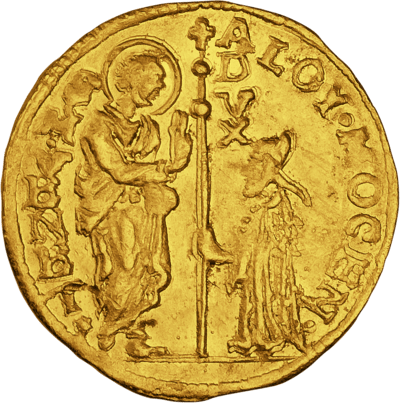
- Proud DesignMark presents the kneeling Doge with the crusader flag
- Ducat GoldFineness of about 986/1000, stable for centuries











- Genuine Original: with certificate
- Proud Design: Mark and the Doge
- Ducat Gold: about 23⅔ karat
 Price alert
  Share
Share
Republic of Venice
The zecchino.One image for centuries.
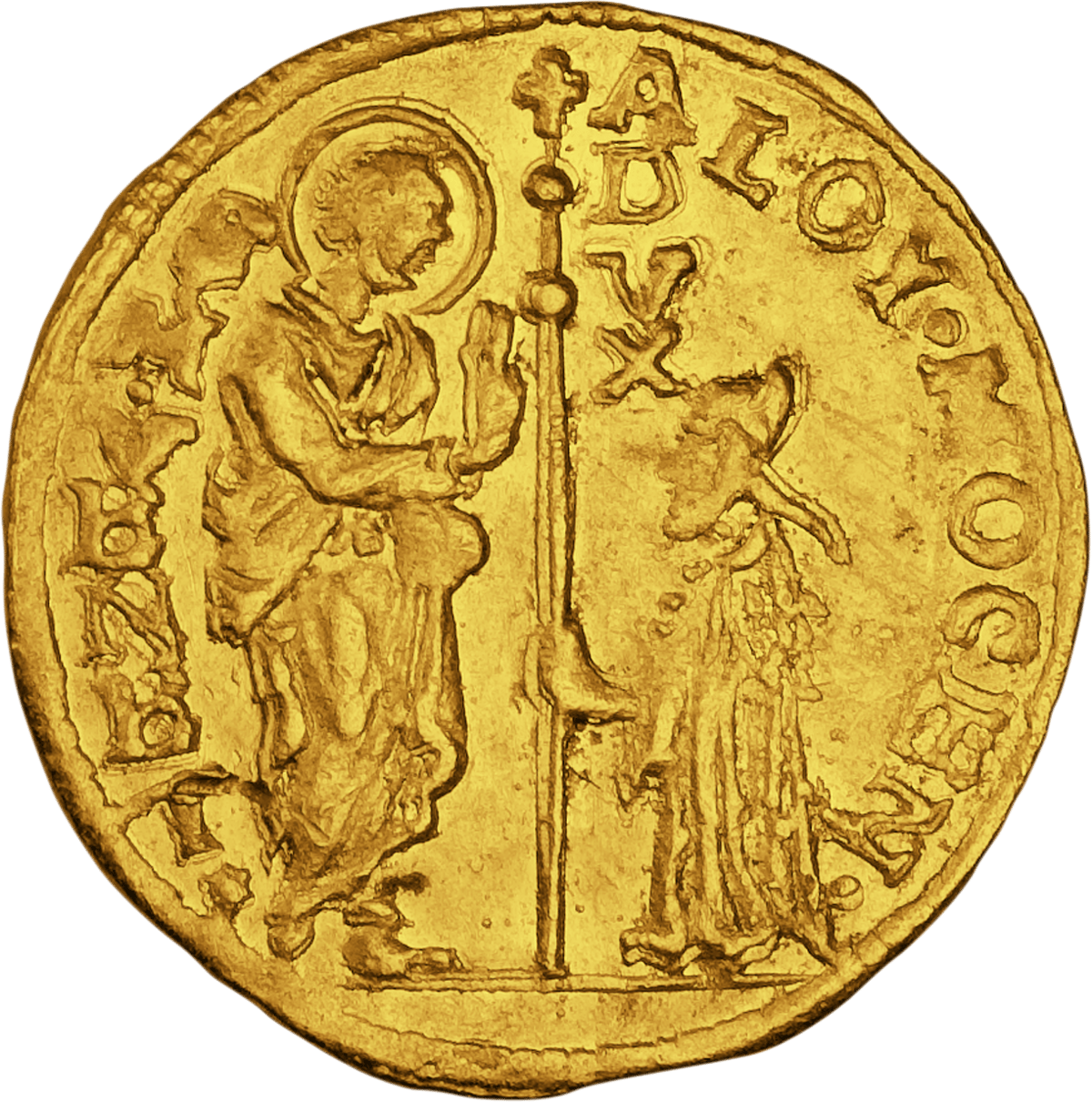
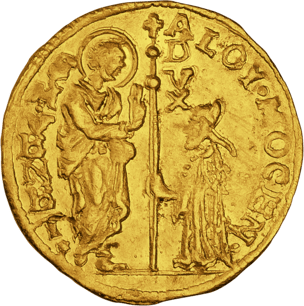
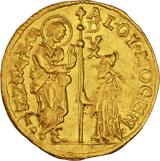
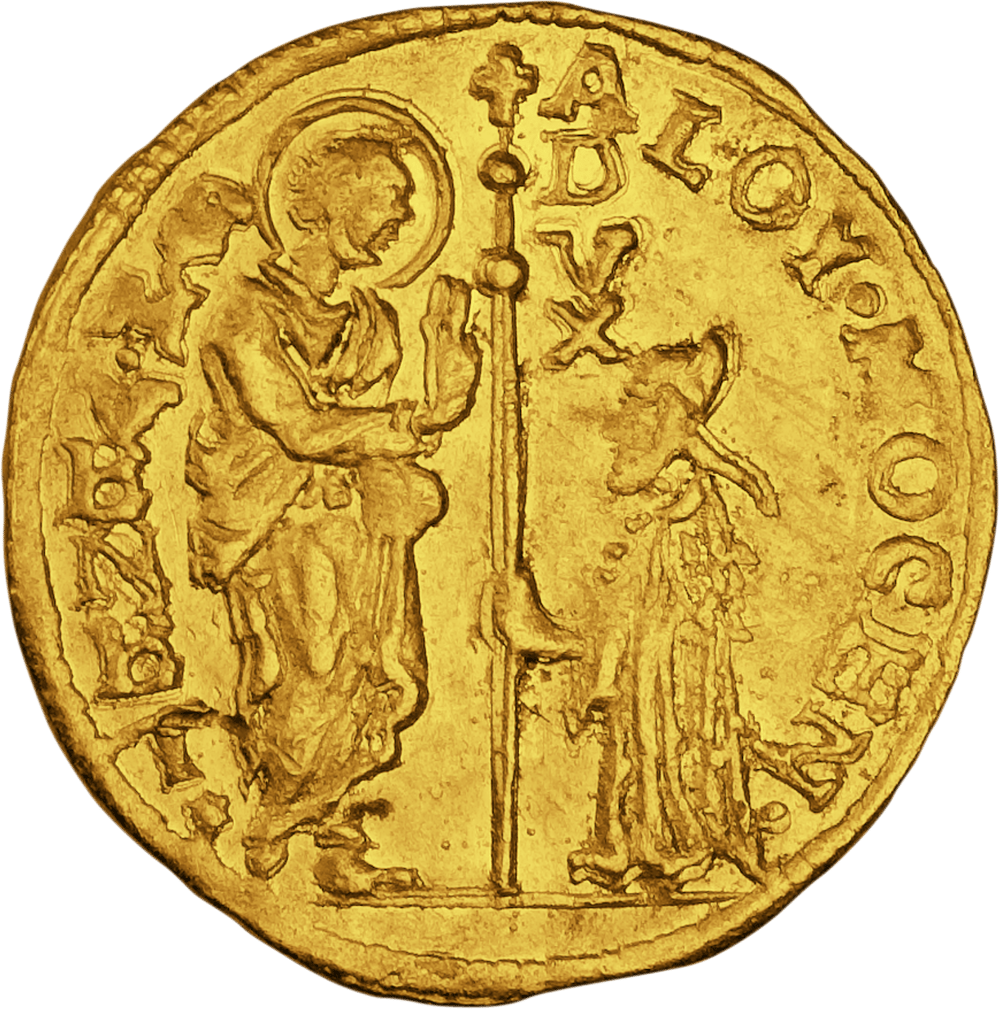
The doge kneels before Saint Mark, who hands him a banner. The ducat of Venice bore this image until the end of the republic in 1797, but never a date.
- Period
- 1329 to 1797
- Coin
- Zecchino, gold
- Weight
- 3.5 g
The doge kneels before Saint Mark, who hands him a banner. The ducat of Venice bore this image until the end of the republic in 1797, but never a date.
- Period
- 1329 to 1797
- Coin
- Zecchino, gold
- Weight
- 3.5 g

The other side
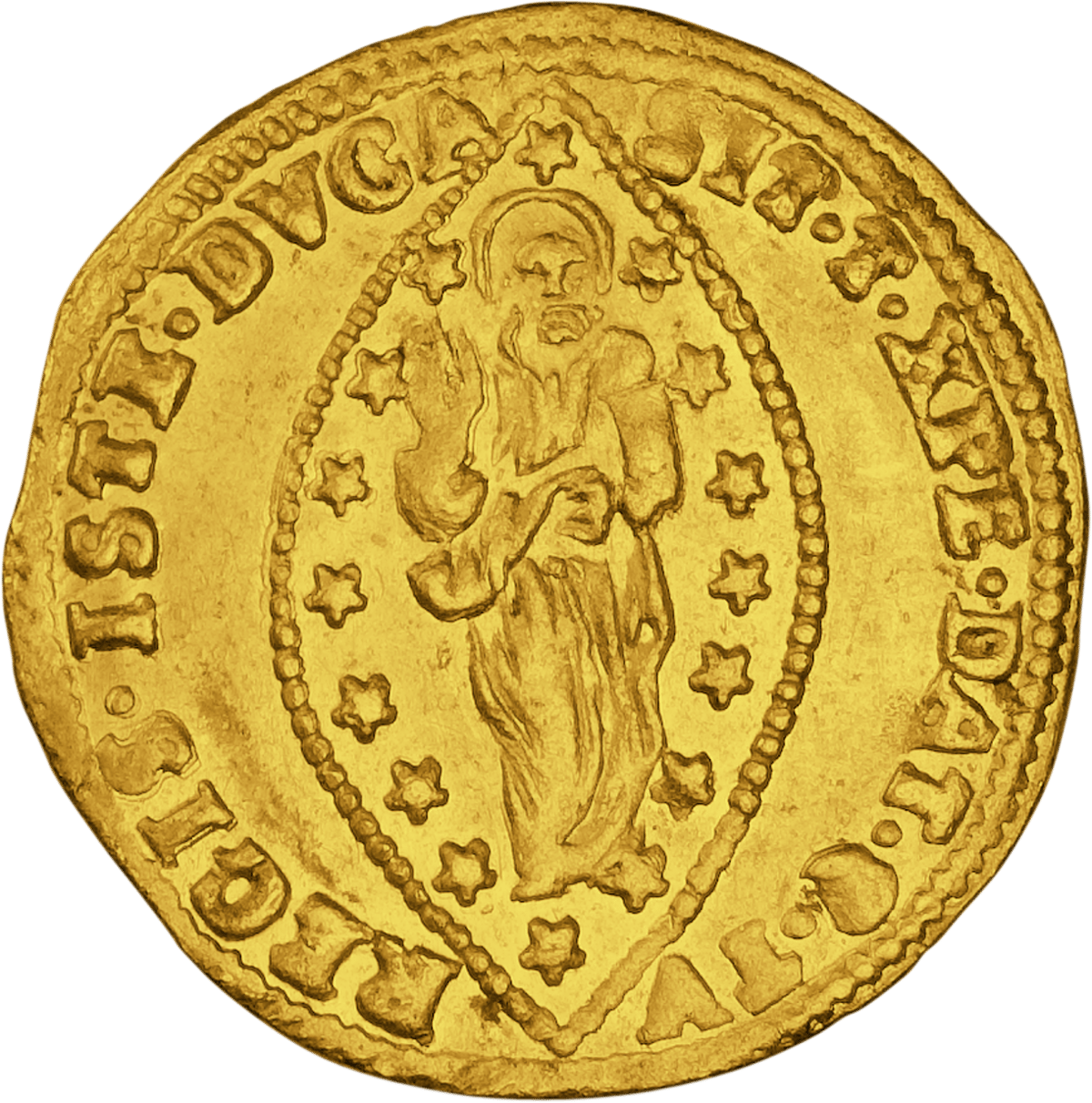
Christ on the back.
The other side shows Christ in an oval frame of stars. Venice introduced the gold ducat in 1284 under the doge Giovanni Dandolo. It held about 3.5 grams of almost pure gold, and that hardly changed until 1797.
The ducat took the name zecchino from the Zecca, the mint of Venice.


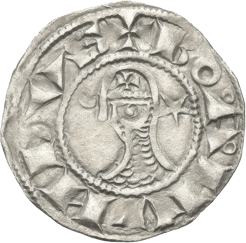
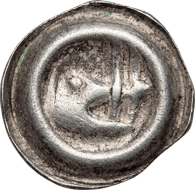
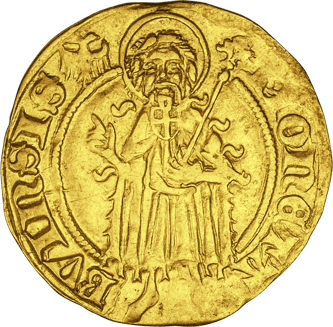
Size comparison
Seven coins, one scale.
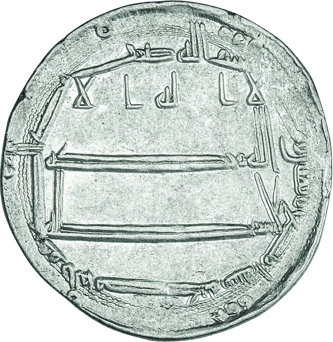
All seven lie on the table in their true proportions, the oldest on the left. Your piece measures 21 mm.
- Cash coin24 mm · 2.6 g
- Dirham23 mm · 2.9 g
- Denier17 mm · 0.83 g
- Bracteate13.5 mm · 0.2 g
- Zecchino21 mm · 3.5 gthis page
- Gold gulden23 mm · 3.9 g
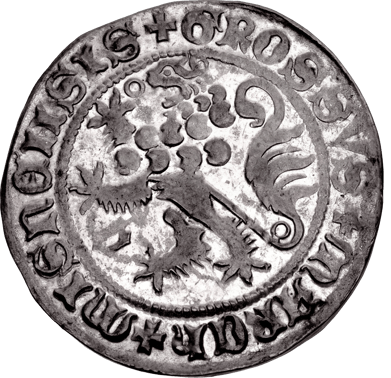
- Prince’s groschen27 mm · 2.85 g
The heaviest piece is not the widest: the gold gulden weighs almost twenty times as much as the bracteate and is still narrower than the groschen. Gold is almost twice as dense as silver.
Timeline
From 621 to 1797.
Each bar shows the years from which the pieces of a type come. For the zecchino that is 468 years, for the prince’s groschen only 13.
 Tang dynasty621 to 907
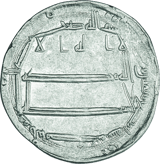 Abbasid caliphate8th and 9th centuries
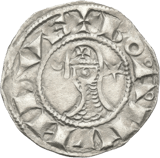 Principality of Antioch1163 to 1232
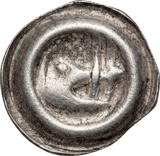 Town of Schweidnitz14th and 15th centuries
 Republic of Venice1329 to 1797 · Your piece
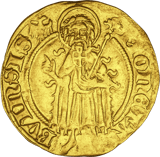 Electorate of Cologne1371 to 1463
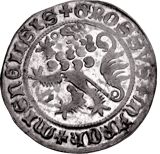 House of Wettin1393 to 1406

Seven coins.Over eleven hundred years.
From 621 to 1797 and from China to the Rhine: every one of these coins was money that people paid with.
Zecchini of the Republic of Venice: Trade Money That Wrote World History
Design: The obverse shows the Evangelist Mark, patron saint of the lagoon city, handing the banner of the cross to the kneeling Doge – flanking him vertically are the legends "S·M·VENET" and the name of the reigning Doge. The reverse depicts Christ giving a blessing within a star-studded mandorla, surrounded by the motto "SIT TIBI CHRISTE DATVS QVEM TV REGIS ISTE DVCATVS" – "To you, Christ, be this duchy given, which you rule." A design programme that remained virtually unchanged for over half a millennium: medieval imagery, dignified, unmistakable.
Material / Fineness: Struck from gold in classic ducat quality. For centuries, the Venetian ducat was minted at approximately 986/1000 fineness (23⅔ carats) – a fineness that earned the metal the nickname "ducat gold." Since the year of issue, Doge, and die variety vary, the data sheet lists the fineness as "various." Gross weight: approximately 3.5 g.
Mint: Various. Struck at the Zecca, the state mint of the Serenissima located near St. Mark's Square – the very mint that gave the zecchino its name.
Diameter: 21 mm
Face value / Country of origin: Zecchino, Republic of Venice
Condition: Circulated item – genuine, circulated currency with corresponding traces of wear. The photo in the shop may differ from the delivered specimen.
Scope of delivery: with certificate of authenticity, shipped as insured mail
There are coins one collects. And there are coins one reads. The Venetian zecchino – also known in German-speaking regions as the Zechine or simply the Venetian ducat – belongs to the second category. Whoever holds one between their fingers is not holding a mere keepsake, but the working capital of a world power: the money used to pay for pepper, silk, glass, and galleys when Venice was the hub between the Occident and the Orient.
From 1329 to 1797: One City, One Coin, One Constant
The Venetian ducat was first struck in 1284 – a confident answer to the Florentine gold florin. What followed is unparalleled in monetary history: until the fall of the Republic in 1797, the coin's design and fine weight remained practically untouched. Over five hundred years. Across dozens of Doges, from Francesco Dandolo to Ludovico Manin, the last officeholder. No devaluation, no debasement, no "reform." This is precisely why the zecchino was regarded as the world currency of trade in the Middle Ages and early modern period – accepted equally in Constantinople and Alexandria, in the Levant as well as at the trading fairs of Central Europe.
For over five centuries, Venice never withdrew a single gram from its gold. Fiat currencies rarely keep that promise for even five decades.
An Original, Not a Mass Product
These pieces are circulated items – and they look the part. Darker patina, individual centring, small nicks, wear, and in places weaker legend details: these are not flaws but biography. Every trace stems from hands that, centuries ago, settled goods, cargo, or debts with these coins. Since the year of minting, mint, and reverse variant may vary, the delivered specimen will differ from the image shown. Please understand the photo in the shop explicitly as a representative image: appearance, exact weight, and condition vary from piece to piece for historical reasons. You are acquiring an original.
Why Historical Gold Belongs in a Well-Considered Tangible Asset Structure
Gold is humanity's oldest currency. It has outlasted empires, reforms, and paper money experiments, never reaching a value of zero, because its worth is not based on a promise but on physical properties and scarce availability. The fact that central banks themselves rank among the largest gold holders in the world speaks volumes about trust in self-printed money. For private holders of tangible assets, the calculation is the same: gold coins are tradable worldwide, highly liquid, divisible, and can be stored discreetly.
Inflation hedge: Gold preserves purchasing power where paper currencies lose it.
Crisis protection: A means of payment that requires no counterparty, no account, and no server operation.
Tax treatment: In Germany, profits from the sale of physical gold are generally tax-free, provided a minimum holding period of one year has been observed.
Generational value: A piece that has been passed down since the 14th century – and can continue to be passed down.
Convenient denomination: A gross weight of approximately 3.5 g means a manageable entry amount per coin.
The Zecchino in Comparison: Where It Excels, Where Other Coins Are Stronger
Next to modern bullion coins such as the Krugerrand or the Vienna Philharmonic, the zecchino appears almost delicate, and indeed it plays in a different league: anyone focused purely on the tightest possible premium over the fine gold price will find standardised bars or ounce coins objectively cheaper. The Austrian ducat modelled on the 1915 issue, in turn, offers nearly identical weight and ducat gold in Brilliant Uncirculated quality – but it is a modern restrike without its own history of circulation. And the Florentine gold florin, the great medieval rival, is significantly harder to source today.
The strength of this offer lies elsewhere. You receive precious metal and a datable testament to European trading history in a single object – at conditions oriented toward the gold value, since thanks to its enormous distribution, the zecchino does not, even today, count among the rarities. For newcomers to historical gold coins, this represents a remarkably elegant first step; experienced collectors can use it to round out their collection of Italian states, trade coins, or medieval coinage. As a counterpart to the Venetian silver coins of that era – such as the Grosso – it also offers an appealing collecting focus: gold as the elder sibling to small silver, both from the same Zecca, both from the same city on stilts.
Anyone seeking substance that has been shining since trade itself began will find a piece of it here: tangible, unmistakable, and, more than 200 years after the end of the Republic of Venice, still solid gold.
Product depiction may differ from the final product.
