





Bronze Cash Coin Emperor Tang Gaozu (ca. 618-907 AD | Ancient China)
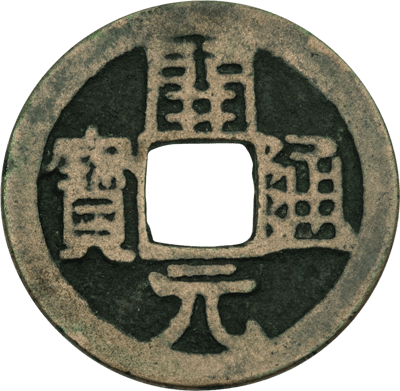
- Turning Point: new currency system from 621
- Master Script: by Ouyang Xun
- Genuine Original: over 1,100 years old
- Turning PointFrom 621, the state set the value, not the weight
- Master ScriptFirst coin ever designed by a famous calligrapher
- Genuine OriginalCast, circulated, each piece unique with patina
Unfortunately, this item is currently out of stock. We will be happy to send you an email as soon as this product becomes available again.
- Turning Point: new currency system from 621
- Master Script: by Ouyang Xun
- Genuine Original: over 1,100 years old
 Price alert
 Share

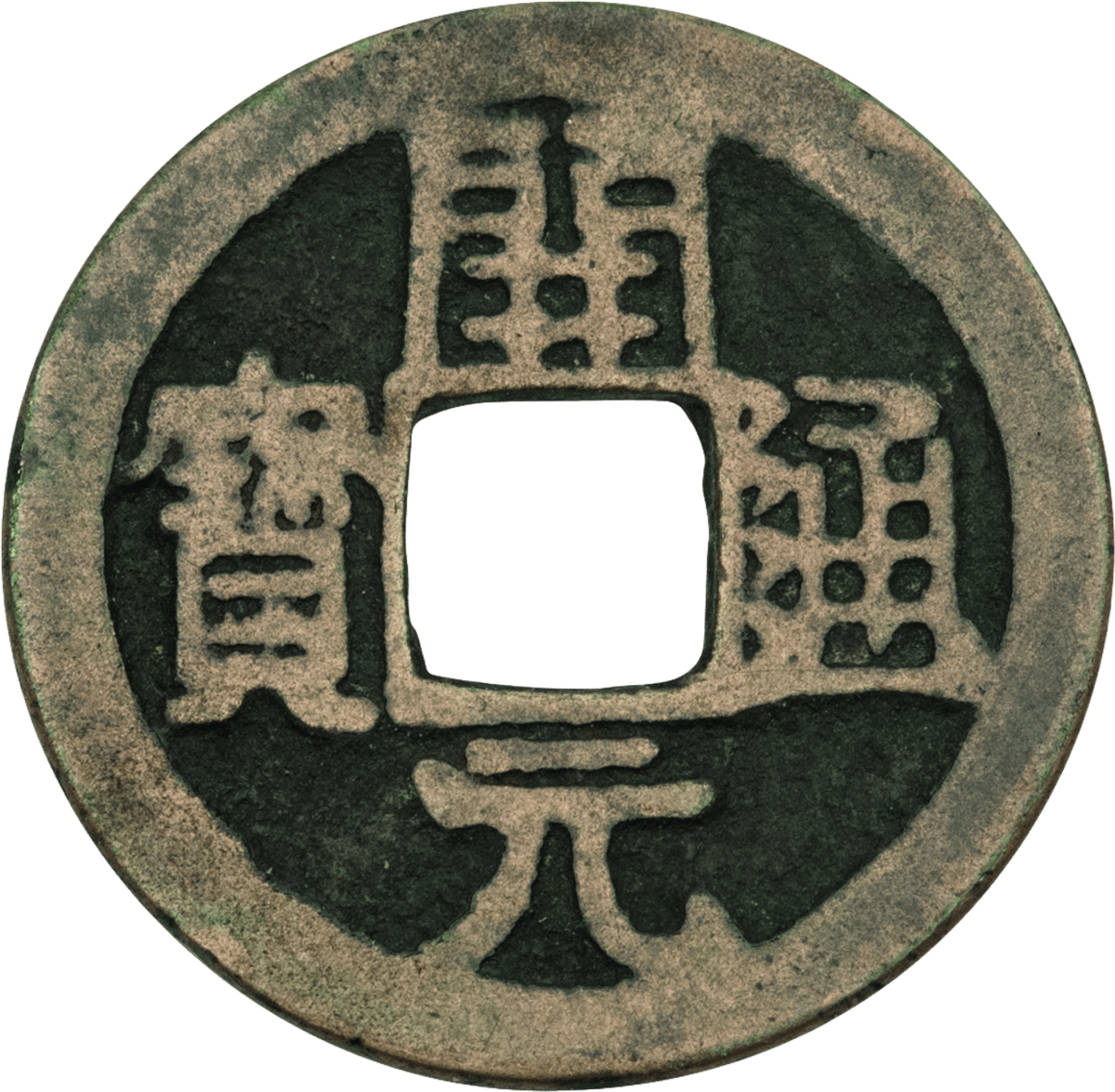
Tang dynasty
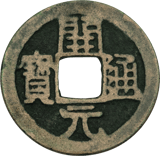
The cash coin.Cast in bronze.
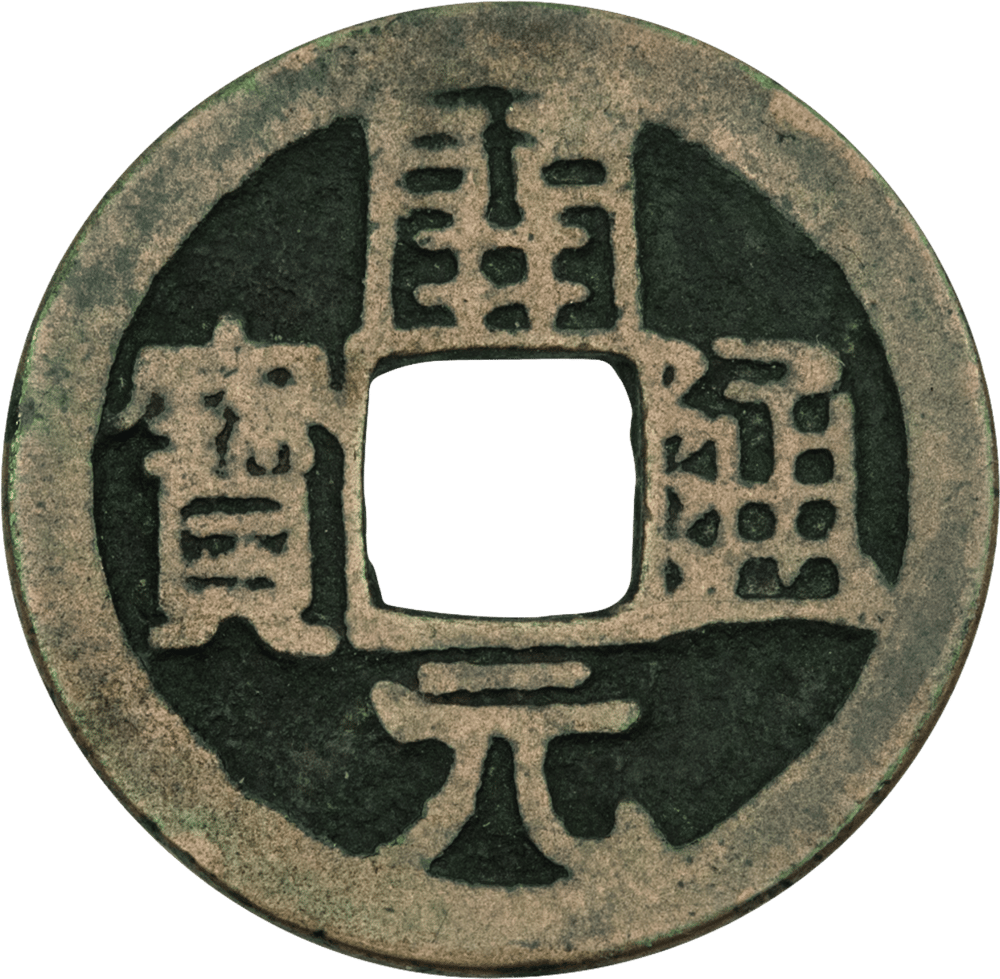
The four characters Kaiyuan Tongbao are the work of Ouyang Xun, one of China’s most famous calligraphers. Never before had a famous calligrapher written the characters of a Chinese coin.
- Age
- over 1,100 years
- Coin
- Cash, bronze
- Weight
- 2.6 g
The four characters Kaiyuan Tongbao are the work of Ouyang Xun, one of China’s most famous calligraphers. Never before had a famous calligrapher written the characters of a Chinese coin.
- Age
- over 1,100 years
- Coin
- Cash, bronze
- Weight
- 2.6 g
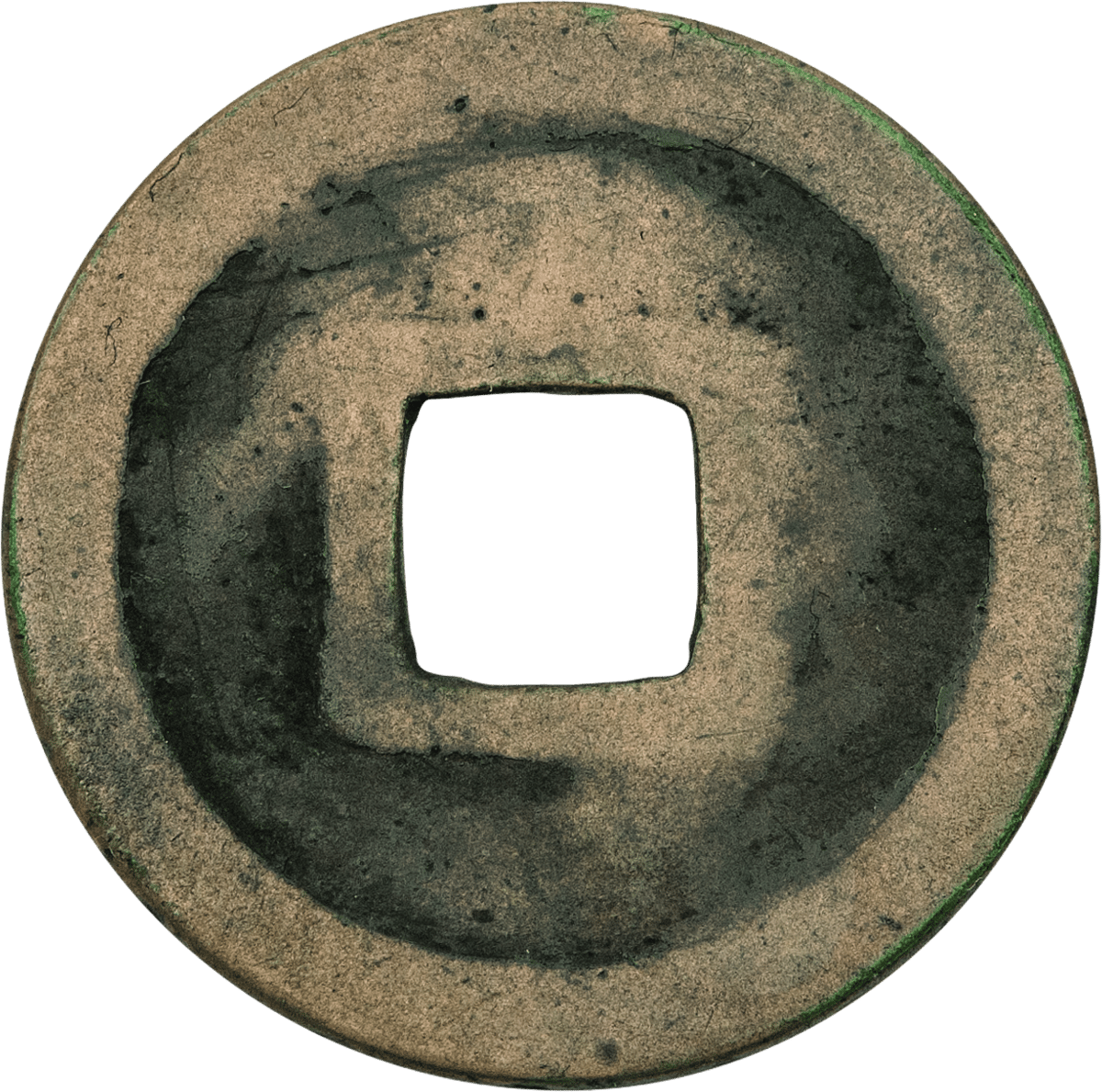
The other side
Cast, not struck.
China cast its money from bronze in moulds, and the square hole let a thousand coins be strung on a cord. Emperor Gaozu introduced the Kaiyuan Tongbao in 621 and fixed its weight at one tenth of a liang. It was cast until 907.
Some pieces carry a small crescent on the reverse. Today it is mostly seen as a quality mark of the foundry.

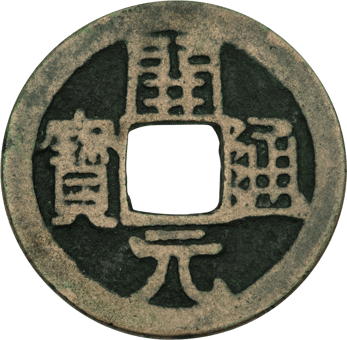
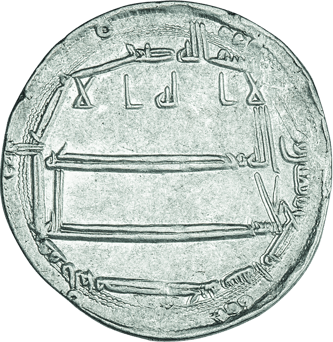
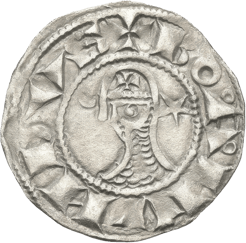
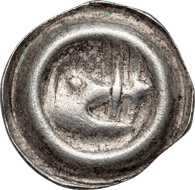
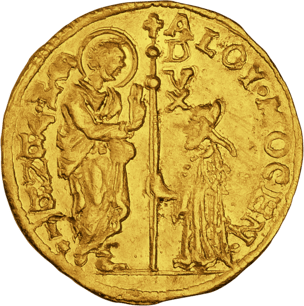
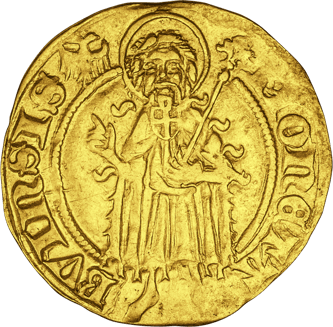
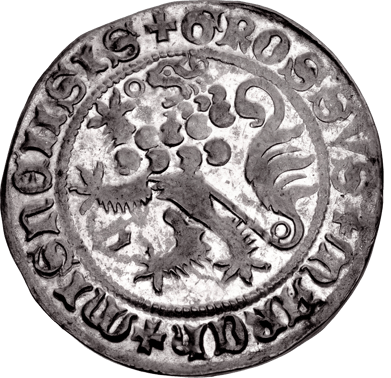
Size comparison
Seven coins, one scale.
All seven lie on the table in their true proportions, the oldest on the left. Your piece measures 24 mm.
- Cash coin24 mm · 2.6 gthis page
- Dirham23 mm · 2.9 g
- Denier17 mm · 0.83 g
- Bracteate13.5 mm · 0.2 g
- Zecchino21 mm · 3.5 g
- Gold gulden23 mm · 3.9 g
- Prince’s groschen27 mm · 2.85 g
The heaviest piece is not the widest: the gold gulden weighs almost twenty times as much as the bracteate and is still narrower than the groschen. Gold is almost twice as dense as silver.
Timeline
From 621 to 1797.
Each bar shows the years from which the pieces of a type come. For the zecchino that is 468 years, for the prince’s groschen only 13.
 Tang dynasty621 to 907 · Your piece
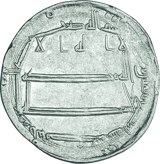 Abbasid caliphate8th and 9th centuries
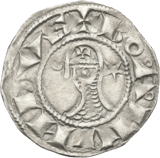 Principality of Antioch1163 to 1232
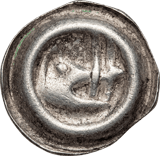 Town of Schweidnitz14th and 15th centuries
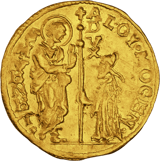 Republic of Venice1329 to 1797
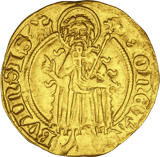 Electorate of Cologne1371 to 1463
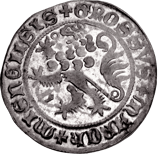 House of Wettin1393 to 1406

Seven coins.Over eleven hundred years.
From 621 to 1797 and from China to the Rhine: every one of these coins was money that people paid with.
Kaiyuan Tongbao – the bronze cash coin with which Emperor Tang Gaozu reinvented China's monetary system
A piece of imperial history you can hold in your hand: this Chinese cash coin made of bronze dates from the Tang dynasty (618–907 AD) and bears the most famous inscription in East Asian numismatic history – Kaiyuan Tongbao (開元通寶). Four characters, a square hole in the centre, a warm, naturally grown patina. Nothing more is needed to bridge over a thousand years.
This coin type was introduced in the year 621 under Emperor Tang Gaozu, the founder of the dynasty, who was originally named Li Yuan, overthrew the Sui dynasty in 618, and ruled until his abdication in 626. What he decreed at the time was far more than a new coin: it was a change of system. Until then, the value of Chinese coins had been determined by their weight – from the Kaiyuan Tongbao onward, the state determined the value. A concept that seems self-evident to us today, and one that had its premiere in China around 1,400 years ago.
Why this coin should be part of every history collection
The inscription roughly translates as "circulating treasure of the beginning of a new era." It is read in the classical order top – bottom – right – left and was designed by Ouyang Xun, one of China's most famous calligraphers. For the first time ever, a renowned calligrapher designed the appearance of a Chinese coin – a detail that still fascinates collectors today.
Material: bronze or copper alloy – not struck, but cast in moulds according to Chinese tradition
Diameter: 24 mm
Raw weight: 2.6 g
Face value: 1 Cash – the basic unit of ancient China
Country of issue: China, Tang dynasty
Condition: circulated coinage with authentic signs of use. These pieces were actual currency in circulation and carry corresponding traces: darker patina, individual centring, nicks, wear, and in places weaker legend details. That is exactly what makes them appealing. Since the year of minting, mint, and reverse variant can differ, the piece delivered will differ from the image shown – you receive an original, not a mass-produced item. Please understand that the image in the shop serves as an example and may differ individually from the delivered item in terms of appearance and condition due to historical circumstances.
The square hole served a purely practical purpose: hundreds of such cash coins were strung together on cords and transported as a "string." This is precisely why many pieces show wear – every nick, every tone tells of the marketplace, of caravan trade, of everyday life in a world power. The reverse of this type is, as a rule, plain and without inscription.
From the imperial court to Japan, Korea, and Vietnam
The Kaiyuan Tongbao was not produced at a single location, but in numerous state foundries throughout the empire – initially around Chang'an, present-day Xi'an, the starting point of the Silk Road, and later also in Luoyang and many provincial towns. This type remained in production for over 280 years. Its influence extended far beyond China: the coinage of Japan, Korea, the Ryūkyū Islands, and Vietnam adopted its form and inscription logic for centuries.
Gold is the oldest currency of mankind – yet the money that people held in their hands every day for centuries was bronze. This cash coin is an original from exactly that world.
Who this piece is suited for
Newcomers to ancient numismatics: a genuine, over 1,100-year-old original – without the entry barriers that many ancient silver or gold coins bring with them.
Theme collectors: an ideal addition to Roman bronze coins, Celtic coinage, or later Chinese cash coins from the Ming and Qing periods.
Fans of tangible assets: a tangible, independently existing collector's value made of metal, requiring nothing more than a display case.
Compared to a modern bullion coin made of gold or silver, the focus here is not on fineness but on historical substance: the value of this bronze cash coin derives from age, rarity of condition, and cultural significance. Those seeking pure precious metal weight, on the other hand, will find classic bars and bullion coins for that purpose – both complement each other perfectly in a well-considered collection.
As this is historical circulated coinage, the variant, patina, and level of detail vary from piece to piece. That is exactly what makes it appealing: you do not receive a mass-produced item, but an individual witness to time from China's golden age. Securely packaged and dispatched as insured shipping.
Product depiction may differ from the final product.