





Bronze Follis Emperor Constans (337-350 AD | Constantinian Dynasty)
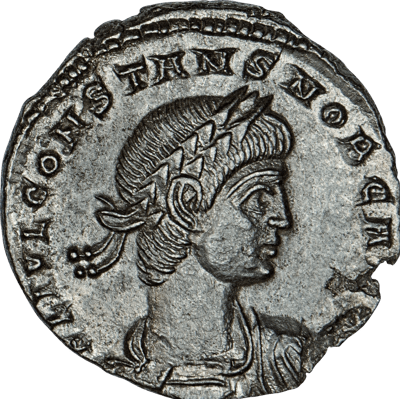
- Genuine Original: money of late antiquity
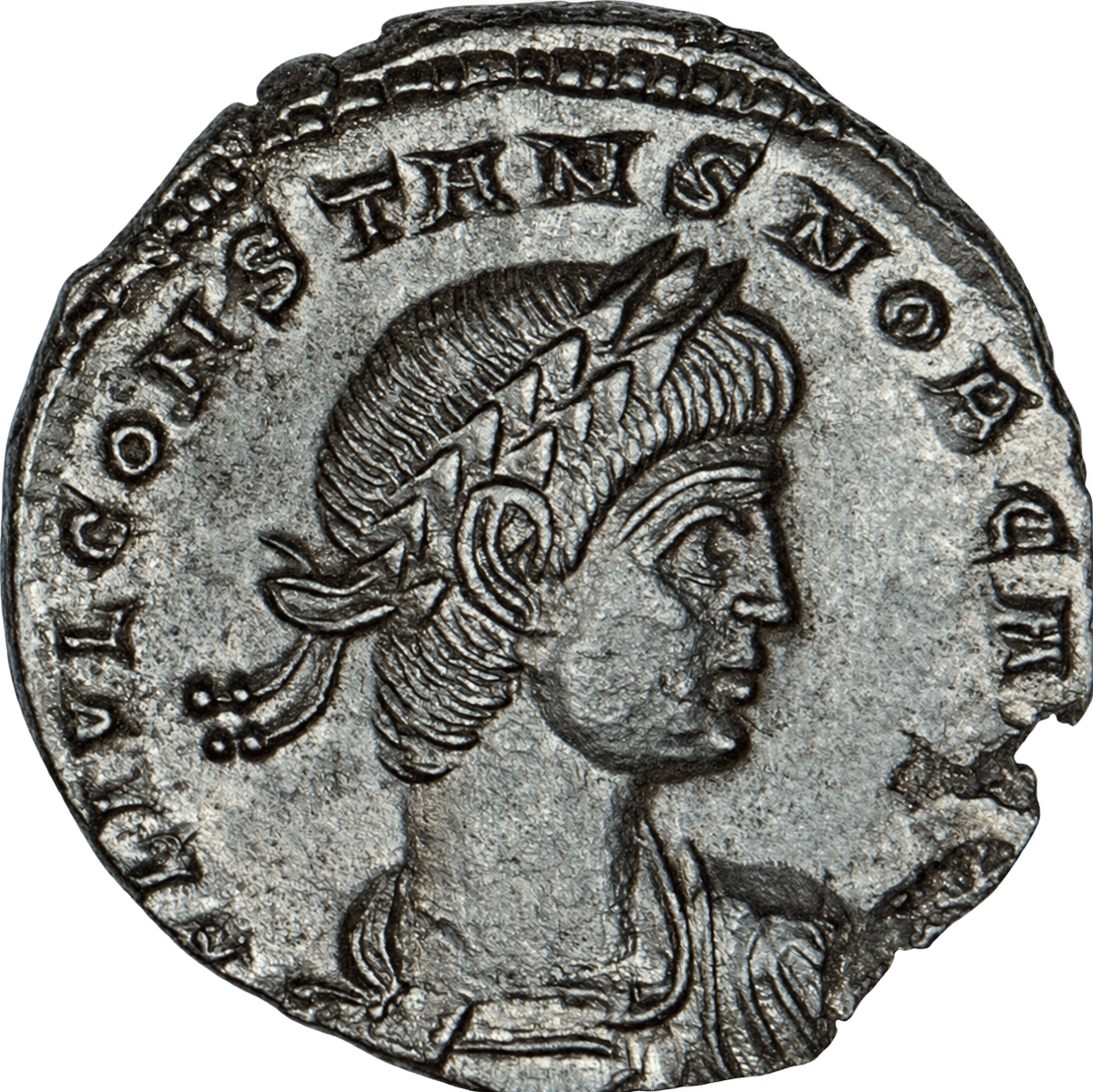
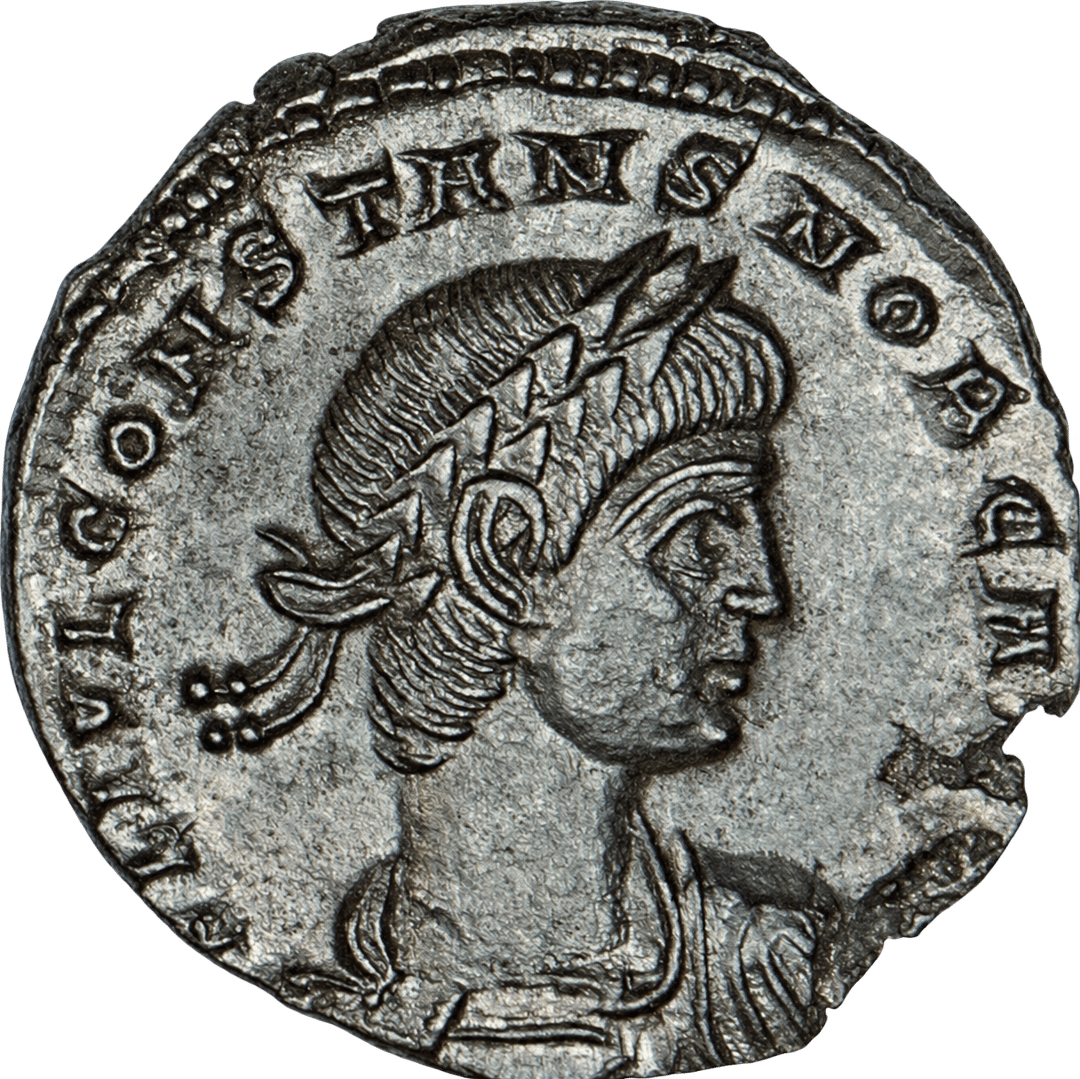
- Emperor's Portrait: young and finely struck
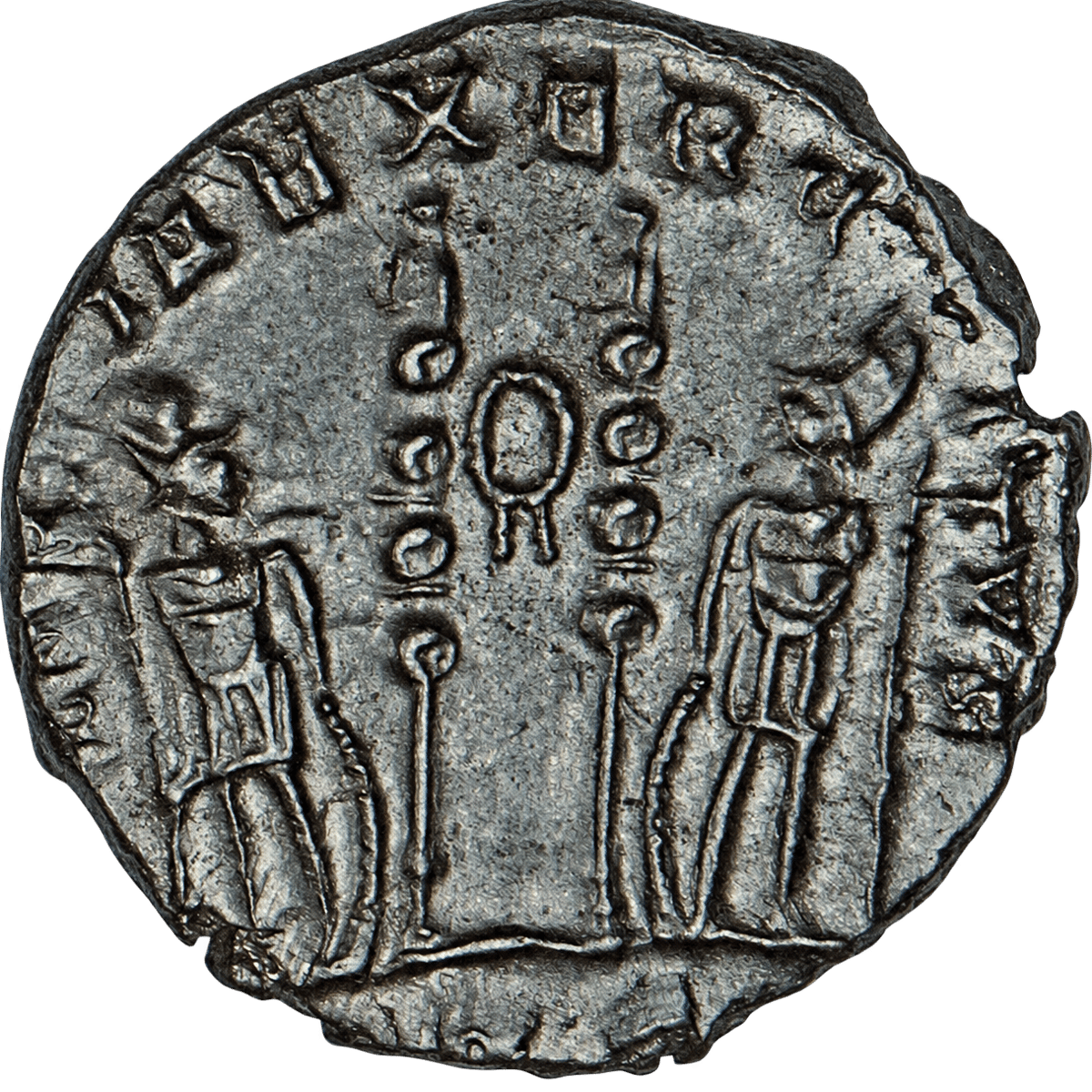
- Glory to the Army: two soldiers with spears
- Genuine OriginalThis coin once paid for bread, wine and soldiers' wages
- Emperor's PortraitThe youngest son of Constantine the Great in profile
- Glory to the ArmyBetween the soldiers stand the standards of the legions








- Genuine Original: money of late antiquity
- Emperor's Portrait: young and finely struck
- Glory to the Army: two soldiers with spears
 Price alert
 Share

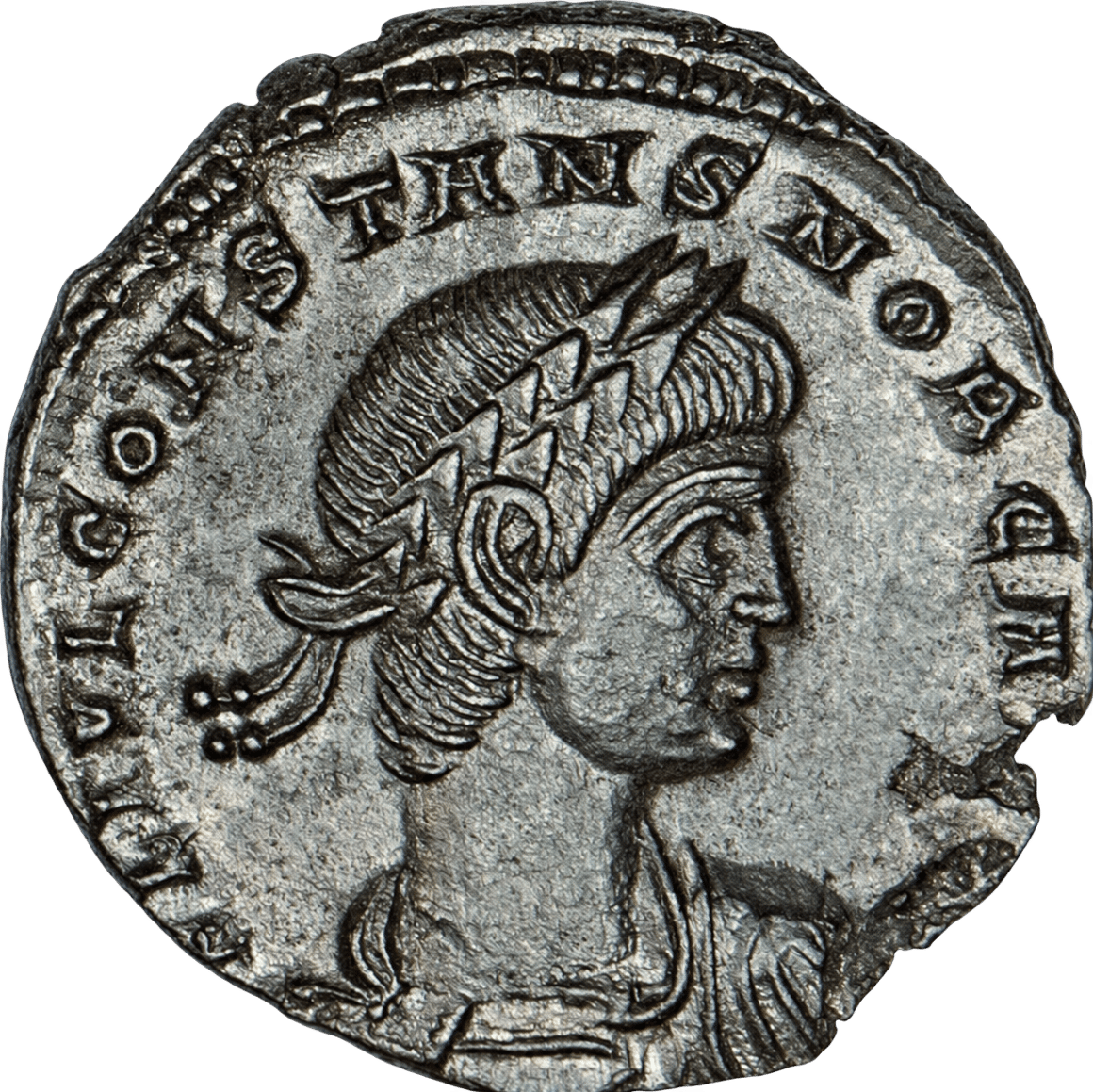
Ancient original · The Constantinian dynasty
Follis of ConstansAbout 1,700 years old.
Under Constantine the follis became smaller and contained hardly any silver. The pieces of this era measure 20 mm, a follis of Diocletian 27 mm.
- Ruler
- ConstansAD 337 to 350
- Diameter
- 20 mm
- Weight
- c. 6.5 g
Under Constantine the follis became smaller and contained hardly any silver. The pieces of this era measure 20 mm, a follis of Diocletian 27 mm.
- Ruler
- ConstansAD 337 to 350
- Diameter
- 20 mm
- Weight
- c. 6.5 g

The Constantinian dynasty · AD 306 to 363
The capital moves to the Bosporus.
Under Constantine Christianity became permitted and soon preferred, the capital moved to the Bosphorus, and the coinage moved with it: fewer gods, more standards, camps and victory signs. His sons divided the empire between them and went to war with each other.
The picture shows an example. The piece you receive may differ in detail.
At the same scale
Denarius, antoninianus, follis and solidus at the same scale
Three sizes are called follis here: about 27 mm in the tetrarchy, 20 mm under Constantine and his sons, 28 mm under Justinian.
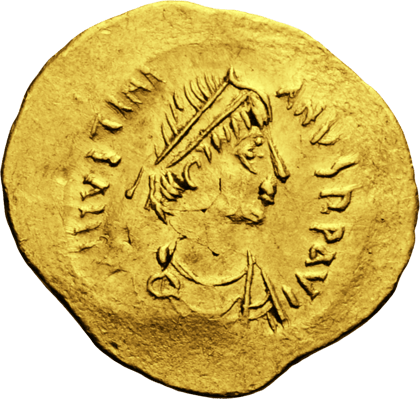 TremissisJustinian I
16 mm
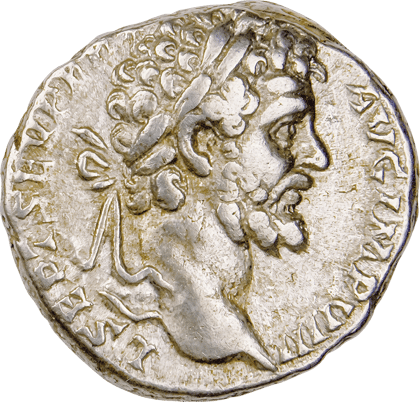 DenariusSeptimius Severus
c. 18 mm
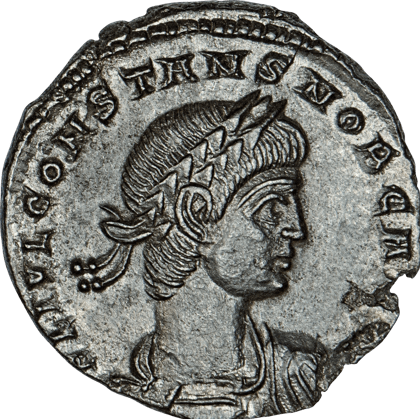 FollisConstans
20 mmthis page
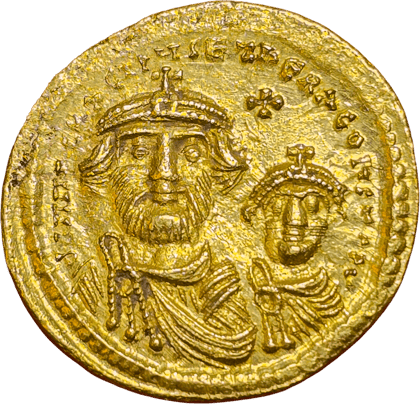 SolidusHeraclius
20 mm
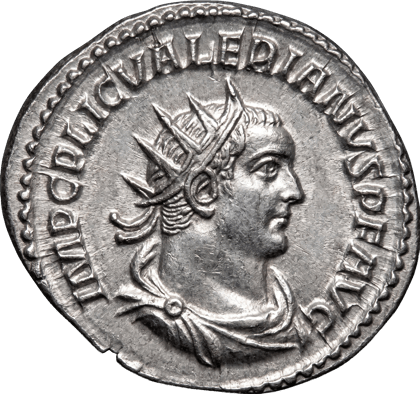 AntoninianusValerian I
21 to 23 mm
 1 eurofor comparison
23.25 mm
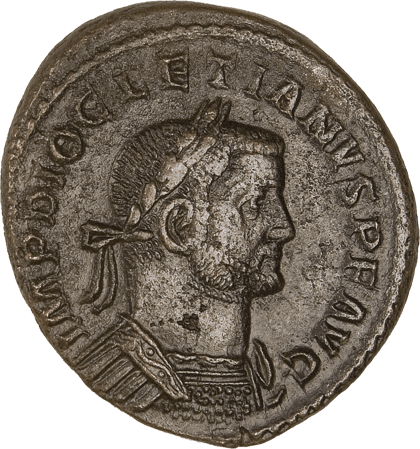 FollisDiocletian
27 mm
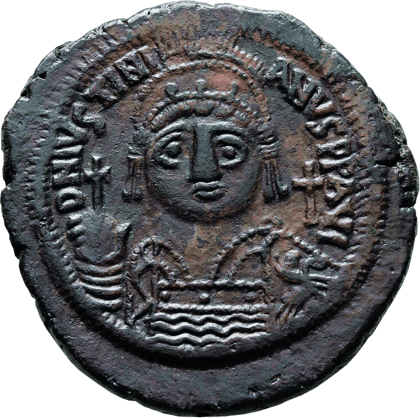 FollisJustinian I
28 mm
Where it belongs
31 originals from about 1,100 years
Each piece stands at the years of its ruler or of its type. The era of this piece is highlighted; choose another one to see its originals.
The Constantinian dynasty AD 306 to 363 · 3 originals
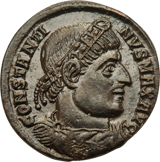 Follis of Constantine IAD 306 to 337
 Follis of Constantine IIAD 337 to 340
 Follis of ConstansAD 337 to 350this page

Keeping it
First things first: do not clean it.
The dark layer on bronze and the matte grey on silver are called patina. It has grown over centuries and protects the surface. Polishing it away takes that protection from the piece.
- Hold it by the edgeSkin oil can etch itself permanently into the surface. Take the piece by the rim between thumb and forefinger, over a soft surface.
- Store each piece on its own, and dryKeep each piece on its own in a dry place, in a capsule or an acid-free case. PVC sleeves do not belong there, they attack the surface.
- No agents, no polishing clothNo vinegar, no silver cloth, no ultrasound. According to the Bank of Canada Museum, almost any attempt at cleaning without a conservator leaves damage, mostly from abrasion.

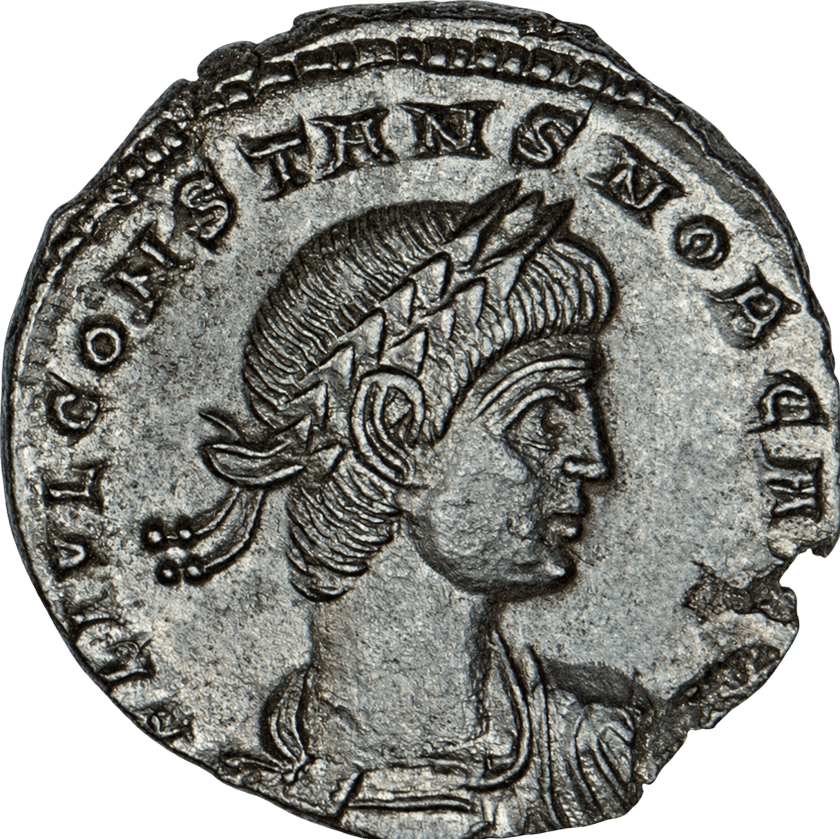
Struck about 1,700 years ago.
Constans and his world are long gone. The piece has remained, with the traces of its circulation.
Bronze Follis of Emperor Constans – 1,700 Years of History You Can Hold in Your Hand
Some collector's items need explaining. This one doesn't. A dark-patinated bronze follis from the Roman Empire, minted under Emperor Constans, the youngest son of Constantine the Great: this coin was real money. It changed hands across market stalls, paid for bread, wine and soldiers' pay – and now lies in your hand. Few collector's items build such a direct bridge to Late Antiquity.
Constans (337–350 AD) – Emperor Between Brothers and Civil War
Flavius Iulius Constans was born between 320 and 323 and was raised to the rank of Caesar as a child on 25 December 333. After his father's death, in September 337 he assumed the title of Augustus together with his brothers Constantine II and Constantius II. From 340 onwards he ruled the entire western half of the empire, resided in Mediolanum – present-day Milan – and lavished generous gifts upon the churches. In February 350 his reign came to an end: followers of the usurper Magnentius killed him in southern Gaul. A short life, an eventful era. And coins that tell the tale.
GLORIA EXERCITVS – "Glory to the Army"
The obverse shows the youthful imperial portrait facing right, surrounded by the Latin legend, typically FL IVL CONSTANS NOB C. The reverse displays the most famous bronze type of the Constantinian dynasty: GLORIA EXERCITVS, two helmeted soldiers with spear and shield, flanked by the legionary standards. Until around 335, two standards stood between the soldiers; afterwards only one – a fine detail by which experts date the emission. The mint reveals itself through the mint mark in the exergue: Siscia, Rome, Arelate, Thessalonica, Antioch or Constantinople, to name just a few. On later issues, one also encounters the design FEL TEMP REPARATIO, "the restoration of happy times".
The Follis Denomination: Small Change of a World Power
The follis was the bronze circulating coin of Late Antiquity, referred to in scholarship – depending on weight standard – also as nummus, centenionalis or maiorina. In 348, Constans and Constantius II reformed the coinage system and replaced the follis with the heavier pecunia maiorina, weighing around 3.5 to 7.5 grams with a diameter of 20 to 24 millimeters. The item data listed here falls precisely within this range – a hint at how exciting it can be to identify your own specimen.
Issuing Authority Constans – Key Facts at a Glance
- Face value: Follis
- Issuing authority: Constans, 337–350 AD
- Country: Roman Empire
- Gross weight: 6.5 g
- Diameter: approx. 20 mm
- Year of issue, mint, metal composition: varies
- Condition: circulated (used means of payment)
- Series: History · Collector's Item
Every Piece an Original – Not a Mass-Produced Item
These coins were in circulation for decades, and it shows: darker patina, individual centering, nicks, signs of wear, and here and there a less sharply struck section of the legend. This is exactly what makes them appealing. Those seeking a flawless, high-gloss strike should turn to modern issues; those seeking traces of genuine life will find them here.
You receive an original from antiquity – not a mass-produced item, and no two specimens are identical.
Since the year of issue, mint and reverse variant may vary, the specimen delivered will differ from the image shown. Please understand: the image in the shop is expressly an example and may differ individually in appearance and condition due to historical circumstances.
Who the Constans Follis Is Suited For
- Newcomers to ancient numismatics: an affordable, well-documented type with a clear attribution to the Constantinian dynasty.
- Thematic collectors: as a building block alongside coinage of Constantine the Great, Constantine II, Constantius II or Delmatius.
- History enthusiasts and gift-givers: an object that instantly makes any narrative about Rome, Christianization and the Migration Period tangible.
- Preservers of tangible assets: a piece of materialized monetary history, independent of paper and databases.
Why Money Made of Metal, of All Things?
This piece provides the answer itself. The Roman Empire has fallen, its emperors are dust, its monetary systems were reformed, devalued and replaced. Yet the coin is still here – legible, tangible, incorruptible. Precious metals and historical circulating coins tell exactly this story: of value preserved across centuries, of substance rather than promises. A follis of Constans is not an investment product in the classic sense, but a collector's item with character – and quiet proof that real money can endure for a very long time.
Shipping is carried out as insured value shipping, so that your antique original arrives safely with you.
Product depiction may differ from the final product.
