





Bronze Follis Emperor Justinian I (543 AD | Era of the Reconquest of Italy)
- Genuinely antique: almost 1,500 years old
- Great emperor: built the Hagia Sophia
- A one-off: with its own patina
- Genuinely antiqueReal money used by merchants and soldiers in Byzantium
- Great emperorRegarded as one of late antiquity's most important rulers
- A one-offPatina and traces of circulation make each piece unique











- Genuinely antique: almost 1,500 years old
- Great emperor: built the Hagia Sophia
- A one-off: with its own patina
 Price alert
  Share
Share
Ancient original · The eastern Roman empire
Follis of Justinian IAbout 1,500 years old.
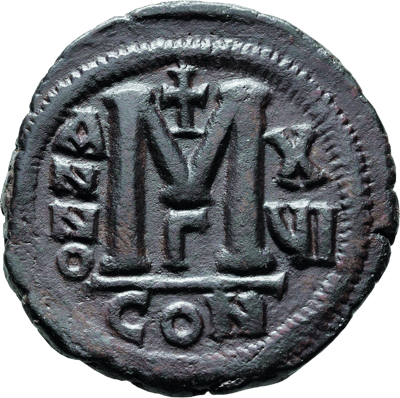
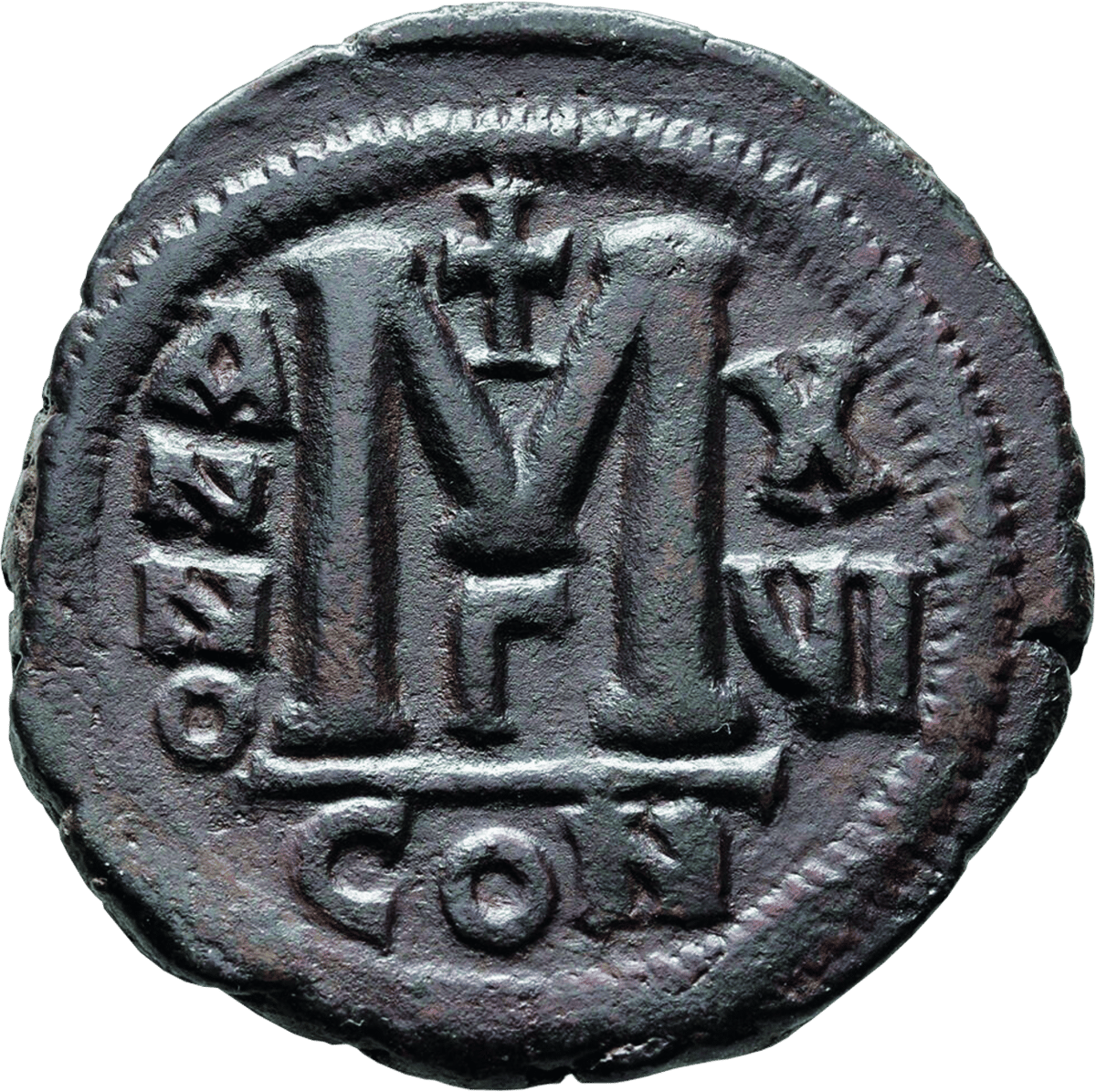
The large M is a number: 40, the value in nummi. Since the coinage reform of Anastasius in the year 498, such values have stood on the bronze coins in Greek numerals.
- Ruler
- Justinian IAD 527 to 565
- Diameter
- 28 mm
- Weight
- c. 17 g
The large M is a number: 40, the value in nummi. Since the coinage reform of Anastasius in the year 498, such values have stood on the bronze coins in Greek numerals.
- Ruler
- Justinian IAD 527 to 565
- Diameter
- 28 mm
- Weight
- c. 17 g

The eastern Roman empire · AD 395 to 1453
In the East, almost a thousand years more.
In the west the emperorship ended in 476, in the east it ran for almost another thousand years. The coins become flatter and more frontal, and the reverse often carries nothing but a large value mark. Justinian built the Hagia Sophia and took back North Africa and Italy. Heraclius lost many regained provinces in the east to the Arabs.
The picture shows an example. The piece you receive may differ in detail.
At the same scale
Denarius, antoninianus, follis and solidus at the same scale
Three sizes are called follis here: about 27 mm in the tetrarchy, 20 mm under Constantine and his sons, 28 mm under Justinian.
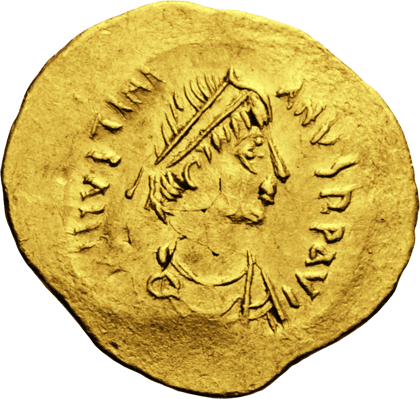 TremissisJustinian I
16 mm
TremissisJustinian I
16 mm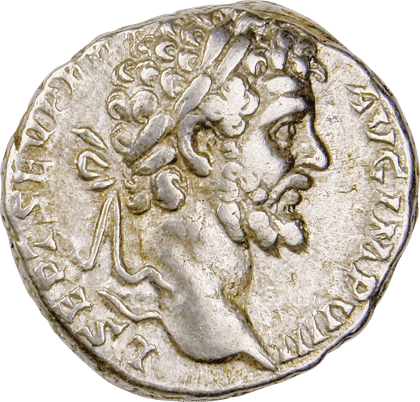 DenariusSeptimius Severus
c. 18 mm
DenariusSeptimius Severus
c. 18 mm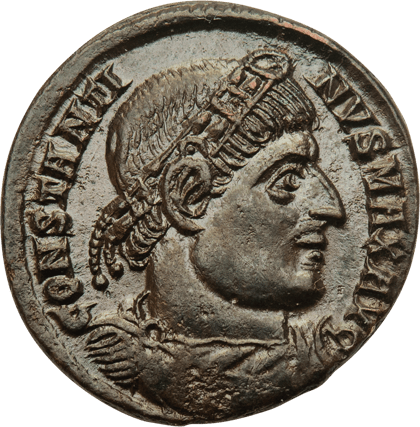 FollisConstantine I
20 mm
FollisConstantine I
20 mm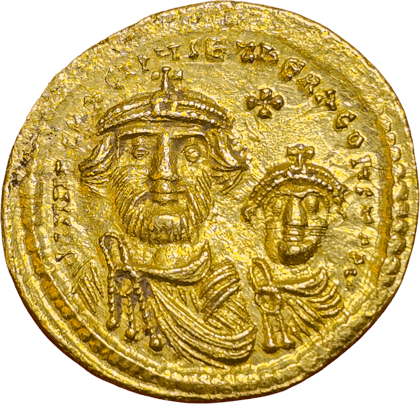 SolidusHeraclius
20 mm
SolidusHeraclius
20 mm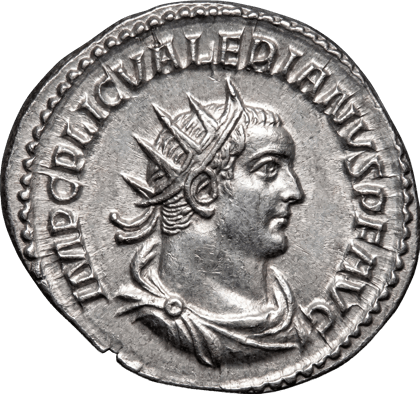 AntoninianusValerian I
21 to 23 mm
AntoninianusValerian I
21 to 23 mm 1 eurofor comparison
23.25 mm
1 eurofor comparison
23.25 mm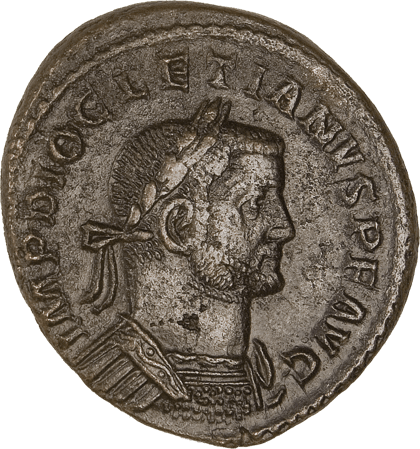 FollisDiocletian
27 mm
FollisDiocletian
27 mm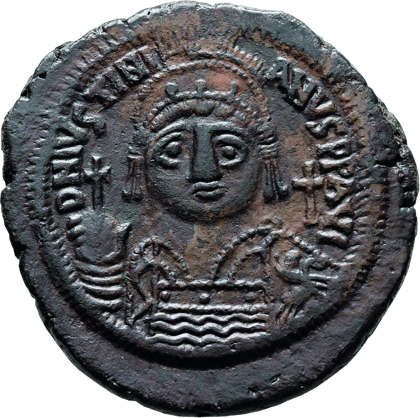 FollisJustinian I
28 mmthis page
FollisJustinian I
28 mmthis pageWhere it belongs
31 originals from about 1,100 years
Each piece stands at the years of its ruler or of its type. The era of this piece is highlighted; choose another one to see its originals.
The eastern Roman empire AD 395 to 1453 · 3 originals
 Tremissis of Justinian IAD 527 to 565
 Follis of Justinian IAD 527 to 565this page
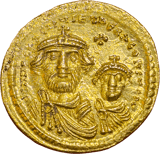 Solidus of HeracliusAD 610 to 641

Keeping it
First things first: do not clean it.
The dark layer on bronze and the matte grey on silver are called patina. It has grown over centuries and protects the surface. Polishing it away takes that protection from the piece.
- Hold it by the edgeSkin oil can etch itself permanently into the surface. Take the piece by the rim between thumb and forefinger, over a soft surface.
- Store each piece on its own, and dryKeep each piece on its own in a dry place, in a capsule or an acid-free case. PVC sleeves do not belong there, they attack the surface.
- No agents, no polishing clothNo vinegar, no silver cloth, no ultrasound. According to the Bank of Canada Museum, almost any attempt at cleaning without a conservator leaves damage, mostly from abrasion.

Struck about 1,500 years ago.
Justinian I and his world are long gone. The piece has remained, with the traces of its circulation.
Bronze Follis of Emperor Justinian I – Pocket Change from the Golden Age of Byzantium
A piece of world history you can hold in your hand: this bronze follis passed through the hands of merchants, craftsmen and soldiers in the Byzantine Empire back in the 6th century AD. Minted under Emperor Justinian I (527–565), the builder of the Hagia Sophia. Roughly 28 mm in diameter, about 17 g of bronze, with a bold, large M on the reverse. Not a modern series product, but an antique original carrying nearly 1,500 years of history.
Justinian I – the Emperor Who Sought to Surpass Solomon
Justinian is regarded as one of the most significant rulers of late antiquity. After the Nika riots of 532, he had Constantinople's destroyed main church rebuilt. The architects Anthemius of Tralles and Isidore of Miletus completed the Hagia Sophia in just five years; it was consecrated in December 537. "Solomon, I have surpassed thee!" the Emperor is said to have exclaimed at the sight of the massive dome. For almost a thousand years, this building remained the largest church in Christendom – and it still stands today.
- Corpus Iuris Civilis: Justinian's jurists codified Roman law, laying a foundation on which European legal tradition still rests today.
- Reconquest of the Mediterranean: General Belisarius won back North Africa, followed by the long Gothic Wars in Italy (535–554).
- Justinianic Plague: From 542 onward, the plague ravaged Constantinople. Some researchers even interpret striking portrait changes on folles from 542/543 as traces of the Emperor's own illness – a numismatic puzzle still debated today.
The Design: Imperial Bust and the Large M
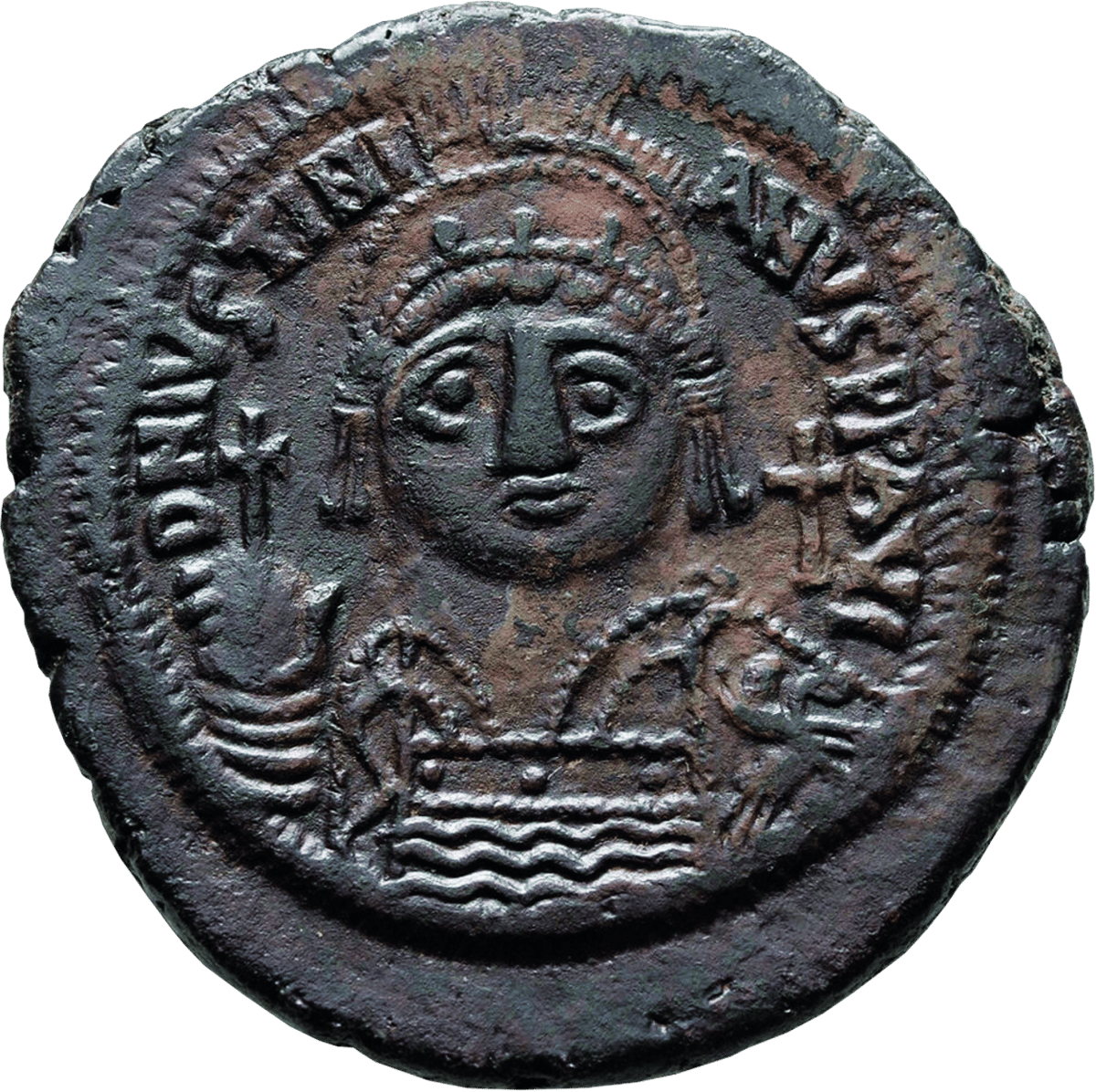
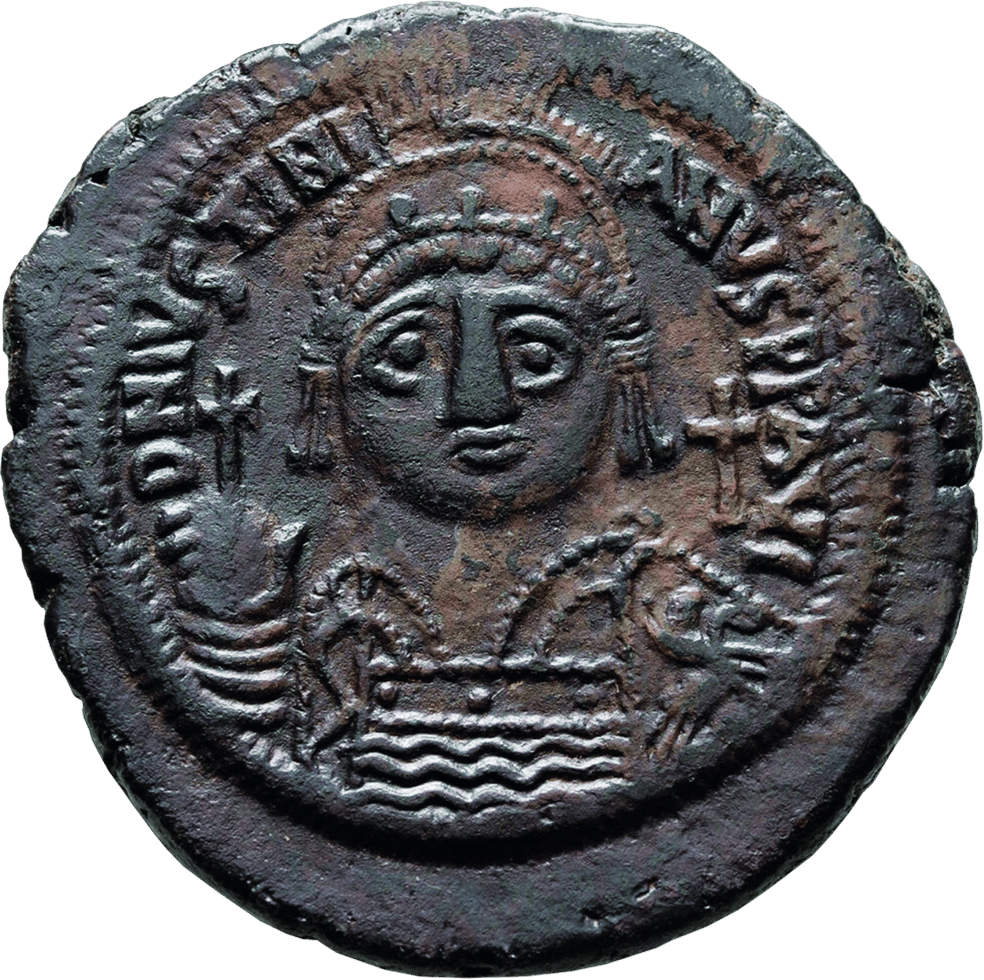
With the coinage reform of 538, the coin's design changed fundamentally. Instead of a side profile, the obverse now shows the Emperor facing forward, wearing helmet, diadem and armor, holding the globus cruciger in his right hand and a shield in his left. The inscription reads D N IVSTINIANVS PP AVG – "Our Lord Justinian, Perpetual Augustus."
- Denomination mark M: The Greek numeral letter M stands for 40 nummi, i.e. a full follis – the largest bronze coin in the Byzantine system.
- ANNO and regnal year: ANNO on the left, the year of the Emperor's reign on the right. A piece marked ANNO XVII corresponds to the year 543/544 AD.
- Officina: The letter below the M indicates the workshop within the mint.
- Mint mark in the exergue: CON for Constantinople; other mints include NIKO (Nicomedia), KYZ (Kyzikos) and THEUP (Antioch).
Technical Specifications
- Face value: Follis (40 nummi)
- Material: Bronze – fineness, denomination and year of minting vary
- Diameter: approx. 28 mm
- Gross weight: approx. 17 g
- Country of origin: Eastern Roman Empire (Byzantium)
- Condition: Circulated piece, grade of preservation varies
- Series: History · Investment type: Coin · Purpose: Collector's item
- Delivered via insured value shipping
Circulated Coinage with Character – Every Piece a One-of-a-Kind
These pieces once served as circulating currency and bear the marks of their duty: darker patina, individual centering, nicks, wear, and in places weaker legends. That is precisely their charm. Since the year of minting, mint, and reverse variant may vary, the piece you receive will differ from the illustration – you are getting an original, not a series product. Please understand that the image shown in the shop is only an example and may individually differ from the delivered item in appearance and condition due to historical circumstances. A tip from experience: never polish the natural patina to a shine – it is part of the coin's history and, for connoisseurs, a mark of quality.
Whoever holds this follis in their hand is holding money from a time when Constantinople was the richest city in the known world.
Follis, Solidus, and the Question of Size
In the Byzantine Empire, the follis was everyday money for the general population, while the golden solidus served as the leading currency of the Mediterranean world. Justinian's reform of 538 temporarily turned the follis into a real heavyweight of over 20 grams; afterward the weight declined again, which is why coins from the 1540s are more compact. This gives collectors an interesting comparison: a follis offers the look of a large ancient coin and dense history, while a solidus from the same era scores with the precious metal value of gold and is traded accordingly higher. Later Byzantine emperors such as Heraclius also had folles struck – but Justinian's issues are considered the classic representatives of the type and are, for many collectors, the centerpiece of a Byzantine collection.
For Collectors and History-Minded Investors
Gold is humanity's oldest currency and has outlived every paper currency. This follis tells the other half of the same story: that of the everyday money that carried an empire. As a collector's item, it is ideal for entering the world of Byzantine numismatics, as a gift with substance, or as a tangible addition alongside Roman denarii, ancient bronzes and modern bullion coins. For those who value precious metals as a store of wealth, this piece offers the cultural-historical counterpart to the plain bar: a witness to history from the Eastern Roman Empire, whose appeal lies precisely in its individuality and its unmistakable patina.
Product depiction may differ from the final product.
