





Bronze Dolphin Money (ca. 5th century BC | Greek Black Sea colony Olbia)
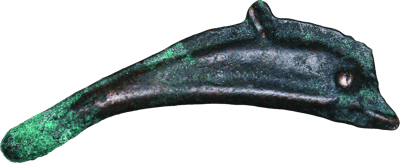










- Early Money: before the first coin
- Genuine Original: hand-cast
- Divine Design: Apollon Delphinios
- Early MoneyBetween weighed bronze bars and standardized coins
- Genuine OriginalThe green-brown patina is a sign of authenticity
- Divine DesignThe dolphin symbolized Apollo and seafaring
 Price alert
  Share
Share
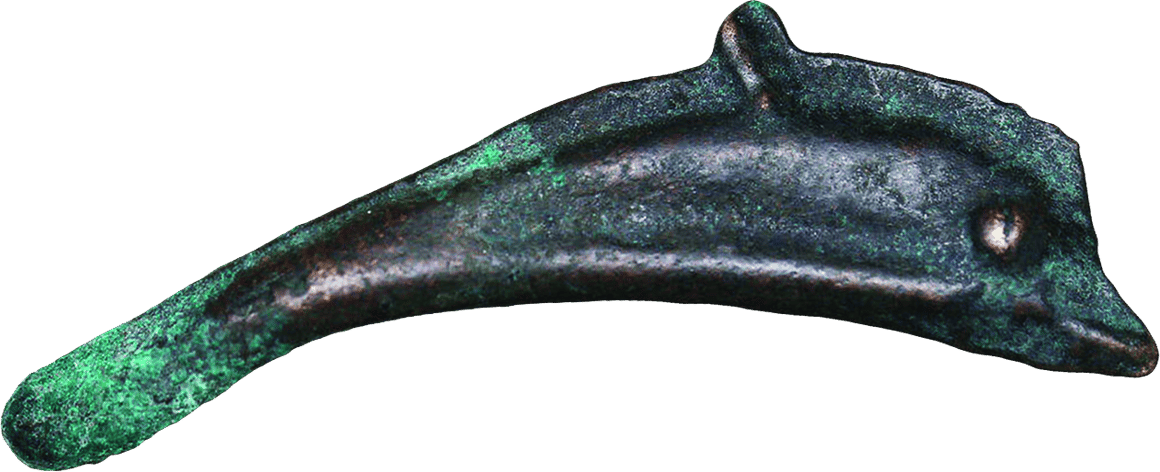
Ancient original · Archaic Greece
Dolphin money from OlbiaAbout 2,500 years old.
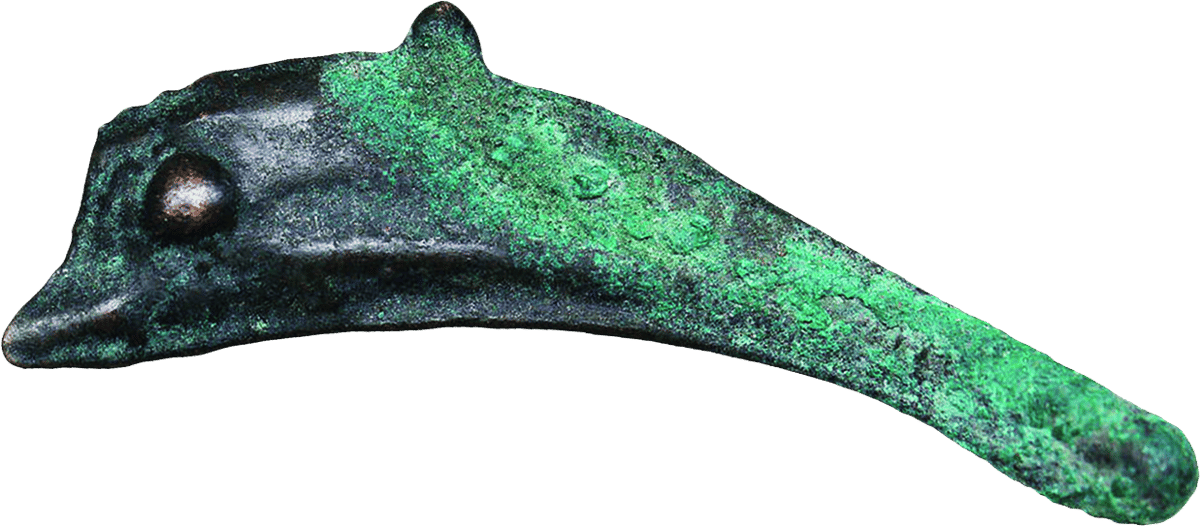
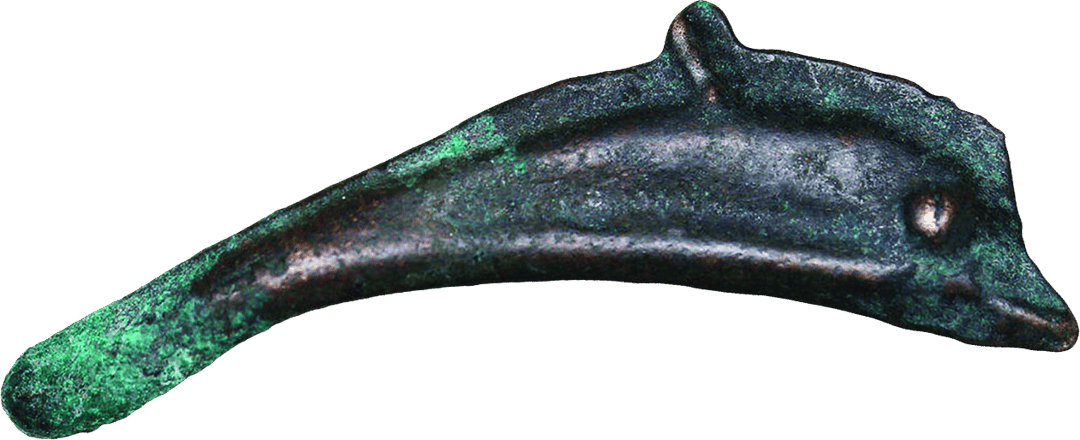
In the 5th century BC Olbia cast money of bronze in two forms: as leaping dolphins and as round pieces with the head of the Gorgon.
- City
- Olbia5th century BC
- Length
- c. 20 mm
- Weight
- c. 1 to 2.7 g
In the 5th century BC Olbia cast money of bronze in two forms: as leaping dolphins and as round pieces with the head of the Gorgon.
- City
- Olbia5th century BC
- Length
- c. 20 mm
- Weight
- c. 1 to 2.7 g

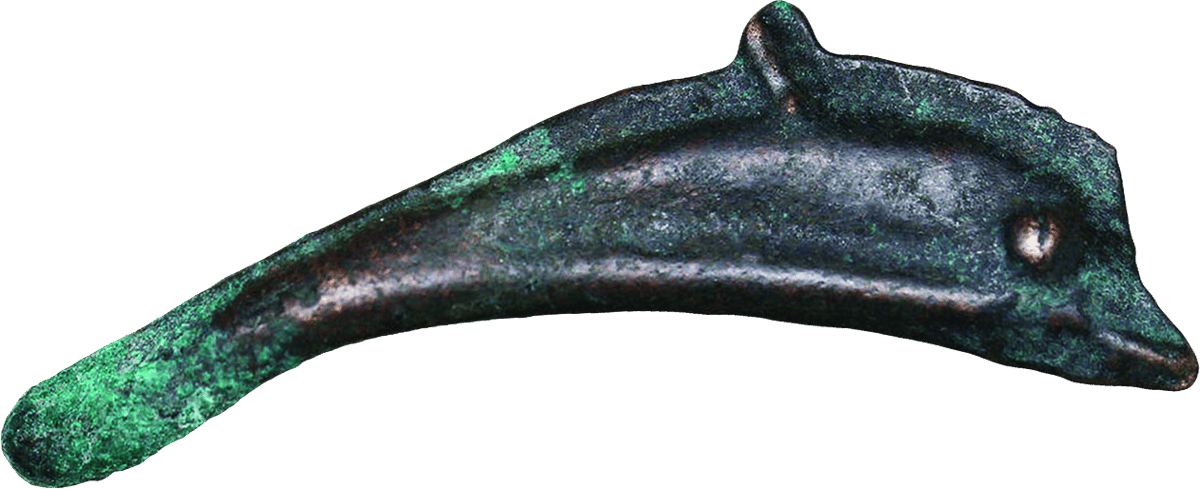
Archaic Greece · 7th to 5th century BC
Money in the shape of a dolphin.
In the beginning money was not round. In Olbia on the Bug, a Greek city on the Black Sea, people cast bronze in moulds that look like dolphins and reckoned with them. The finds reach from the late 6th to the early 4th century BC.
The picture shows an example. The piece you receive may differ in detail.
At the same scale
Greeks, Persians, Carthaginians: coins side by side
From the diobol of Teos at 9 mm to the tetradrachm at about 26 mm. Under each piece you see its diameter as our product data give it.
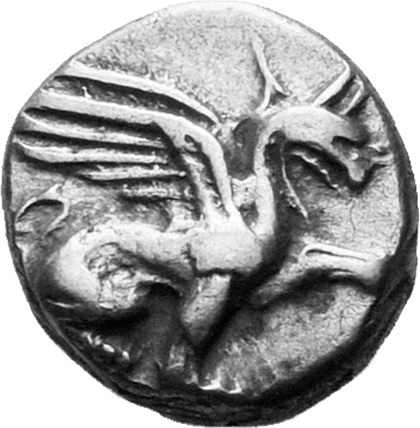 DiobolTeos
9 mm
DiobolTeos
9 mm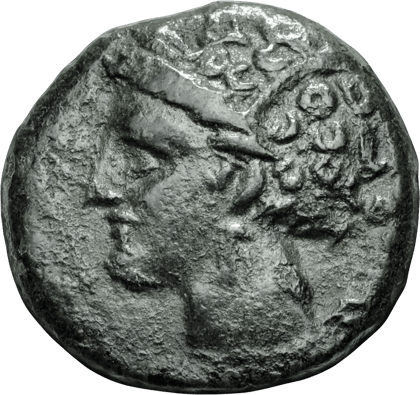 Bronze coinCarthage
16 mm
Bronze coinCarthage
16 mm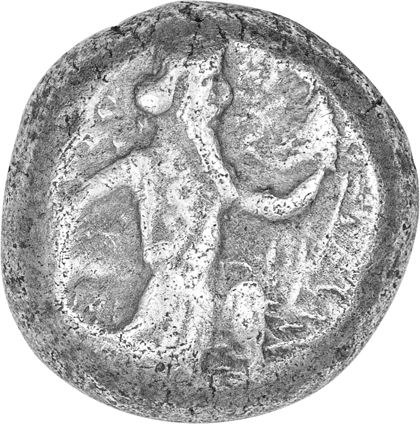 SiglosAchaemenids
18 mm
SiglosAchaemenids
18 mm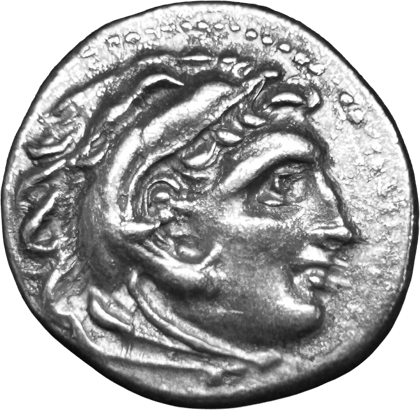 DrachmAlexander the Great
18 mm
DrachmAlexander the Great
18 mm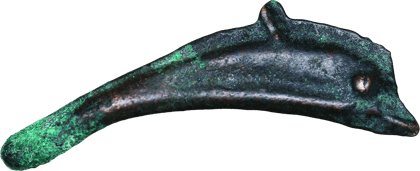 Dolphin moneyOlbia
c. 20 mm longthis page
Dolphin moneyOlbia
c. 20 mm longthis page 1 eurofor comparison
23.25 mm
1 eurofor comparison
23.25 mm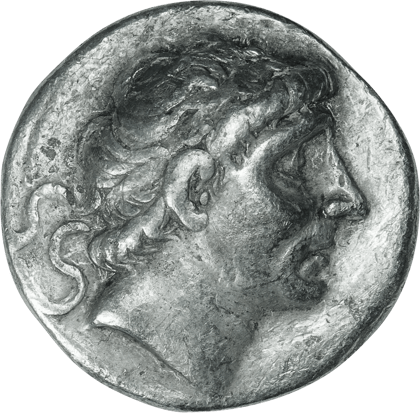 TetradrachmAntiochos I Soter
c. 26 mm
TetradrachmAntiochos I Soter
c. 26 mmWhere it belongs
31 originals from about 1,100 years
Each piece stands at the years of its ruler or of its type. The era of this piece is highlighted; choose another one to see its originals.
Archaic Greece 7th to 5th century BC · 1 original
 Dolphin money from Olbia5th century BCthis page

Keeping it
First things first: do not clean it.
The dark layer on bronze and the matte grey on silver are called patina. It has grown over centuries and protects the surface. Polishing it away takes that protection from the piece.
- Hold it by the edgeSkin oil can etch itself permanently into the surface. Take the piece by the rim between thumb and forefinger, over a soft surface.
- Store each piece on its own, and dryKeep each piece on its own in a dry place, in a capsule or an acid-free case. PVC sleeves do not belong there, they attack the surface.
- No agents, no polishing clothNo vinegar, no silver cloth, no ultrasound. According to the Bank of Canada Museum, almost any attempt at cleaning without a conservator leaves damage, mostly from abrasion.

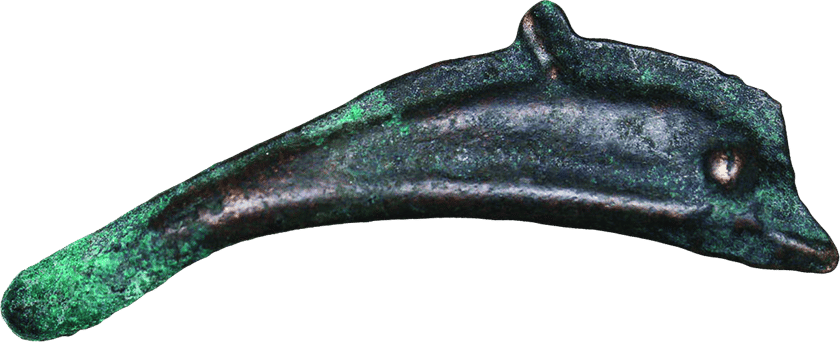
Cast about 2,500 years ago.
Olbia and its world are long gone. The piece has remained, with the traces of its circulation.
Bronze Dolphin Money from Olbia – When Money Could Still Swim
A dolphin, not a round disc. Anyone holding this small, cast bronze piece between their fingers for the first time immediately understands: the history of money did not begin with the round coin. The so-called dolphin money – also known as delphinia – from the Greek Black Sea colony of Olbia dates back to around the 5th century BC and ranks among the most fascinating testimonies of early monetary history. Around 2,500 years old, handmade, unmistakable.
Olbia: Granary, Harbor, Hub of Trade
Olbia was located at the mouth of the Hypanis, today's Southern Bug, on the northern shore of the Black Sea – in the territory of present-day Ukraine. The city was founded in the 6th century BC by settlers from Miletus. It quickly grew into one of the wealthiest trading cities of the ancient Greek world: grain, fish, wine, weapons, metals. Trade between the Greek poleis and the Scythians of the hinterland flowed across Olbia's quays. In catalogues, you will therefore encounter this money under various regional names – Sarmatia, Scythia, or Thrace – but they always refer to the same city on the Bug.
Why a Dolphin? Apollo Delphinios and the Symbol of Trade
Two reasons make this shape so fitting. First, the cult: among Olbia's principal cults was Apollo Delphinios – that form of the god's worship in which, according to myth, he is said to have led his priests to Delphi in the shape of a dolphin. Second, observation: dolphins were common in these waters and often accompanied ships over long distances. In this way they became a symbol of seafaring – and ultimately a symbol of trade itself.
From raw material to token of value: in terms of monetary development, dolphin money stands between the weighed bronze bar and the standardized coin. Only the legend on the reverse – such as ΘΥ, ΟΥ, or ΑΡΙΧΟ – transforms the piece of metal into a state-authenticated means of payment.
The Facts About This Historical Original
- Object: Dolphin money, pre-coinage means of payment (proto-money)
- Material: Bronze, cast – not minted
- Dating: approx. 5th century BC
- Origin: Greece / Greek Black Sea colony of Olbia
- Dimensions: approx. 20 x 5 mm
- Gross weight: approx. 1–2.7 g
- Condition: circulated, varies
- Series: History · Investment purpose: Collector's product
Condition: Not Flaws, But Biography
These pieces are circulated goods – and they look the part. Darker patina, individual centering, small nicks, wear, and sections of the legend that are less sharply struck in places: these are not flaws but biography. Every trace stems from hands that, centuries ago, used it to settle goods, cargo, or debts. Since the year of minting, mint location, and reverse variant can vary, the piece delivered will differ from the image shown. Please understand the photo in the shop explicitly as a representative image: appearance, exact weight, and condition vary from piece to piece for historical reasons. You are acquiring an original.
A practical note: please be sure to leave the green-brown patina untouched. It is the piece's protective skin, an indicator of authenticity, and an essential part of its collector's appeal. Nothing here is polished.
Dolphin Money Compared to Other Ancient Collectibles
Collectors of antiquity usually turn to classic silver coins such as the Attic tetradrachm or to Roman bronzes. Dolphin money plays in a league of its own – and scores with arguments no round coin can offer:
- Unusual shape: A figural means of payment that every observer recognizes at once. No other ancient money tells its story so easily.
- Early stage of monetary history: You hold in your hand the threshold between exchange metal and coinage.
- Affordable entry point: Olbia's silver and gold coins are extremely rare and barely available, whereas dolphin money remains accessible.
- One-of-a-kind character: Casting, wear, and patina make every piece unique.
The price of this piece is determined not by metal value but by age, rarity, and narrative power – unlike modern bullion coins made of gold and silver, which follow fine weight. This is precisely where its charm lies: dolphin money is a collector's product, a conversation piece, a tangible fragment of human history.
Who This Piece Is For
For collectors of ancient originals. For beginners seeking their first genuine artifact. For enthusiasts of monetary history who want to understand how metal became trust. And for anyone who thinks of precious metals and history together: what Olbia's merchants knew 2,500 years ago still holds true today – real assets in hand have outlasted every monetary order. Gold is humanity's oldest currency and has outlived all others; dolphin money is a chapter from that same long story. Anyone building a collection on the history of money should not let this small, darkly patinated creature be missing from it. Shipping is carried out as insured value shipping.
Product depiction may differ from the final product.
