





Bronze Antoninianus Claudius II Gothicus (268-270 AD | Age of the Imperial Crisis)
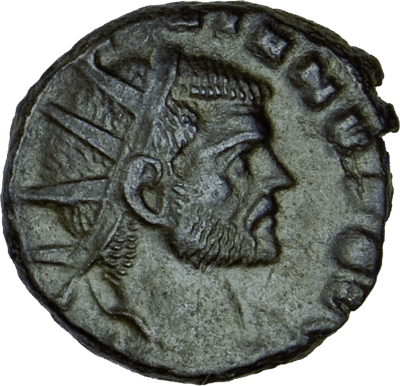
- Genuine Roman Coin: almost 1,800 years old
- World History: victory at Naissus 269
- Radiate Crown: each piece a one-off
- Genuine Roman CoinPassed through countless hands across the Roman Empire
- World HistoryThe emperor pushed the Goths back across the Danube
- Radiate CrownDesign, mint and patina vary from piece to piece











- Genuine Roman Coin: almost 1,800 years old
- World History: victory at Naissus 269
- Radiate Crown: each piece a one-off
 Price alert
  Share
Share
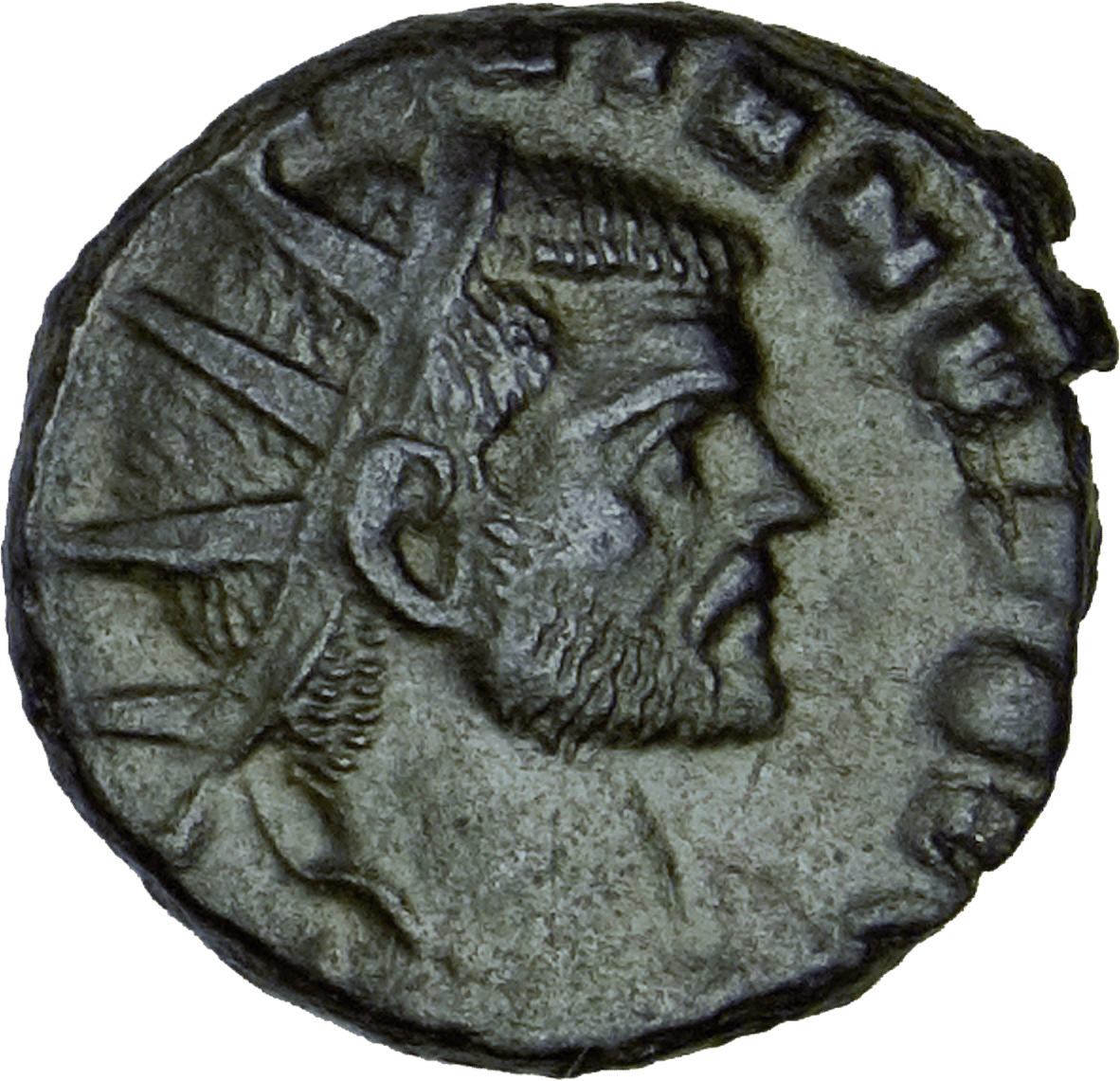
Ancient original · Crisis of the third century
Antoninianus of Claudius II GothicusAbout 1,750 years old.
Caracalla introduced the antoninianus in the year 215. The radiate crown of the emperor marks it as a double denomination.
- Ruler
- Claudius II GothicusAD 268 to 270
- Diameter
- 21 mm
- Weight
- c. 2.5 g
Caracalla introduced the antoninianus in the year 215. The radiate crown of the emperor marks it as a double denomination.
- Ruler
- Claudius II GothicusAD 268 to 270
- Diameter
- 21 mm
- Weight
- c. 2.5 g

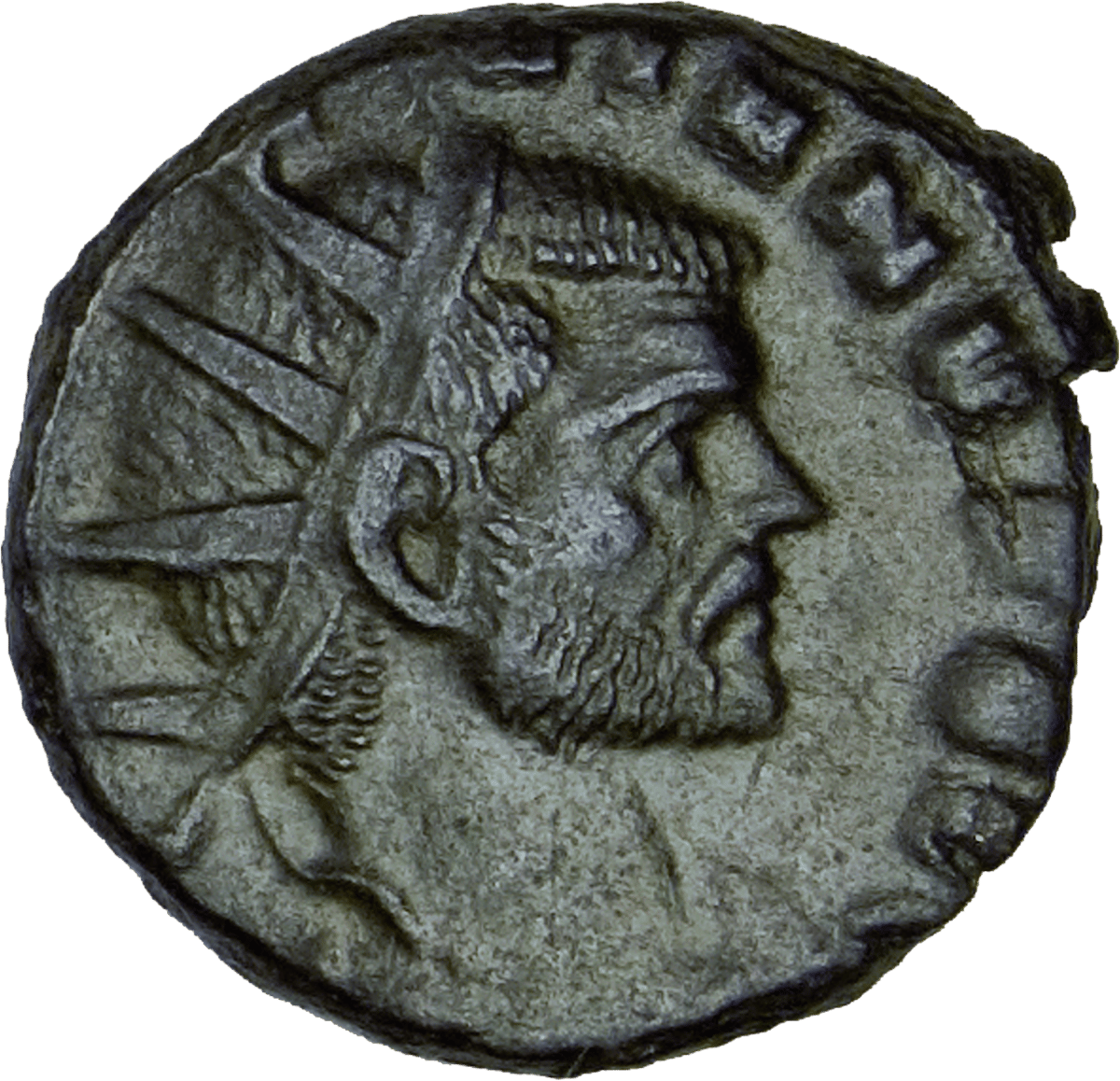
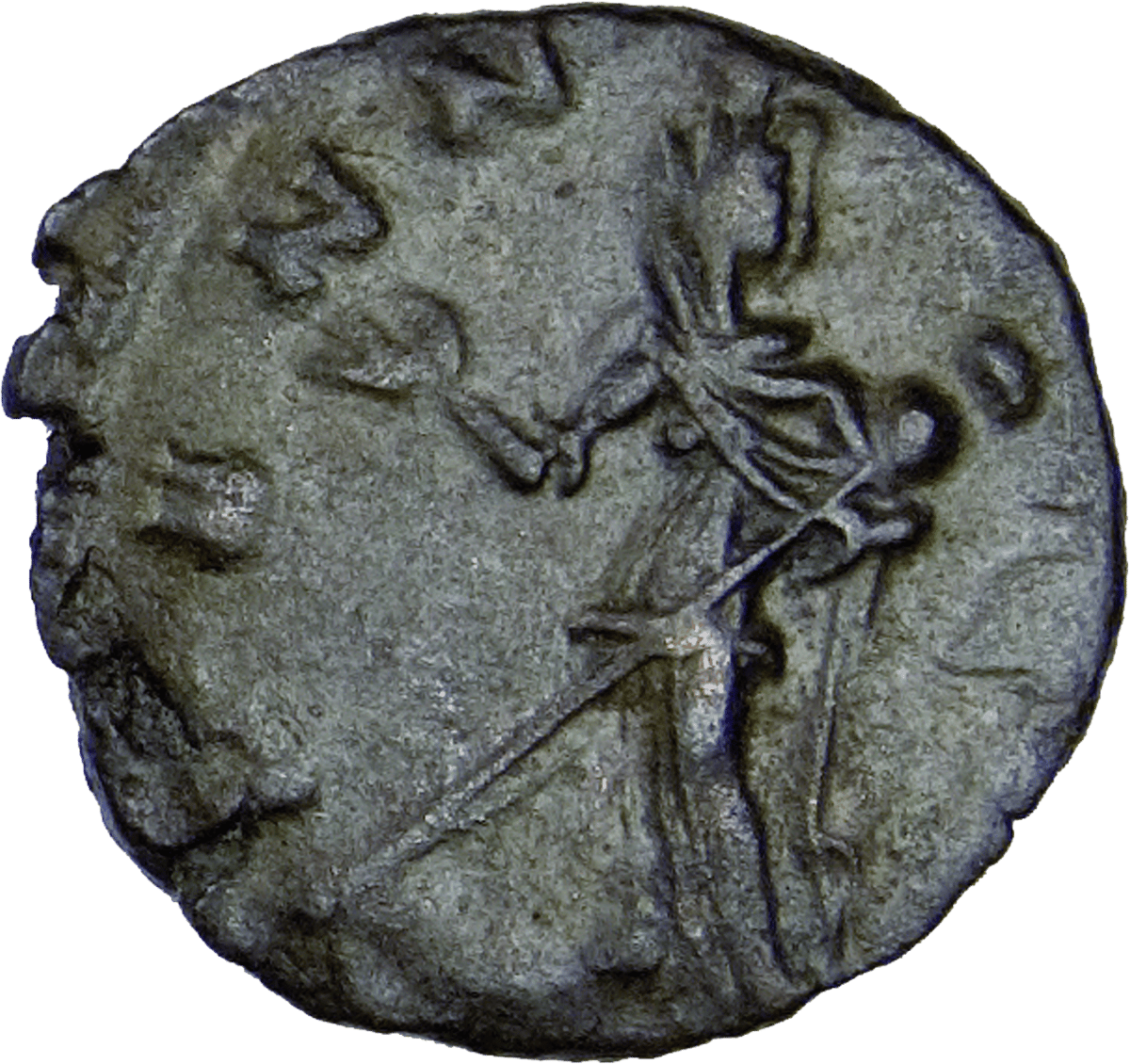
Crisis of the third century · AD 235 to 284
Silver that turned into bronze.
In fifty years at least 26 men claimed the imperial title. At the same time the money decayed: the antoninianus began as a silver coin, probably worth two denarii, and ended as a bronze piece with a thin wash of silver. Hold a coin from these decades and you are holding an inflation.
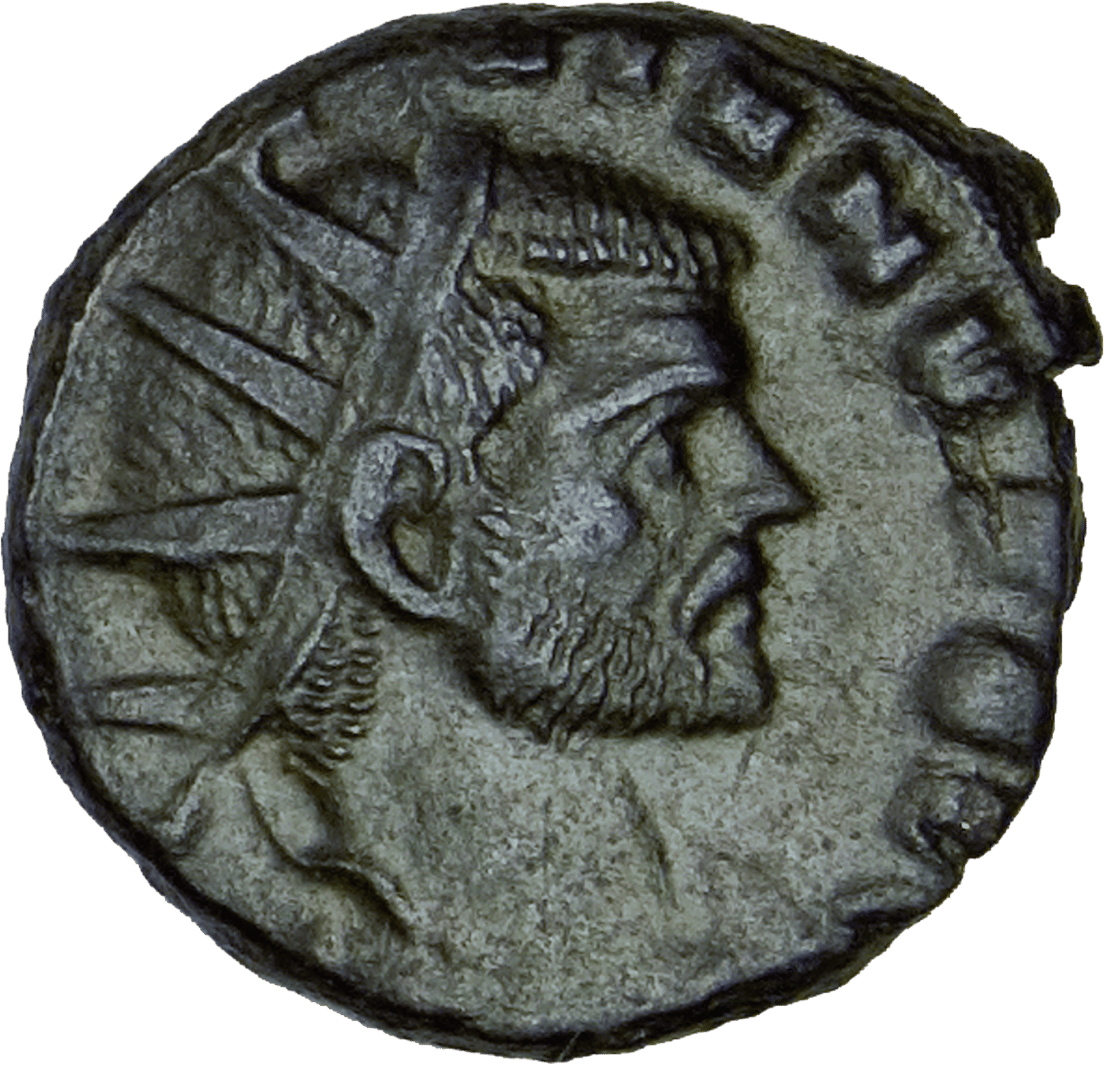
The picture shows an example. The piece you receive may differ in detail.
At the same scale
Denarius, antoninianus, follis and solidus at the same scale
Three sizes are called follis here: about 27 mm in the tetrarchy, 20 mm under Constantine and his sons, 28 mm under Justinian.
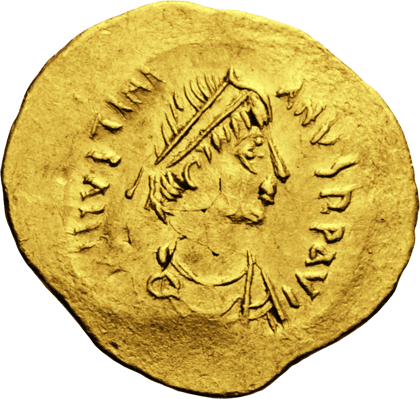 TremissisJustinian I
16 mm
TremissisJustinian I
16 mm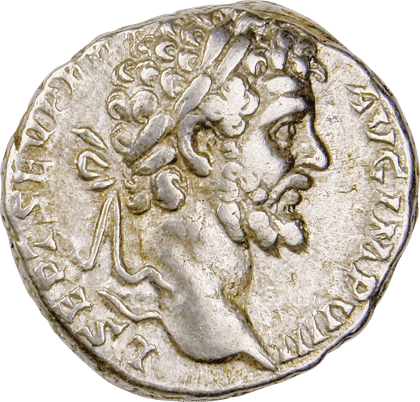 DenariusSeptimius Severus
c. 18 mm
DenariusSeptimius Severus
c. 18 mm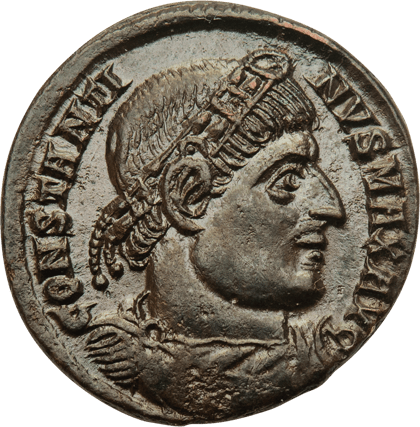 FollisConstantine I
20 mm
FollisConstantine I
20 mm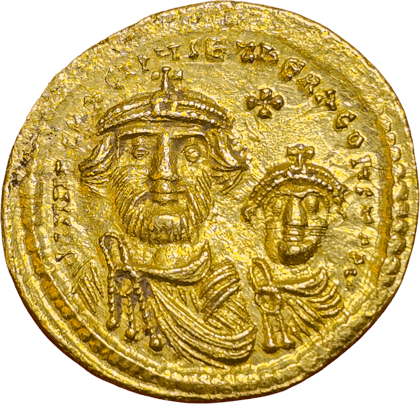 SolidusHeraclius
20 mm
SolidusHeraclius
20 mm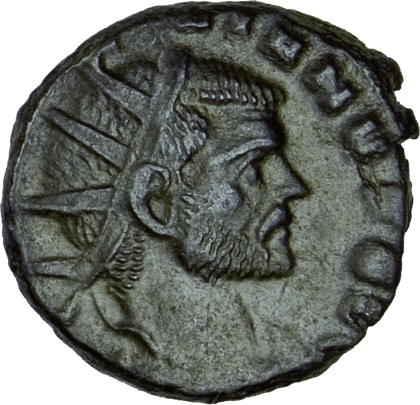 AntoninianusClaudius II Gothicus
21 mmthis page
AntoninianusClaudius II Gothicus
21 mmthis page 1 eurofor comparison
23.25 mm
1 eurofor comparison
23.25 mm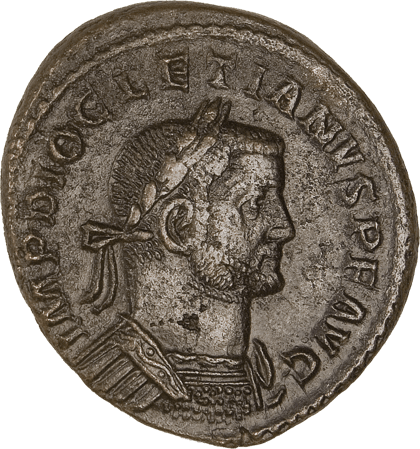 FollisDiocletian
27 mm
FollisDiocletian
27 mm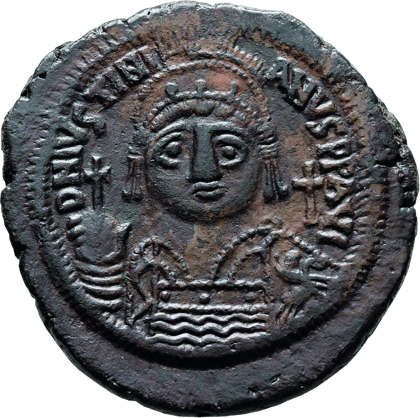 FollisJustinian I
28 mm
FollisJustinian I
28 mmWhere it belongs
31 originals from about 1,100 years
Each piece stands at the years of its ruler or of its type. The era of this piece is highlighted; choose another one to see its originals.
Crisis of the third century AD 235 to 284 · 8 originals
 Antoninianus of Philip I the ArabAD 244 to 249
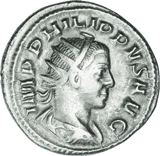 Antoninianus of Philip IIAD 247 to 249
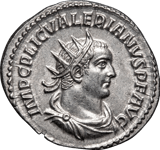 Antoninianus of Valerian IAD 253 to 260
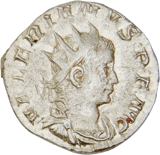 Antoninianus of Valerian IIAD 256 to 258
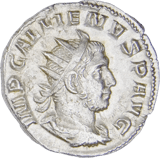 Antoninianus of GallienusAD 260 to 268
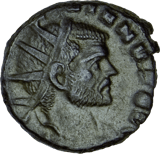 Antoninianus of Claudius II GothicusAD 268 to 270this page
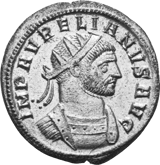 Antoninianus of AurelianAD 270 to 275
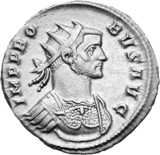 Antoninianus of ProbusAD 276 to 282

Keeping it
First things first: do not clean it.
The dark layer on bronze and the matte grey on silver are called patina. It has grown over centuries and protects the surface. Polishing it away takes that protection from the piece.
- Hold it by the edgeSkin oil can etch itself permanently into the surface. Take the piece by the rim between thumb and forefinger, over a soft surface.
- Store each piece on its own, and dryKeep each piece on its own in a dry place, in a capsule or an acid-free case. PVC sleeves do not belong there, they attack the surface.
- No agents, no polishing clothNo vinegar, no silver cloth, no ultrasound. According to the Bank of Canada Museum, almost any attempt at cleaning without a conservator leaves damage, mostly from abrasion.

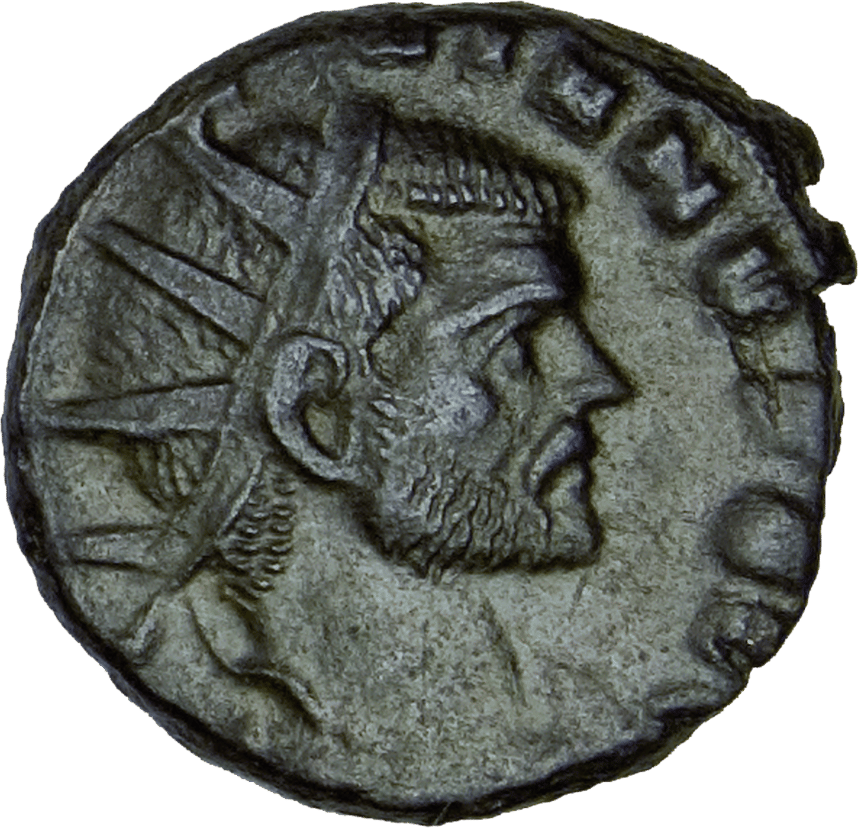
Struck about 1,750 years ago.
Claudius II Gothicus and his world are long gone. The piece has remained, with the traces of its circulation.
Bronze Antoninianus of Claudius II Gothicus – Original Currency from the Crisis of the Empire
Almost 1,800 years old and passed through countless hands: this bronze antoninianus of Emperor Claudius II Gothicus is genuine legal tender from the Roman Empire, struck between 268 and 270 AD. It was minted at a time when the empire was fighting for its survival on multiple fronts. Whoever holds such a Roman coin in their hand holds world history in their hand – a collector's item that carries its charm entirely without high gloss, certificates or modern packaging.
The Emperor Who Defeated the Goths
Marcus Aurelius Claudius, like many soldier-emperors of the 3rd century, came from the Illyrian-Dalmatian region. Rising from officer to military commander, he was proclaimed emperor in September 268 – following the assassination of Gallienus, in which, according to ancient tradition, he was implicated. His military masterstroke came in 269: at the great Battle of Naissus, present-day Niš in Serbia, he inflicted a decisive defeat on the Goths and drove them back across the Danube. This victory secured the survival of the empire and earned him the honorific title "Gothicus."
He remained emperor for barely two years. In 270, Claudius died of the plague in Sirmium. Rome subsequently deified him – the posthumous commemorative coinage bearing the legend DIVO CLAVDIO and the eagle of the Consecratio remain among the most common coins of antiquity to this day. Later, even the family of Constantine the Great claimed him as an ancestor. A brief but weighty chapter of the empire – and this small bronze piece is its direct witness.
The Antoninianus: The Double Denarius with the Radiate Crown
This denomination was introduced around 214/215 AD under Caracalla and was intended to be worth two denarii, hence its nickname "double denarius." Its distinguishing feature is the radiate crown on the emperor's portrait. Within the Roman system, this marked the double denomination while simultaneously underscoring the ruler's near-divine authority. In the 3rd century, the antoninianus became the most widely minted coin of the empire – while its silver content steadily declined: around 238 it still averaged about 40 percent, but by 270 it had fallen to less than three percent. For this reason, numismatists refer to these later issues as bronze or billon coinage with only a thin silver wash. An old coin that literally tells the story of ancient currency debasement.
Technical Details at a Glance
Face value: Antoninianus (double denarius)
Issuing authority: Claudius II Gothicus, 268–270 AD
Country / country of origin: Roman Empire
Gross weight: approx. 2.5 g
Diameter: approx. 21 mm
Material and fineness: various (bronze/billon)
Year of issue, mint, manufacturer: various
Series: History · Investment purpose: Collector's item
Condition: Circulated coin. These pieces are genuine circulated legal tender and bear corresponding traces: darker patina, individual centering, nicks, wear, and in some cases weaker areas of the legend. This is exactly what gives them their appeal. Since the year of issue, mint and reverse variant may vary, the specimen delivered will differ from the image shown – you receive an original, not a mass-produced item. We therefore ask for your understanding that the image in the shop serves as an example and may differ individually from the item delivered in terms of appearance and condition due to historical circumstances.
Designs and Mints: Every Specimen a Unique Piece
Under Claudius II, several mints operated in parallel, including Rome, Mediolanum (Milan), Siscia, Cyzicus, and Antioch. The obverse regularly shows the emperor's bust with radiate crown facing right, accompanied by inscriptions such as IMP C CLAVDIVS AVG. On the reverses, you will encounter personifications and deities of Roman state ideology: Aequitas with scales and cornucopia, Salus at the altar, Mars with spear and trophy, as well as Virtus, Spes, Victoria or Fides Militum. Those who wish can trace the attribution of their piece using standard reference literature (RIC) – for many collectors, this is precisely the most enjoyable part of the hobby.
Who Will Appreciate This Piece of History
Ancient coins follow a different logic than modern coinage: it is not the fine weight that defines their character, but history, variant, and condition. Compared to a silver denarius from the early imperial period, an antoninianus of Claudius Gothicus is usually significantly more affordable, making it a classic entry point into Roman numismatics. Compared to a large sestertius or a late antique follis, it stands out with its striking radiate-crown portrait and its direct connection to a specific historical event – the Battle of the Goths in 269. A drawback, quite frankly, is that legends and details are not always fully legible on circulated coinage. In return, every specimen is truly one of a kind.
Gold and silver are humanity's oldest currencies and have outlasted every paper money system. The antoninianus vividly illustrates what happens when a currency loses its precious metal content – an argument for genuine tangible assets that you can literally hold in your hand here. As a gift with a story to tell, as the starting point for a collection on the crisis of the 3rd century empire, or as a tangible history lesson for children and grandchildren: this piece makes an impression.
One emperor, two years of reign, a victory that shaped world history – and a coin that has outlasted it all.
In Brief
Original antoninianus of one of the most famous soldier-emperors: "Conqueror of the Goths"
Historical context: Battle of Naissus in 269, Crisis of the Third Century
Each piece is individual – design, mint, and patina vary
Compact format: approx. 21 mm diameter, around 2.5 g gross weight
Collector's item from the Roman Empire, securely packaged for insured shipping
Product depiction may differ from the final product.
