





Bronze Coin from Carthage (400-350 BC | Birthplace of Hannibal Barca)
- Punic World Power: from its golden age
- Genuinely antique: every piece a one-off
- Goddess Tanit: the city's patron goddess
- Punic World PowerWhen the city held the region's strongest fleet
- Genuinely antiqueOnce-circulated money with patina, not a series product
- Goddess TanitWith wreath of grain on obverse, horse and palm on reverse











- Punic World Power: from its golden age
- Genuinely antique: every piece a one-off
- Goddess Tanit: the city's patron goddess
 Price alert
  Share
Share
Ancient original · Carthage
Bronze coin from CarthageAbout 2,400 years old.
Many Punic coins carry a palm tree. In Greek it is called phoinix, like the Phoenicians; that is why it is mostly read as a sign of Carthage.
- City
- Carthage400 to 350 BC
- Diameter
- 16 mm
- Weight
- c. 2.9 g
Many Punic coins carry a palm tree. In Greek it is called phoinix, like the Phoenicians; that is why it is mostly read as a sign of Carthage.
- City
- Carthage400 to 350 BC
- Diameter
- 16 mm
- Weight
- c. 2.9 g
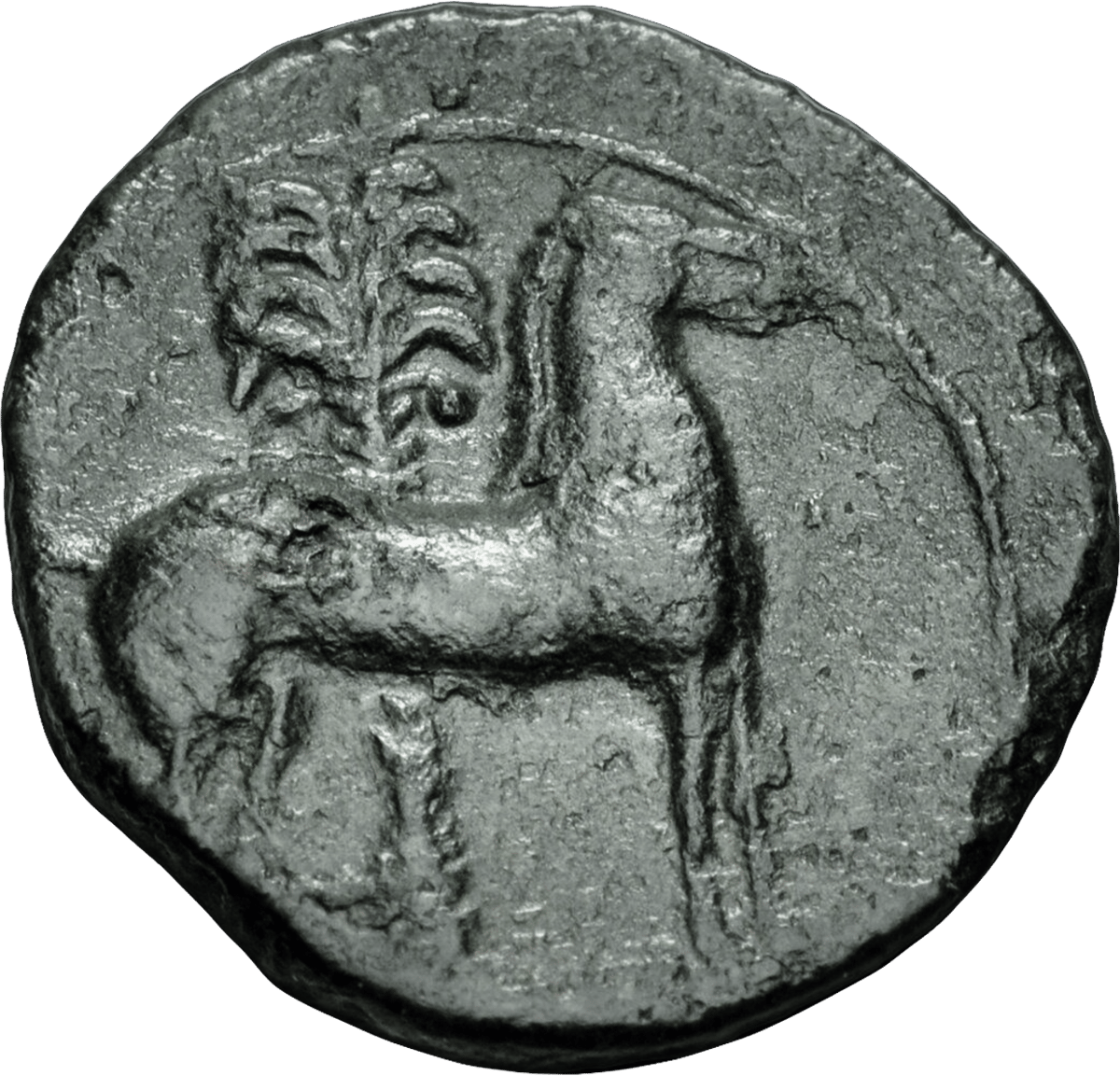
Carthage · 5th to 2nd century BC
Money for a war in Sicily.
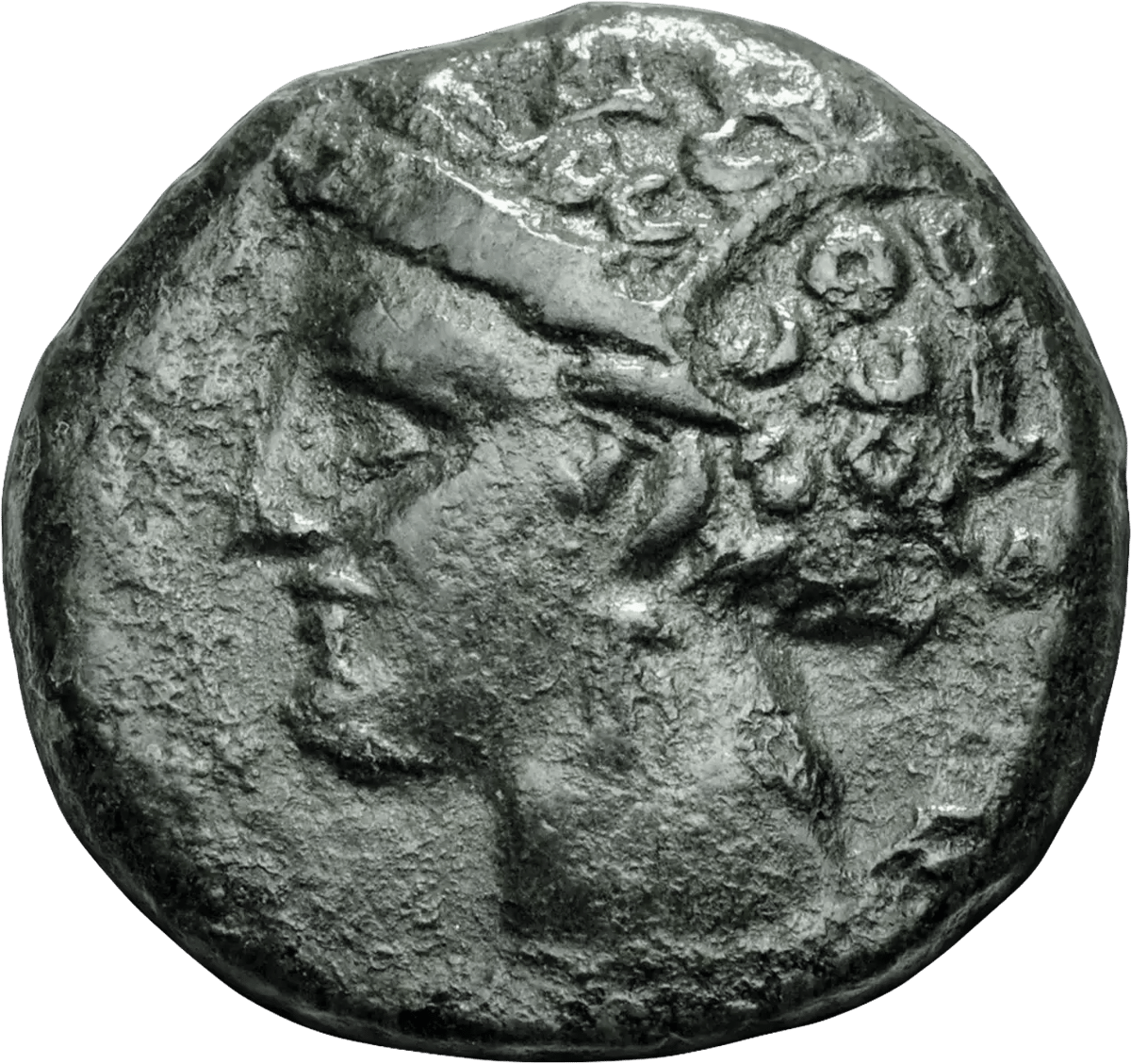
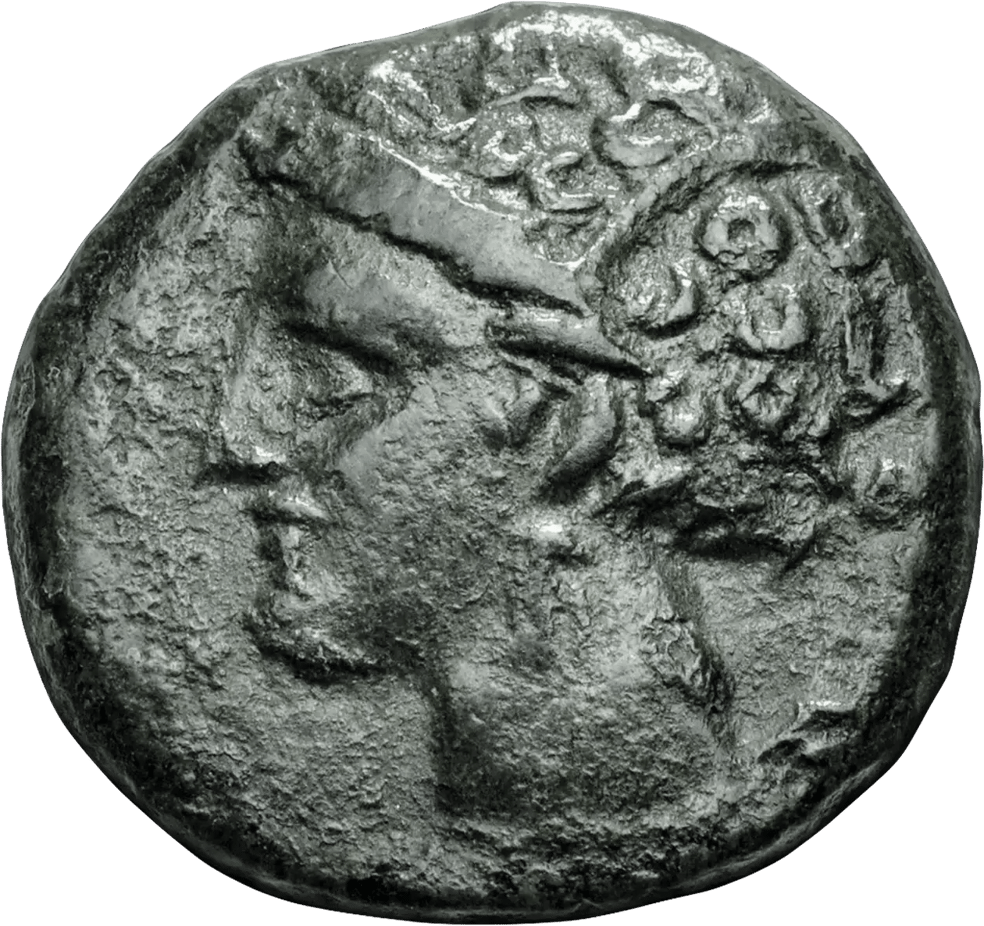
The trading power of the western Mediterranean struck coins late, only from 410 BC, to pay for its war in Sicily. Typical are a female head modelled on the goddess Kore on coins of Syracuse, and the horse. Hannibal was a Carthaginian.
The picture shows an example. The piece you receive may differ in detail.
At the same scale
Greeks, Persians, Carthaginians: coins side by side
From the diobol of Teos at 9 mm to the tetradrachm at about 26 mm. Under each piece you see its diameter as our product data give it.
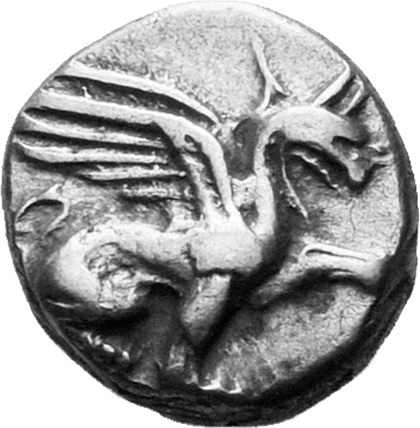 DiobolTeos
9 mm
DiobolTeos
9 mm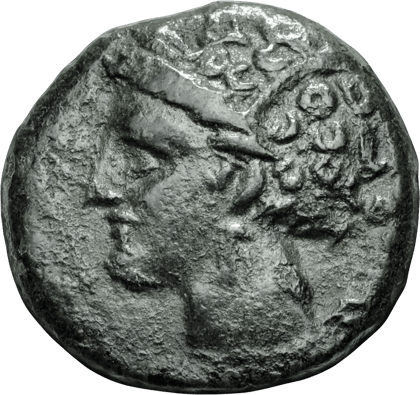 Bronze coinCarthage
16 mmthis page
Bronze coinCarthage
16 mmthis page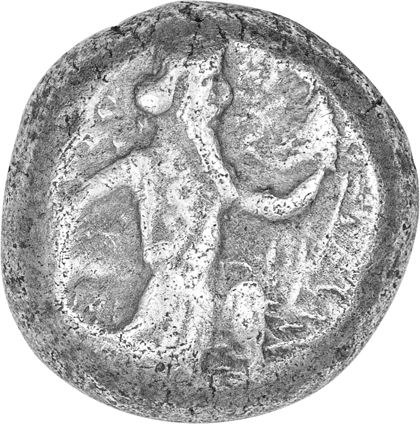 SiglosAchaemenids
18 mm
SiglosAchaemenids
18 mm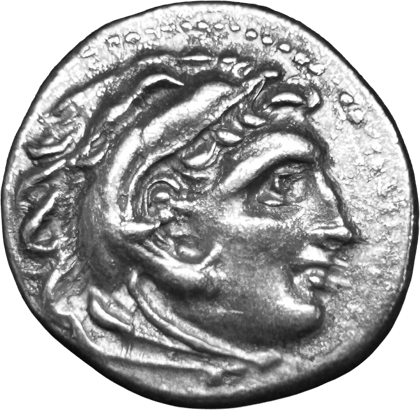 DrachmAlexander the Great
18 mm
DrachmAlexander the Great
18 mm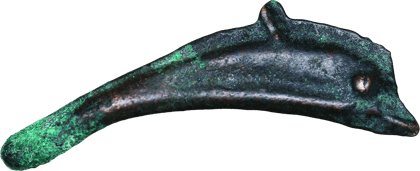 Dolphin moneyOlbia
c. 20 mm long
Dolphin moneyOlbia
c. 20 mm long 1 eurofor comparison
23.25 mm
1 eurofor comparison
23.25 mm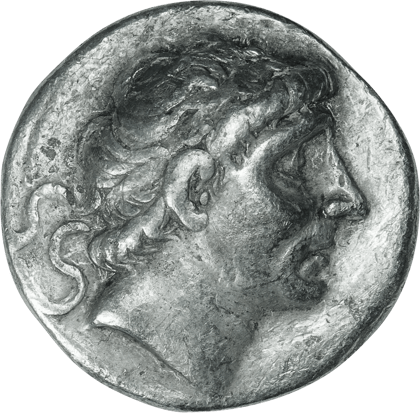 TetradrachmAntiochos I Soter
c. 26 mm
TetradrachmAntiochos I Soter
c. 26 mmWhere it belongs
31 originals from about 1,100 years
Each piece stands at the years of its ruler or of its type. The era of this piece is highlighted; choose another one to see its originals.
Carthage 5th to 2nd century BC · 1 original
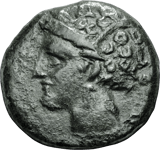 Bronze coin from Carthage400 to 350 BCthis page

Keeping it
First things first: do not clean it.
The dark layer on bronze and the matte grey on silver are called patina. It has grown over centuries and protects the surface. Polishing it away takes that protection from the piece.
- Hold it by the edgeSkin oil can etch itself permanently into the surface. Take the piece by the rim between thumb and forefinger, over a soft surface.
- Store each piece on its own, and dryKeep each piece on its own in a dry place, in a capsule or an acid-free case. PVC sleeves do not belong there, they attack the surface.
- No agents, no polishing clothNo vinegar, no silver cloth, no ultrasound. According to the Bank of Canada Museum, almost any attempt at cleaning without a conservator leaves damage, mostly from abrasion.

Struck about 2,400 years ago.
Carthage and its world are long gone. The piece has remained, with the traces of its circulation.
Carthage in Your Hand: A Bronze Coin from the World Before Hannibal
This small bronze coin comes from Carthage, the Punic metropolis on the North African Mediterranean coast, located in the ancient region of Zeugitana in what is now Tunisia. It was struck within a time frame of roughly 400 to 350 BC. At that time, Rome was an up-and-coming regional power – Carthage, by contrast, dominated trade in the western Mediterranean, maintained the strongest fleet in the region, and ranked among the wealthiest cities of the ancient world. About a century later, in this very city, Hannibal Barca was born, around 247 BC, the general who crossed the Alps with war elephants and brought Rome to the brink of destruction at Cannae.
Tanit and the Horse: The Designs in Detail
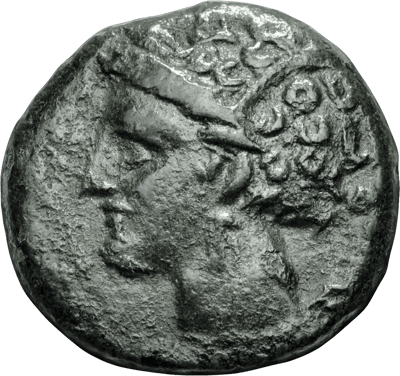
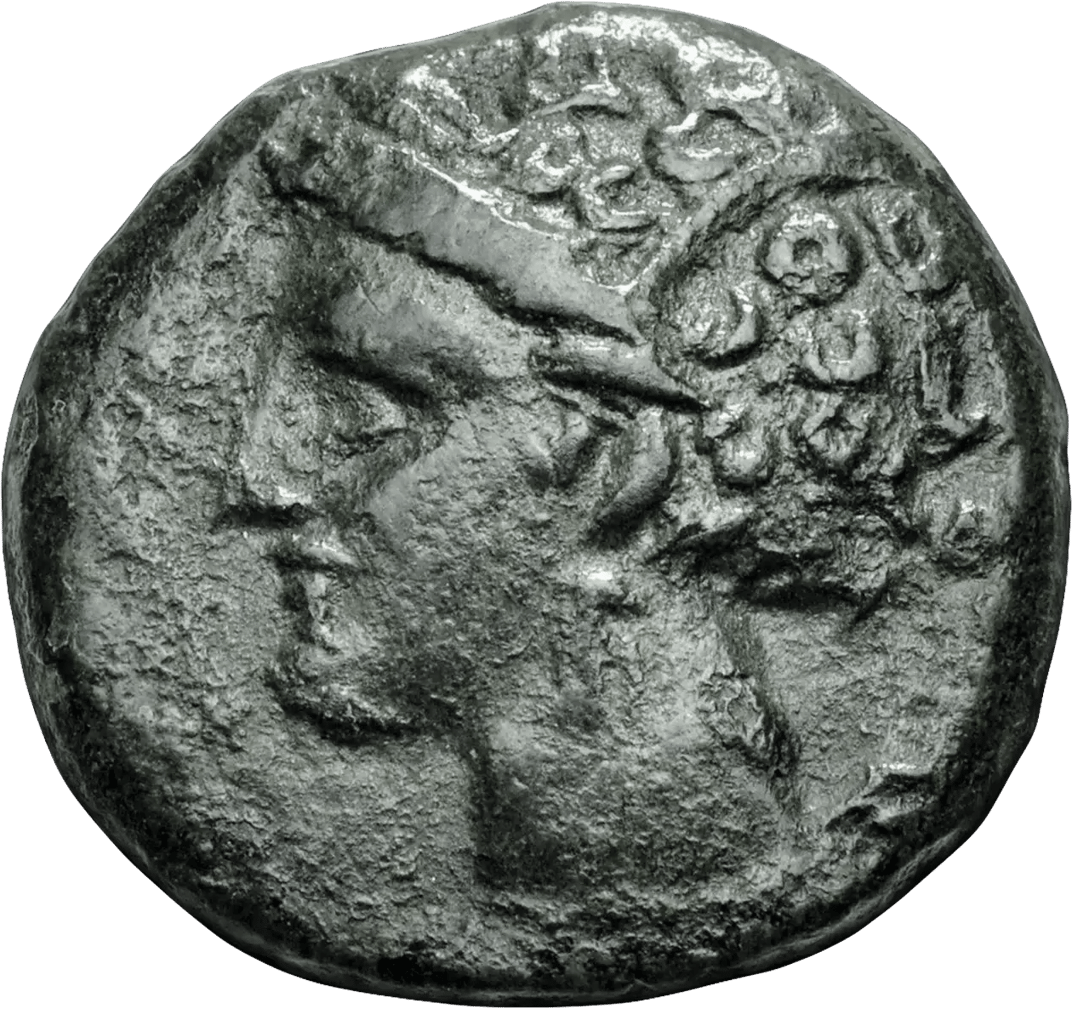
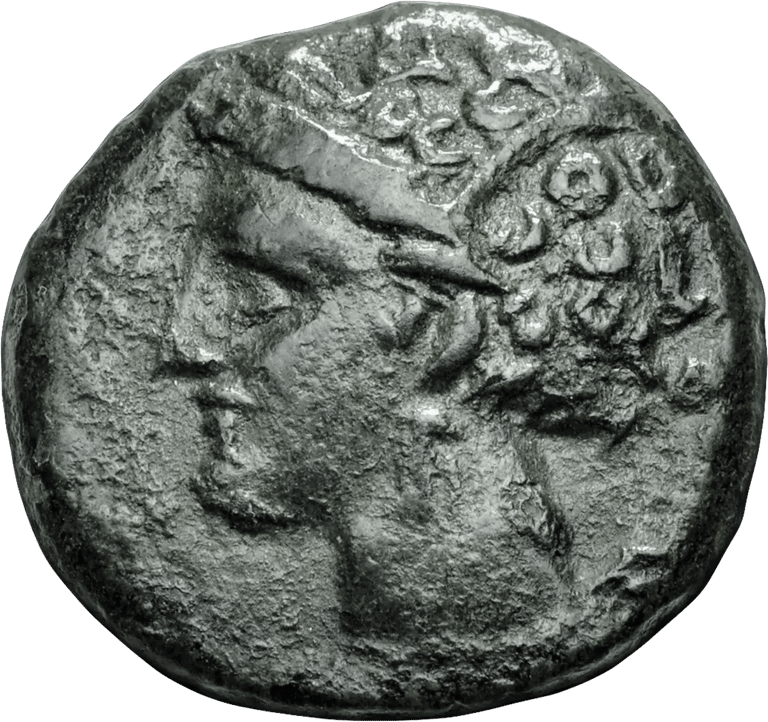
The obverse shows the head of Tanit facing left, wreathed in grain ears, often accompanied by an earring and necklace. Tanit was the Punic goddess of fertility and the patron goddess of Carthage. In the 5th century BC, together with Baal Hammon, she replaced the older divine pair Astarte and Melqart as the chief deities of the Punic people. Her attributes include the grain ear, pomegranate, fig, and dove – so the grain ears in the coin's design are not mere decoration, but a statement of faith.
The reverse shows a standing horse facing right, with a date palm behind it. Both symbols function almost like a city emblem. According to tradition, the horse refers to a divine omen at the founding of Carthage by Phoenician settlers from Tyre; the palm plays on the Greek word phoinix, alluding to this very Phoenician origin. There is no struck face value – numerical denominations were unknown in antiquity.
Key Data at a Glance
- Country of origin: Carthage, region of Zeugitana (modern-day Tunisia)
- Minting period: c. 400–350 BC; year of issue within this range varies
- Material: Bronze – a copper alloy, therefore without precious metal fineness
- Diameter: approx. 16 mm
- Gross weight: approx. 2.9 g
- Face value: none stated
- Condition: circulated piece, grade of preservation varies
- Investment type: coin, collector's item from the "History" series
- Shipping: as insured value shipment
Circulated Coinage with Character – What You Receive
These pieces were once currency in active use, and it shows. They display darker patina, individual centering, nicks, scratches, wear, and in places weaker legend details. That is exactly what makes them appealing: no polish in the world can simulate two thousand years of trading history.
Since the year of issue, mint, and reverse variant may vary, the piece you receive will differ from the image shown – you receive an original, not a mass-produced item. We therefore ask for your understanding that the image in the shop serves as an example and may differ individually from the delivered item in terms of appearance and condition due to historical circumstances.
How This Bronze Differs from Related Issues
Carthage did not mint coins solely in its capital. Numerous Punic bronzes were produced at mints in Sicily and Sardinia, often in larger formats of 18 to 25 mm and with noticeably greater weights. A very common type there features a horse's head instead of a full horse, sometimes combined with a palm on the reverse.
- Advantage of this small format: compact, very well suited for display, and clearly dated to Carthage's classical golden age before the Punic Wars.
- Worth noting: at 16 mm, there is less surface area for detail – the grain wreath and palm fronds stand out with varying clarity depending on condition.
- Typical preservation grades for ancient circulated bronzes range between "fine" and "very fine"; mint luster is naturally absent here.
History You Can Hold in Your Hand
Whoever holds this piece touches an object that has seen harbors, marketplaces, and mercenary camps. In 146 BC, at the end of the Third Punic War, Carthage was razed to the ground. The city vanished. Its bronzes remained – small, resilient witnesses of a world power.
Gold is humanity's oldest currency and has outlived all others. Ancient coins like this one tell the story of how it all began – and why tangible assets have earned trust across millennia.
For collectors, this bronze coin is an excellent entry point into the world of the Greeks and Punic peoples. For investors looking to add objects with history to their precious metals holdings, it is a tangible piece of antiquity: small, unassuming, and incorruptibly genuine. And a gift that never needs explaining twice.
Product depiction may differ from the final product.
