





Silver Denar Kingdom of Sicily (1194-1197 | King Henry VI - Son of Emperor Frederick I "Barbarossa")
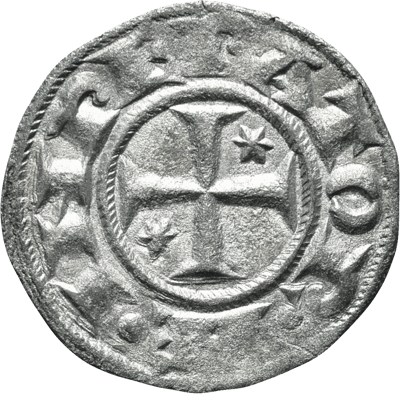
- Genuine Original: around 830 years old
- The Imperial Couple: Emperor and Empress
- Short Reign: pure Hohenstaufen era
- Genuine OriginalNo cast copy, no replica, but genuine medieval history
- The Imperial CoupleThe inscription typically also names Empress Constance
- Short ReignHenry died aged just 31 in Messina








- Genuine Original: around 830 years old
- The Imperial Couple: Emperor and Empress
- Short Reign: pure Hohenstaufen era
 Price alert
 Share

Kingdom of Sicily
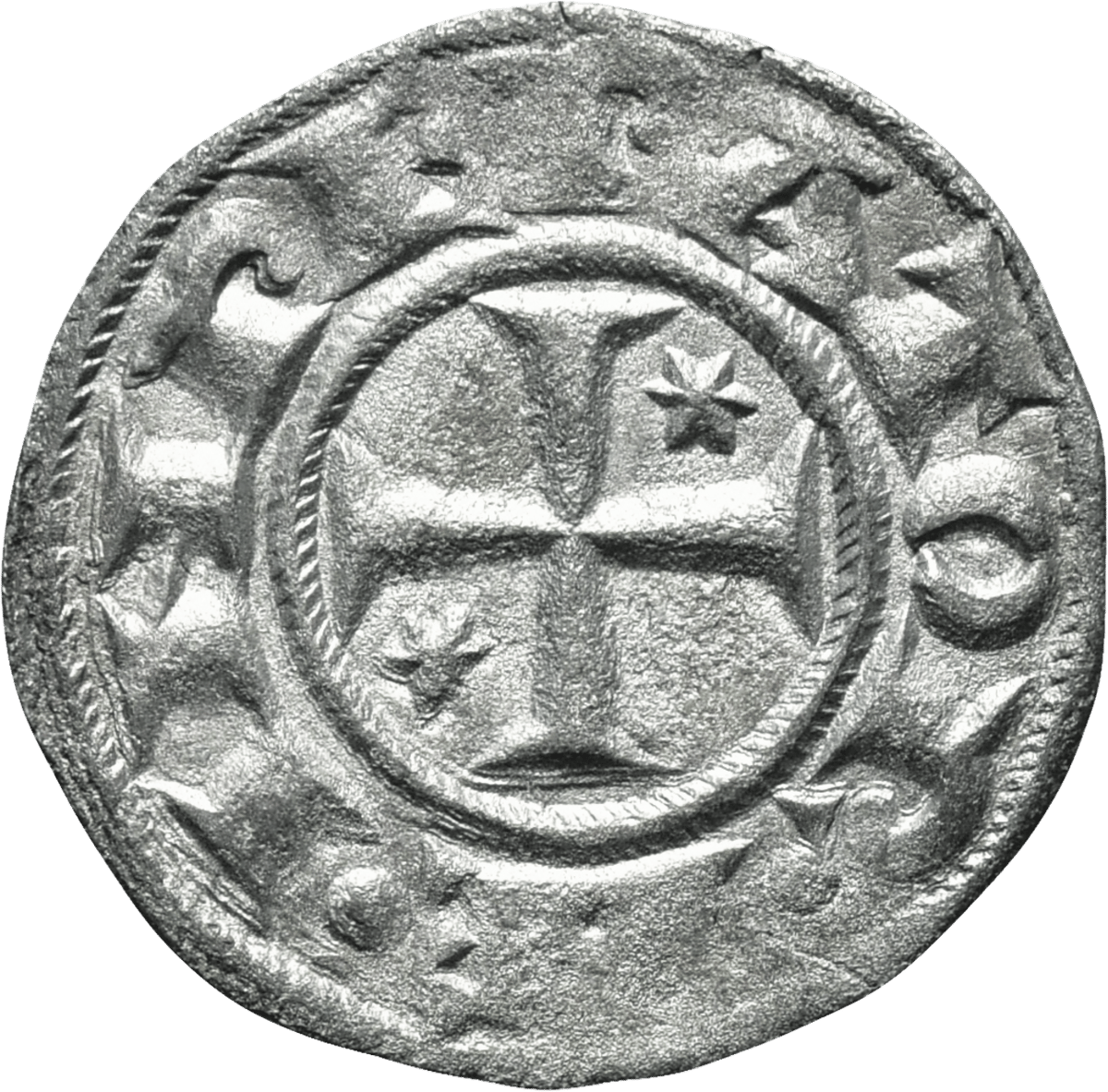
The denier of Henry VI.Emperor and empress, united in silver.
Henry, son of Barbarossa, was crowned King of Sicily in Palermo on 25 December 1194. The next day his son, the later Emperor Frederick II, was born in Jesi.
- Age
- over 800 years
- Coin
- Denier, silver
- Weight
- 0.7 g
Henry, son of Barbarossa, was crowned King of Sicily in Palermo on 25 December 1194. The next day his son, the later Emperor Frederick II, was born in Jesi.
- Age
- over 800 years
- Coin
- Denier, silver
- Weight
- 0.7 g
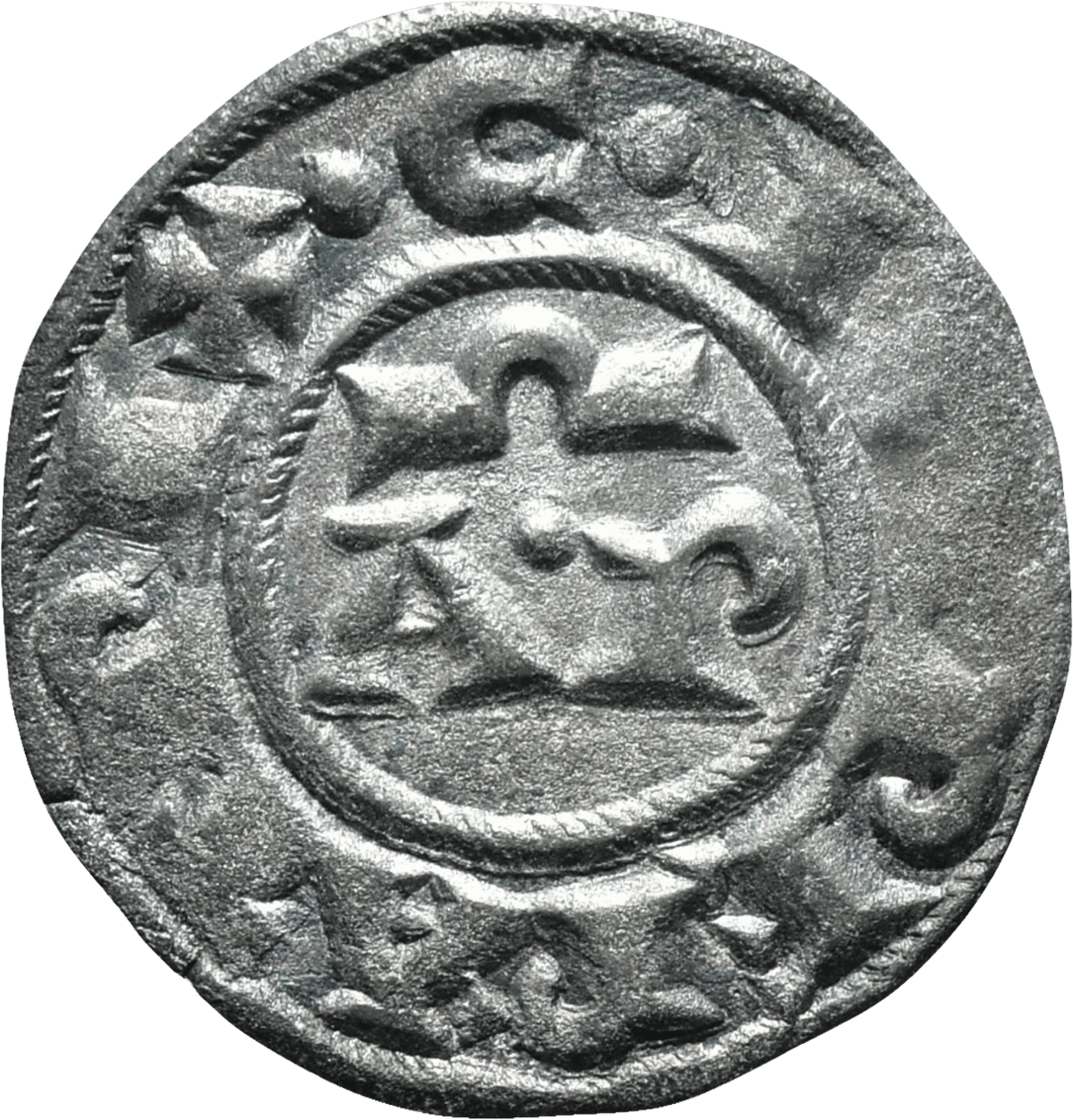
The other side
On the other side: the empress.
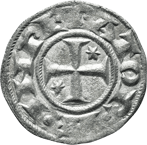
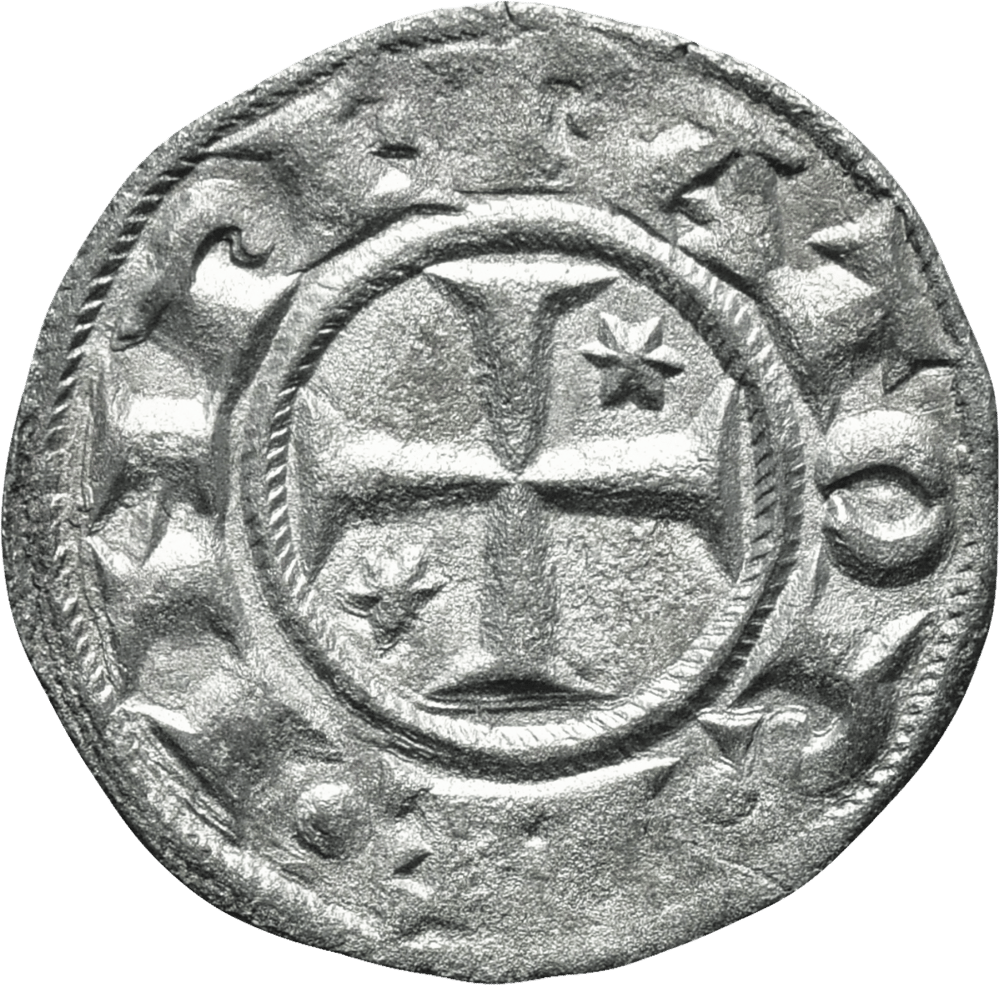
C INPERATRIX stands for Constance, heiress of Norman Sicily. On the emperor’s side INPERATOR runs around a cross with 2 stars. The denier was probably struck in Brindisi or Messina.
The ransom for Richard the Lionheart helped Henry to conquer Sicily in 1194. He died in Messina on 28 September 1197.

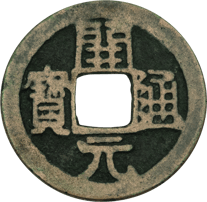
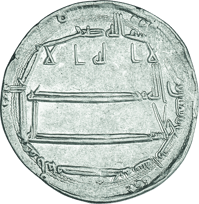
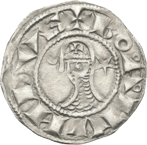
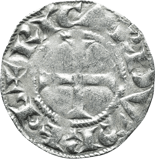
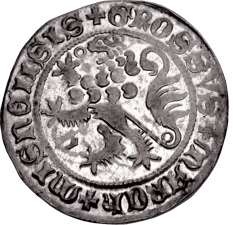
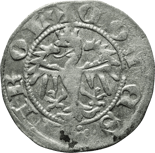

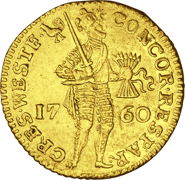
Size comparison
12 coins, one scale.
All 12 lie on the table in their true proportions, the oldest on the left. Your piece measures 17 mm.
- Cash coin24 mm · 2.6 g
- Dirham23 mm · 2.9 g
- Denier17 mm · 0.83 g
- Denier of Poitou18 mm · 1 g
- Denier of Sicily17 mm · 0.7 gthis page
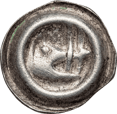
- Bracteate13.5 mm · 0.2 g
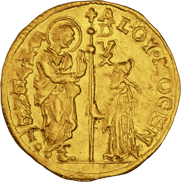
- Zecchino21 mm · 3.5 g
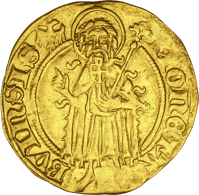
- Gold gulden23 mm · 3.9 g
- Prince’s groschen27 mm · 2.85 g
- Kreuzer18 mm · 0.7 g
- Gold fanam8 mm · 0.3 g
- Trade ducat21.4 mm · 3.5 g
The heaviest piece is not the widest: the gold gulden weighs almost twenty times as much as the bracteate and is still narrower than the groschen. Gold is almost twice as dense as silver.
Timeline
From 621 to 1797.
Each bar shows the years from which the pieces of a type come. For the zecchino that is 468 years, for the prince’s groschen only 13.
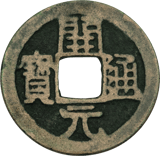 Tang dynasty621 to 907
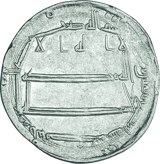 Abbasid caliphate8th and 9th centuries
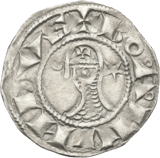 Principality of Antioch1163 to 1232
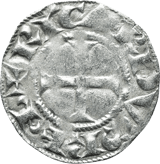 County of Poitou1189 to 1196
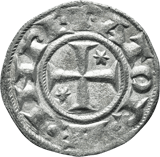 Kingdom of Sicily1194 to 1197 · Your piece
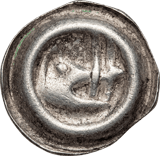 Town of Schweidnitz14th and 15th centuries
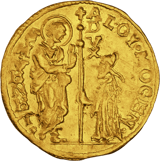 Republic of Venice1329 to 1797
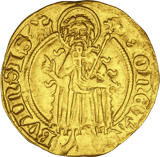 Electorate of Cologne1371 to 1463
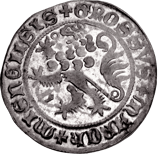 House of Wettin1393 to 1406
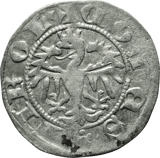 Tyrolfrom 1477
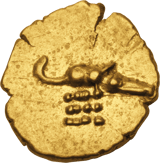 South India1600 to 1750
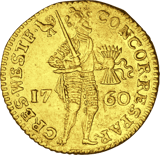 United Provinces1739 to 1794

12 coins.Over 1,100 years.
From 621 to 1797 and from China to the North Sea: every one of these coins was money that people paid with.
A Denar from the Hand of the Hohenstaufen Emperor: Henry VI as King of Sicily
An emperor's son, a Norman heiress, and a kingdom between Orient and Occident: rarely does a single coin hold so much history. This denar made of silver was minted in the Kingdom of Sicily under Henry VI, the son of Emperor Frederick I "Barbarossa". It measures around 17 mm and weighs about 0.7 g. And yet, you hold a genuine piece of the High Middle Ages in your hand.
Henry was born in Nijmegen in 1165 and became Holy Roman Emperor in 1191. Through his marriage to Constance, daughter of the Norman King Roger II, he laid claim to the Sicilian crown. The campaign was financed, among other things, by the enormous ransom paid for Richard the Lionheart. In 1194, Henry conquered the Norman kingdom and was crowned in Palermo Cathedral on 25 December 1194. One day later, his only son was born in Jesi — the future Emperor Frederick II. Henry himself died as early as 28 September 1197 in Messina, at just 31 years of age. His coins therefore stem from a brief but dramatic reign.
Obverse and Reverse: Cross, Stars, and the Empress
The example piece shown depicts a typical denaro struck in the names of Henry and Constance, as minted in Brindisi or Messina:
- Obverse: a bold cross with two stars in the angles. The legend + HE INPERATOR names Henry as emperor.
- Reverse: the letters A and P beneath an omega sign in the field. The legend + C INPERATRIX names Constance as empress.
- Variants: Depending on the mint and issue, there are also types featuring an eagle or small spheres in the angles of the cross. From 1196 onward, coins struck in the names of Henry and his son Frederick were also issued.
The emperor on one side, the empress on the other: this denar represents the Hohenstaufen-Norman ruling couple who united Sicily with the Empire.
Specialist catalogues, such as Spahr or the MEC (Medieval European Coinage), record these issues in detail. Comparable pieces from the time of Henry VI can today be found in major collections such as the Münzkabinett of the Staatliche Museen zu Berlin.
Condition: Traces That Tell Stories
These pieces were circulating currency — and they look the part. Darker patina, individual centring, small nicks, wear, and legend portions that are weakly struck in places: these are not flaws, but biography. Every trace comes from hands that, centuries ago, used these coins to settle goods, cargo, or debts.
Since the year of minting, mint of origin, and reverse variant can vary, the piece supplied may differ from the image shown. Please understand the photo in the shop explicitly as a representative image: appearance, exact weight, and condition vary from piece to piece for historical reasons. You are purchasing an original.
The fineness, too, varies from piece to piece. Small medieval coins such as this denar were struck from a silver alloy whose precious metal content fluctuated depending on the issue. Numismatists often refer to this as billon.
Why Collectors Value This Silver Denar
Anyone collecting historical silver coins is looking for exactly these connecting links. Here, two worlds meet: the Hohenstaufens from the north and the rich, multilingual Norman kingdom in the south.
- A famous ruling family: Barbarossa as father, Frederick II as son. Henry VI stands right at the heart of the Hohenstaufen dynasty.
- A brief minting period: as King of Sicily, Henry reigned for only three years, from 1194 to 1197.
- Genuine medieval history: around 830 years old. No restrike, no replica.
- A compact format: fits into any collection focused on the Hohenstaufens, Sicily, or the era of the Crusades.
In Comparison: Denar, Tari, and Augustalis
Besides the denari, Henry also had gold tari struck in Sicily. These are impressive, but considerably harder for most collectors to obtain. His son Frederick II later introduced the famous gold augustalis, a masterpiece of coin art and correspondingly rare. The denar offers an easier entry point into this era. Its advantage: it provides a genuine, tangible piece of the Hohenstaufen period. Its disadvantage? It does not shine like a modern bullion coin, and its metal value is smaller than its historical value. But for those who love history, that is precisely where the appeal lies.
Silver: A Monetary Metal for Millennia
This denar is itself the best proof of that: for centuries, silver was the metal with which people paid across Europe. It endures, retains its physical properties, and carries an intrinsic value that does not depend on a government's promise. Little has changed in this regard to this day. Many people use precious metals as an inflation hedge and as crisis protection in uncertain times. In doing so, they build lasting provisions and create value that can be passed on to the next generation.
Industry, too, requires large amounts of silver, particularly in electronics, solar technology, and medical technology. At the same time, supply is limited. For private investors in Germany, there is an additional advantage: profits from the sale of physical silver are generally tax-free if held for at least one year.
With this piece, however, the collector's value is clearly what matters most. You are not buying bullion metal, but an original from the Kingdom of Sicily that has already survived more than 800 years — a witness to the Hohenstaufen era that you can admire with pleasure and one day pass on to the next generation.
Product image may differ from the actual product.
