





0.5 Gram Gold Prehistoric Life II Tupandactylus 2026 (Mintage: 2,000 | Proof)
- Pure fine gold: Fineness 999.9/1,000
- Wealth building: Step by step
- German minting: by B.H. Mayer
- Pure fine goldGenuine investment gold, its value tied to the gold price
- Wealth buildingBuy more regularly, sell individual coins flexibly
- German mintingProduced by a traditional German mint








- Pure fine gold: Fineness 999.9/1,000
- Wealth building: Step by step
- German minting: by B.H. Mayer
 Price alert
 Share

Tupandactylus
A crest taller than its whole head.The Tupandactylus 2026 in 0.5 g of gold.
0.5 g of gold, in proof quality, issuing country Democratic Republic of the Congo. Tupandactylus lived about 112 million years ago in what is now Brazil.
Tupandactylus on 0.5 g of gold, reverse, image
0.5 g of gold, in proof quality, issuing country Democratic Republic of the Congo. Tupandactylus lived about 112 million years ago in what is now Brazil.

From the rock
Brazil’s limestone kept the crest that the coin shows.
Tupandactylus comes from the Crato Formation in north-eastern Brazil, finely layered limestone in which even soft tissue has survived. Its crest was partly bone, partly soft tissue. In the most complete skeleton known, it rises more than 5 times as high as the skull.
This skeleton lies in 6 limestone slabs that fit together exactly along straight cuts. That is how quarrymen there cut paving stones.
Source: Beccari et al., PLOS ONE, 2021
The timeline
From the Devonian to the last Ice Age
Each animal stands in its geological period. The sections show the order, not the duration.
Devonian
about 420 to 359 million years ago
 DunkleosteusArmoured fish
Carboniferous
about 359 to 299 million years ago
Permian
about 299 to 252 million years ago
Triassic
about 252 to 201 million years ago
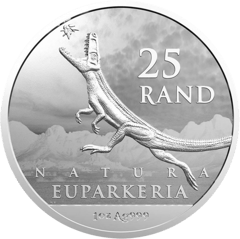 ArchosaursAnimal group
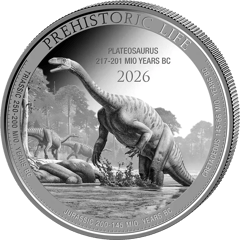 PlateosaurusDinosaur
Jurassic
about 201 to 143 million years ago
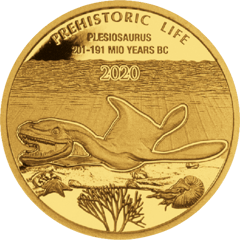 PlesiosaurusMarine reptile
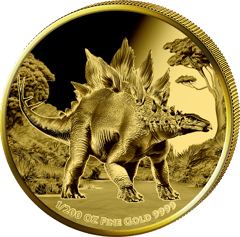 StegosaurusDinosaur
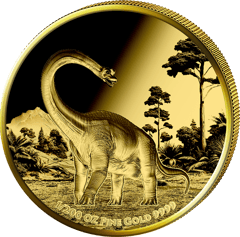 BrachiosaurusDinosaur
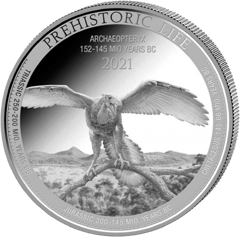 ArchaeopteryxEarly bird
Cretaceous
about 143 to 66 million years ago
 TupandactylusPterosaur
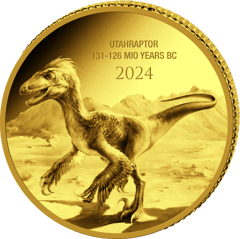 UtahraptorDinosaur
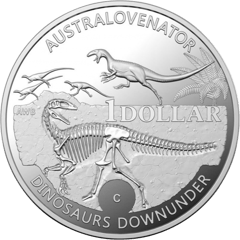 AustralovenatorDinosaur
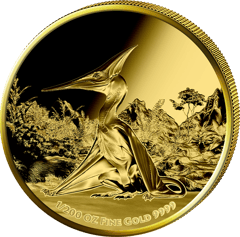 PteranodonPterosaur
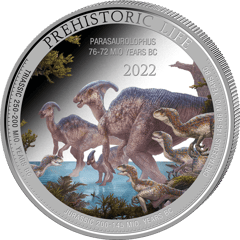 ParasaurolophusDinosaur
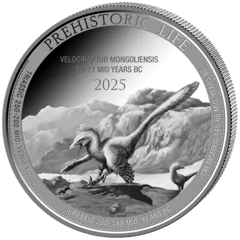 VelociraptorDinosaur
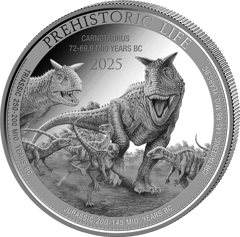 CarnotaurusDinosaur
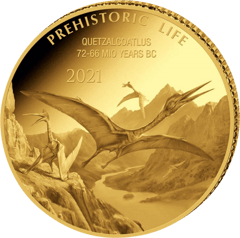 QuetzalcoatlusPterosaur
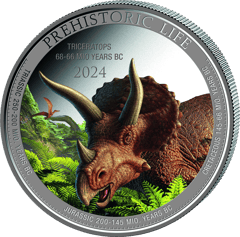 TriceratopsDinosaur
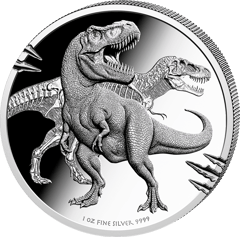 T. rexDinosaur
- The age of the dinosaurs ends 66 million years ago.
Palaeogene
66 to about 23 million years ago
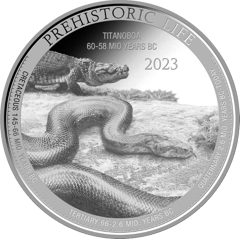 TitanoboaSnake
Neogene
about 23 to 2.6 million years ago
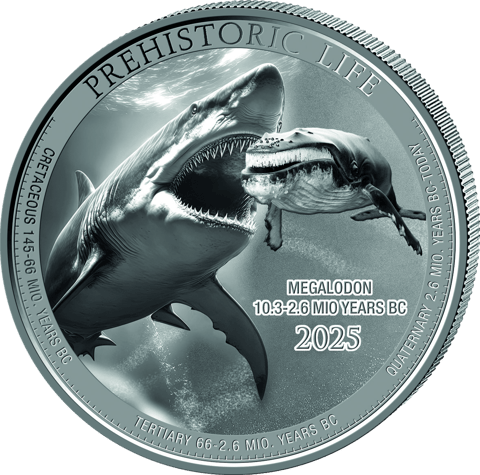 MegalodonShark
- The human genus begins about 2.8 million years ago.
Pleistocene
about 2.6 million to 11,700 years ago
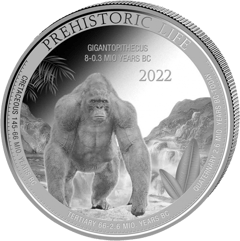 GigantopithecusGreat ape
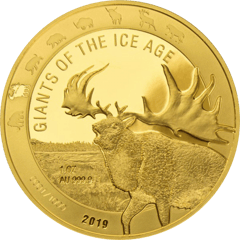 Giant deerMammal
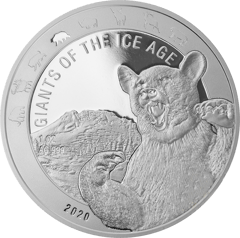 Cave bearMammal
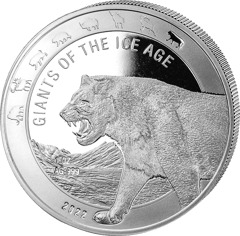 Cave lionMammal
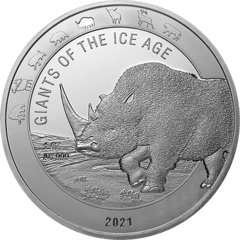 Woolly rhinocerosMammal
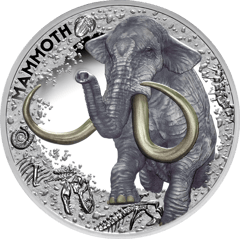 MammothMammal
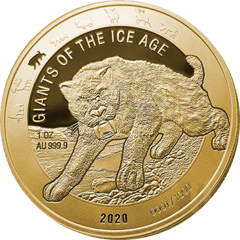 Sabre-toothed catMammal
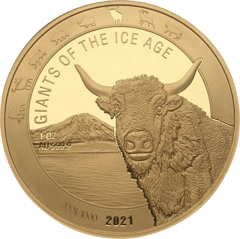 AurochsMammal
- Homo sapiens has existed for about 300,000 years.
- People enter the Chauvet Cave about 36,500 years ago.
Not to scale. Dates according to the International Commission on Stratigraphy, rounded.
The coin
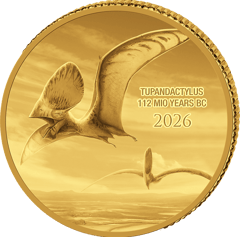
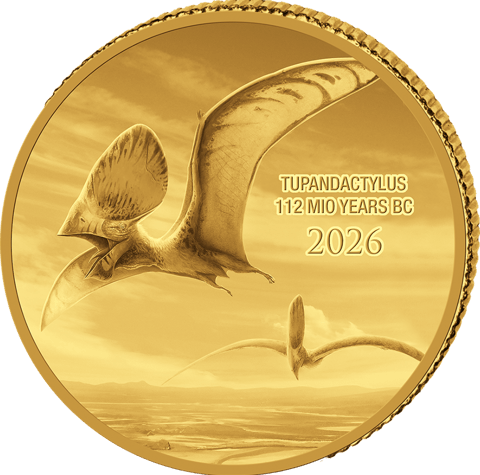
The Tupandactylus 2026: 2 pterosaurs over a wide plain.
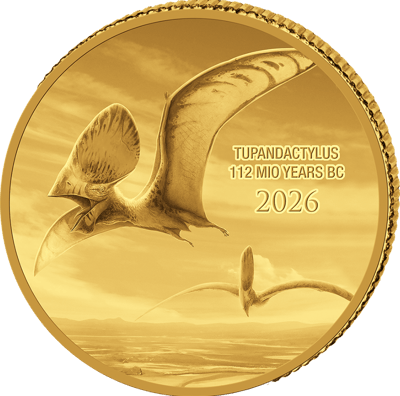
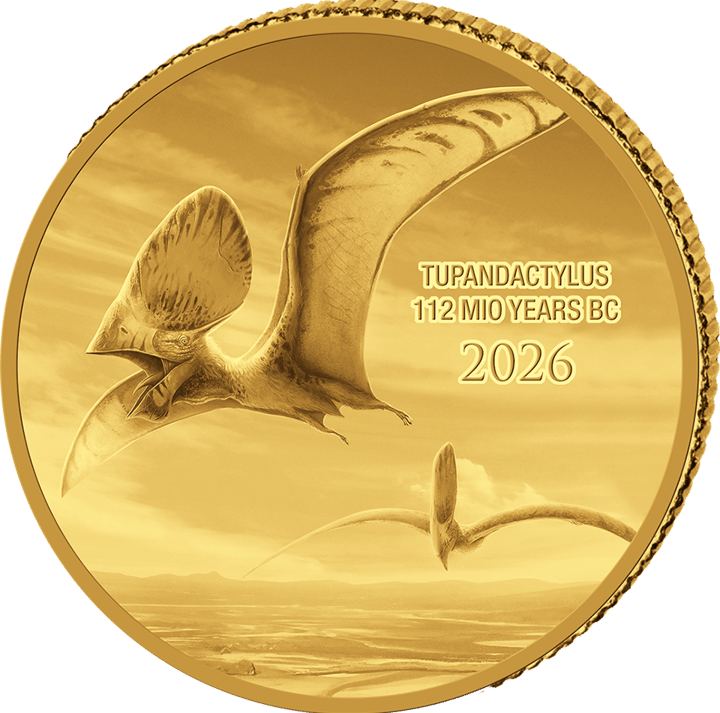
On the reverse, 2 Tupandactylus fly over a wide plain crossed by streams, with hills on the horizon. The animal in front carries a tall crest and opens its beak. On the right of the field stand TUPANDACTYLUS, 112 MIO YEARS BC and 2026.
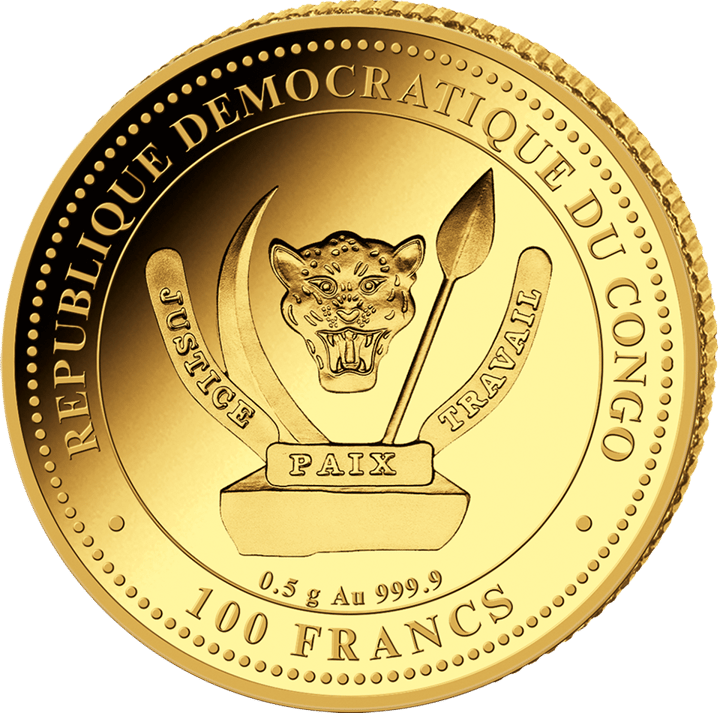
On the silver coins a timeline of the geological periods runs around the rim, and the obverse bears the coat of arms of the Democratic Republic of the Congo.
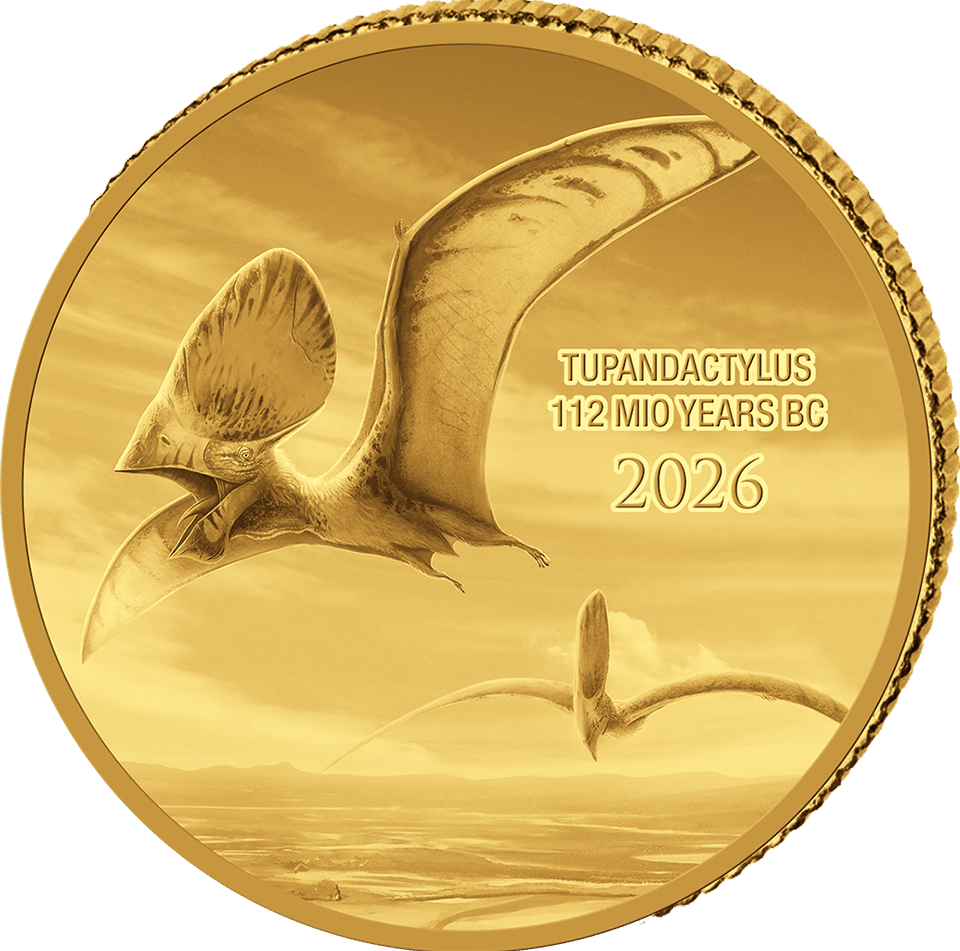
CrestThe crest of Tupandactylus
InscriptionTUPANDACTYLUS, 112 MIO YEARS BC
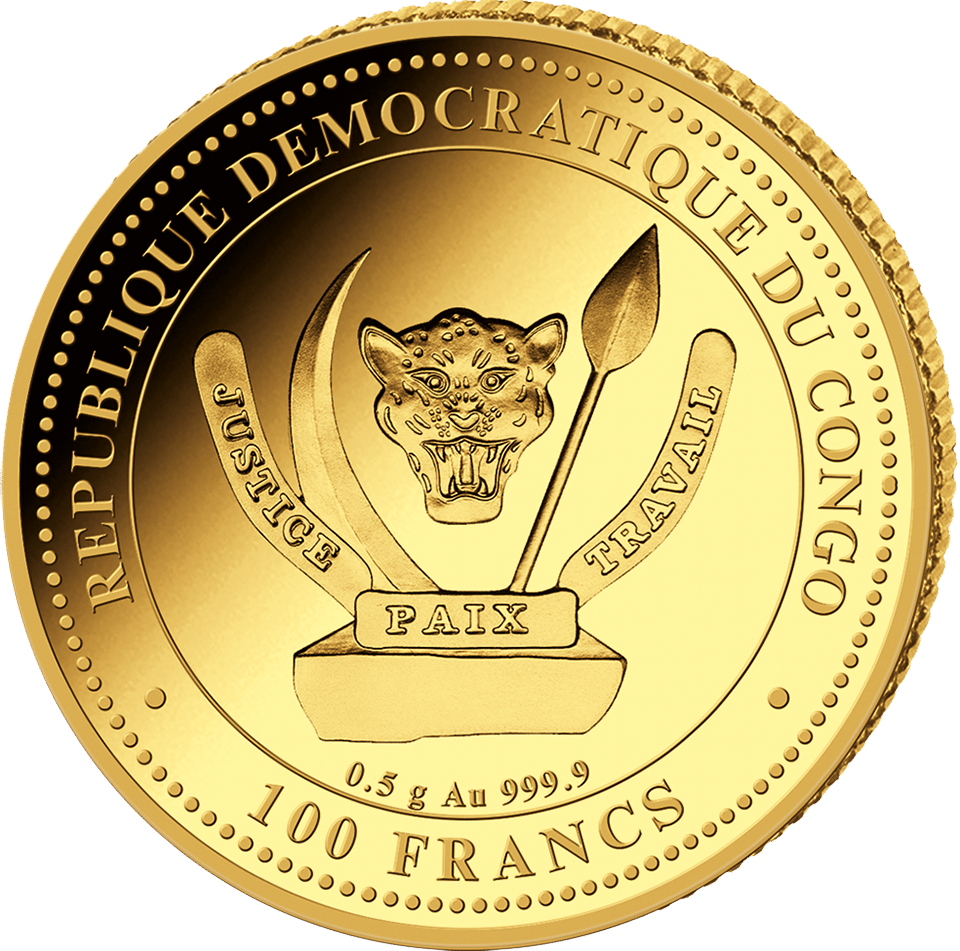
Coat of armsCoat of arms of the DR Congo
Face valueThe face value
The image up close

At a glance
- Issuing country
- Democratic Republic of the Congo
- Face value
- 100 francs
- Metal
- gold
- Weight
- 0.5 g
- Diameter
- 11 mm
- Quality
- Proof
- Fineness
- 999.9/1,000
- Mintage
- 2,000 pieces
- Year
- 2026

From the limestone of Brazil into the light: the Tupandactylus 2026 in 0.5 g of gold.
Tupandactylus 2026 in 0.5 g Fine Gold – the Pterosaur with the Giant Crest
- Strictly limited: capped worldwide at a very low mintage of just 2,000 pieces
- Growth potential: potential for value appreciation thanks to the limited quantity and the great popularity of the prehistoric series
- Rarity in miniature format: a true rarity among the 0.5-gram strikes made of pure fine gold
- Minting quality: the highest possible finish, Proof (PP), with mirrored fields and frosted relief
- Design: two Tupandactylus glide over a prehistoric landscape with their enormous head crests – together with the inscription "112 MIO YEARS BC"
- Material / fineness: 0.5 g fine gold at 999.9/1,000 – equivalent to 99.99 percent purity
- Manufacturer: produced by the long-established mint B.H. Mayer
- Country of origin: minted in Germany, issued by the Democratic Republic of the Congo
The 0.5 gram Prehistoric Life II Tupandactylus 2026 gold coin continues the second season of the successful prehistoric series from the Congo – and does so with a design you won't forget anytime soon. Half a gram of gold of the highest purity carries one of the most spectacular pterosaurs ever discovered. Anyone who sees nothing more than a pretty collector's coin here is missing the bigger picture. The substance of this coin is pure fine gold, whose value is based on the gold price.
A Pterosaur with a Spectacular Head Ornament
Tupandactylus lived during the Early Cretaceous in what is now northeastern Brazil. Its fossils come from the famous Crato Formation in the Araripe Basin, a site renowned for exceptionally well-preserved soft tissue. Strictly speaking, it was not a dinosaur but a pterosaur – a contemporary of the dinosaurs that shared the prehistoric era with them. Its trademark? A huge, sail-like head crest, among the proportionally largest of any pterosaur. Add to that a toothless, bird-like beak.
These exact features are masterfully brought out on the obverse. In the foreground, a Tupandactylus soars through the air with wings spread wide, the fine structure of its wing membrane recognizable down to the last detail. A second animal flies further back over a vast plain crossed by waterways. To the right are the inscriptions "TUPANDACTYLUS", "112 MIO YEARS BC" and the year of issue 2026. The reverse shows the national coat of arms of the Democratic Republic of the Congo with a leopard's head, elephant tusk and spear, the motto "Justice – Paix – Travail", the legend "REPUBLIQUE DEMOCRATIQUE DU CONGO", the specification "0.5 g Au 999.9" as well as the face value of 100 francs.
Proof Quality: Minting Artistry on 11 Millimeters
Eleven millimeters in diameter – and yet so much depth. This is made possible by the Proof minting quality. For Proof coins, polished dies and carefully prepared blanks are used, often with multiple striking pressure. The result is mirrored fields against which the frosted design elements stand out in relief. The reeded edge rounds off the overall appearance. The gold coin is delivered in a coin capsule that reliably protects its sensitive surface.
Full-Value Investment Gold – Building Wealth Step by Step
Despite its fascinating design, what you are acquiring here is full-value investment gold: minted fine gold whose value is primarily based on the 0.5 grams it contains and which moves in line with the gold price. Small denominations offer a major advantage. They allow for wealth building in manageable steps – and anyone who buys regularly will see small amounts of gold grow into a sizeable holding over the years. If needed, individual coins can also be sold flexibly without having to touch the entire holding.
- Proven store of value: Gold has served as a store of value for over 6,000 years and is considered the oldest currency in the world.
- Intrinsic value: Gold has never had a value of zero – it is scarce, durable and recognized worldwide.
- High liquidity: tradable worldwide and convertible back into cash at any time.
- Tax advantage: Profits from the sale of physical gold are generally tax-free after a holding period of at least one year.
- Value for generations: Gold never loses its shine and can easily be passed on to children and grandchildren.
It is no coincidence that central banks are among the largest holders of gold in the world. Many investors also value physical gold as an inflation hedge and as crisis protection. However, the focus of this coin is the interplay between pure fine gold and a limited mintage.
Strict Limitation Meets Strong Demand
With a mintage of just 2,000 pieces worldwide, the Tupandactylus is among the scarcest issues in the series. The strict limitation and the loyal following of the Prehistoric Life series can give rise to noticeable potential for value appreciation. As with all precious metals, there are of course no guarantees – but scarcity has always been a strong argument.
In Comparison: Tupandactylus, Plateosaurus and the 1-Gram Bar
Within the gold coins category, the 0.5-gram issues of the Prehistoric Life series occupy a special place. In the same 2026 year of issue, the Plateosaurus – a plant-eating dinosaur from the Triassic period and a ground-dweller rather than a pterosaur – is also released in the same denomination. Anyone expanding their gold holdings gram by gram can combine different designs from the series. A classic 1-gram gold bar typically offers a lower premium per gram of fine gold, but forgoes a face value, design and the elaborate Proof finish. The Tupandactylus coin combines both: fine gold as substance and a design that brings genuine joy.
Give the gift of genuine investment gold for a christening, birthday or Christmas – especially for young prehistoric enthusiasts, the Tupandactylus is an ideal entry point into physical gold investment.
Technical Data at a Glance
- Precious metal: gold, fineness 999.9/1,000
- Fine weight: 0.5 g
- Diameter: 11.00 mm
- Edge: reeded
- Face value: 100 francs
- Year of issue: 2026
- Condition: Proof (PP)
- Mintage: 2,000 pieces
- Series: Prehistoric Life II
- Issuing country: Democratic Republic of the Congo
- Country of origin: Germany
- Manufacturer: B.H. Mayer
- Packaging: coin capsule
Product image may differ from the actual product.
