





1kg Copper Germanic Museum 2026 (Proof)
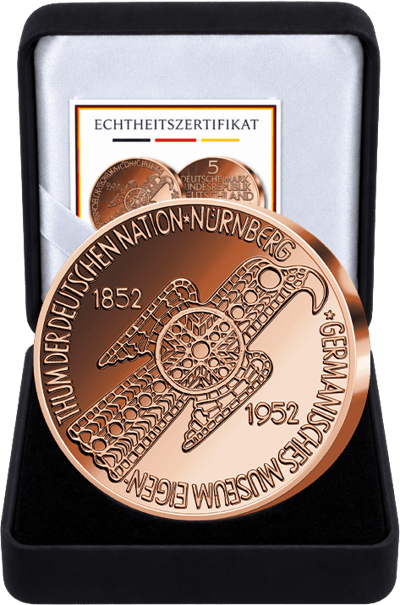
- 1952 original: first commemorative coin
- Eagle brooch: jewelry around 500 AD
- High purity: 999/1,000 fine copper
- 1952 originalTribute to the 5-mark commemorative coin of the young Federal Republic
- Eagle broochThe Ostrogothic jewel was likely worn by a lady at the royal court
- High puritySolid fine copper with a warm, reddish shine








- 1952 original: first commemorative coin
- Eagle brooch: jewelry around 500 AD
- High purity: 999/1,000 fine copper
 Price alert
 Share

Copper medal
The red metal.Germanisches Museum 2026: the eagle brooch gleams on 1 kg of copper.
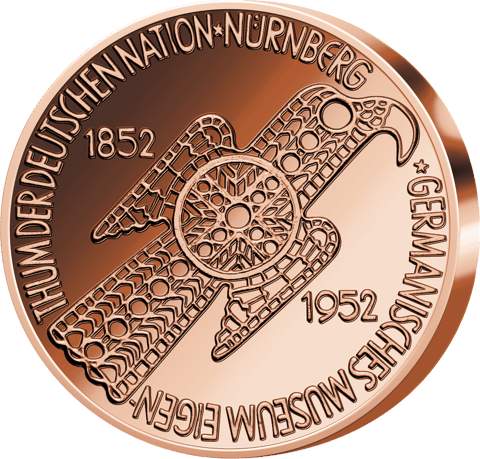
1 kg of 999/1,000 copper, a medal struck in proof quality, 100 mm in diameter. The image shows the motif side with the eagle brooch of Domagnano.
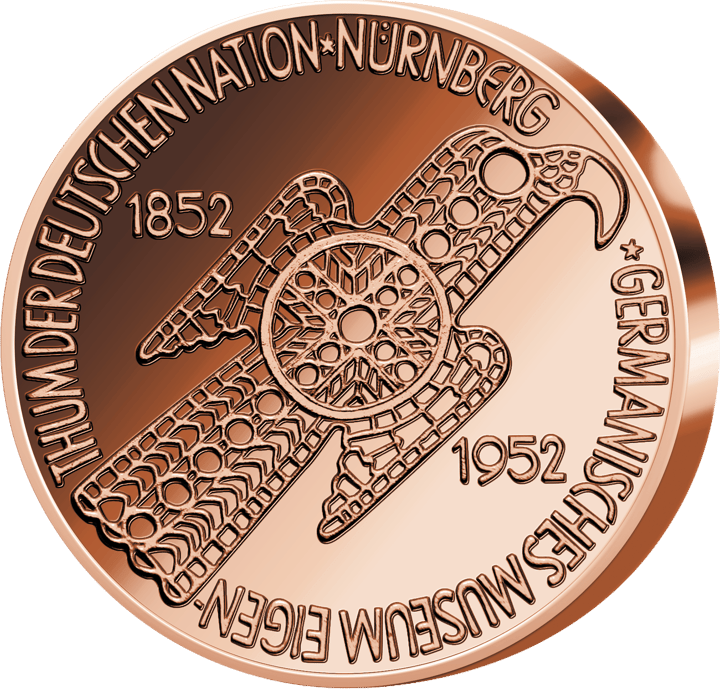
1 kg copper Germanisches Museum 2026, side with the eagle brooch, image
1 kg of 999/1,000 copper, a medal struck in proof quality, 100 mm in diameter. The image shows the motif side with the eagle brooch of Domagnano.
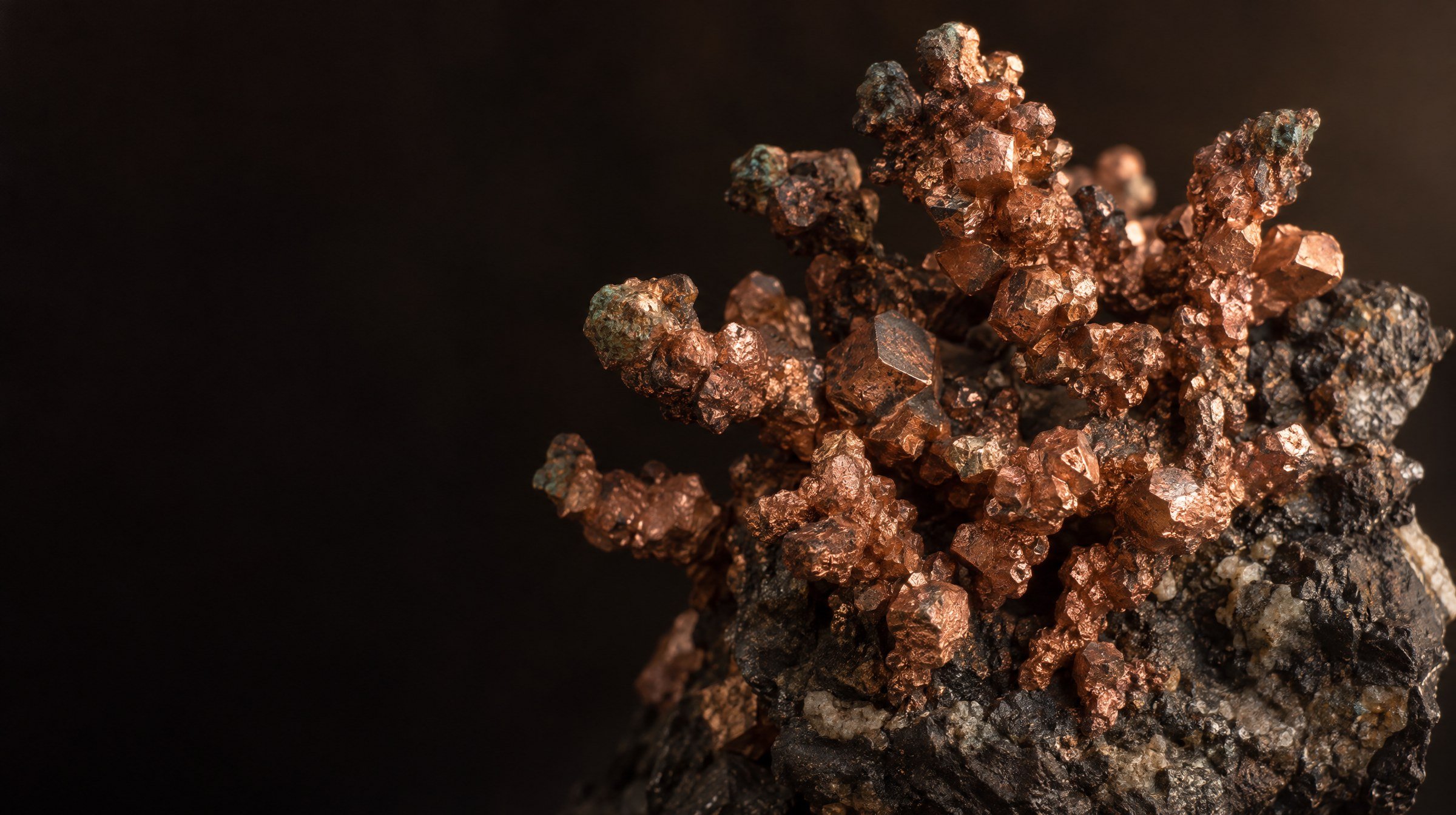
The Copper Age
The first tools made of metal
Copper was the first metal from which people made tools and weapons. At first they took native copper, as nature brings it forth in pure form, and hammered it into shape.
A copper pendant from the north of today’s Iraq is dated to about 8700 BC. It is estimated that copper was known as early as 7,000 years before tin; the time up to bronze is therefore also called the Copper Age.

Fire
Above 1,080 °C, copper turns liquid.
After hammering, people learned to melt copper and cast it in moulds. Egyptian sandstone furnaces and crucibles bear witness to this.
More than 5,300 years ago, Ötzi carried an axe with a blade of almost pure copper from southern Tuscany. It had been cast in a mould and, once cooled, compressed by hammering.
The name
The metal from Cyprus
- KýprosGreek: Cyprus
- aes cypriumLatin: metal from Cyprus
- cuprumLate Latin, hence Cu
- kupharOld High German, 9th century
- KupferGerman, since Middle High German
In antiquity Cyprus was a major supplier of the metal, as the Etymological Dictionary of German records.
More than 3,000 years ago, copper bars were already being made on Cyprus. One of them, weighing almost 37 kilograms and bearing an impressed mark, is now in the British Museum.
The colour
A metal with a colour of its own
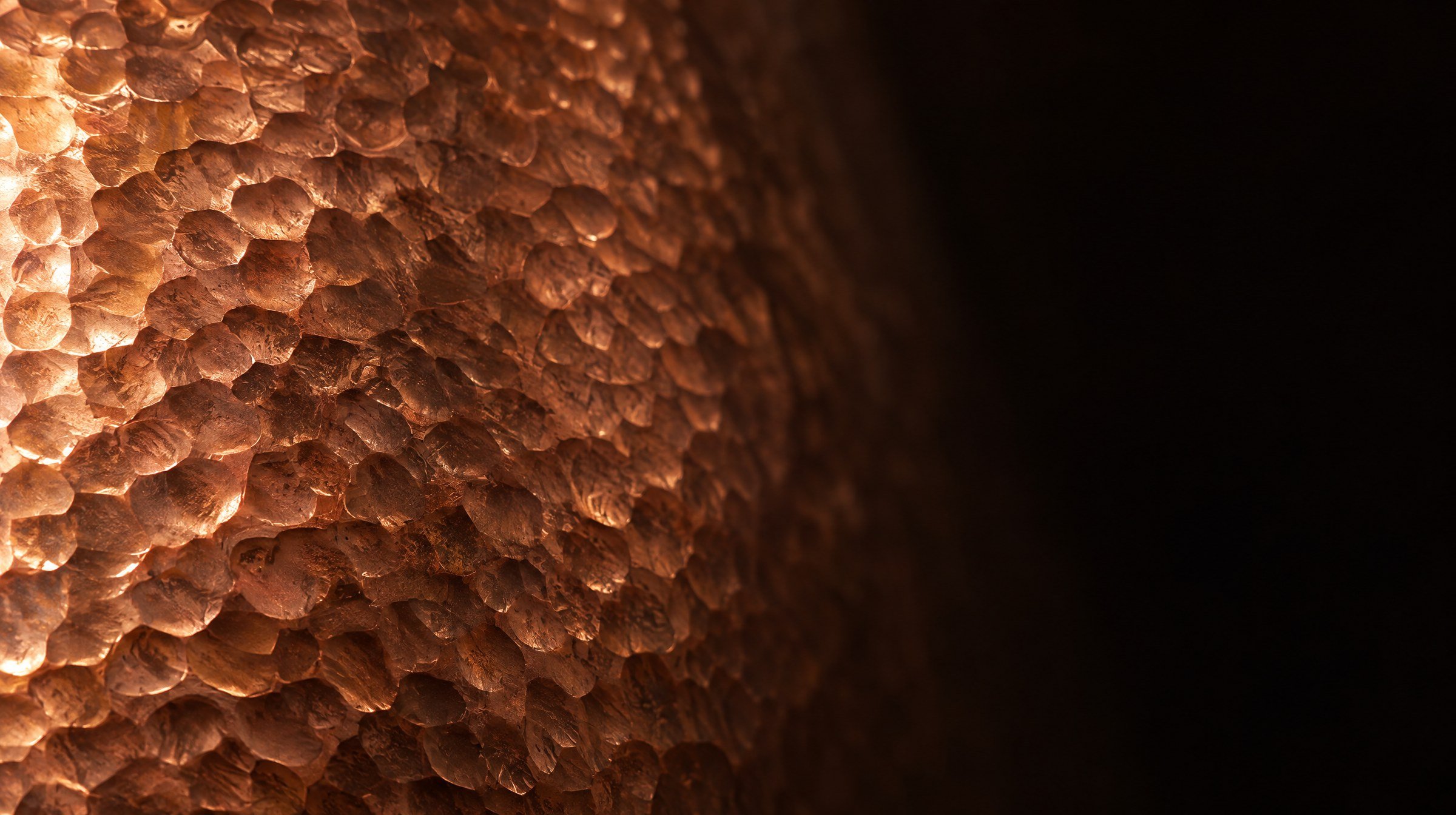
Copper is one of the very few metals with a colour of its own. Pure copper is salmon red, as the German copper association describes it.
Hardly any metal conducts heat as well. And copper is dense: a cube measuring one centimetre along each edge weighs almost nine grams.

Time
The patina grows with the years
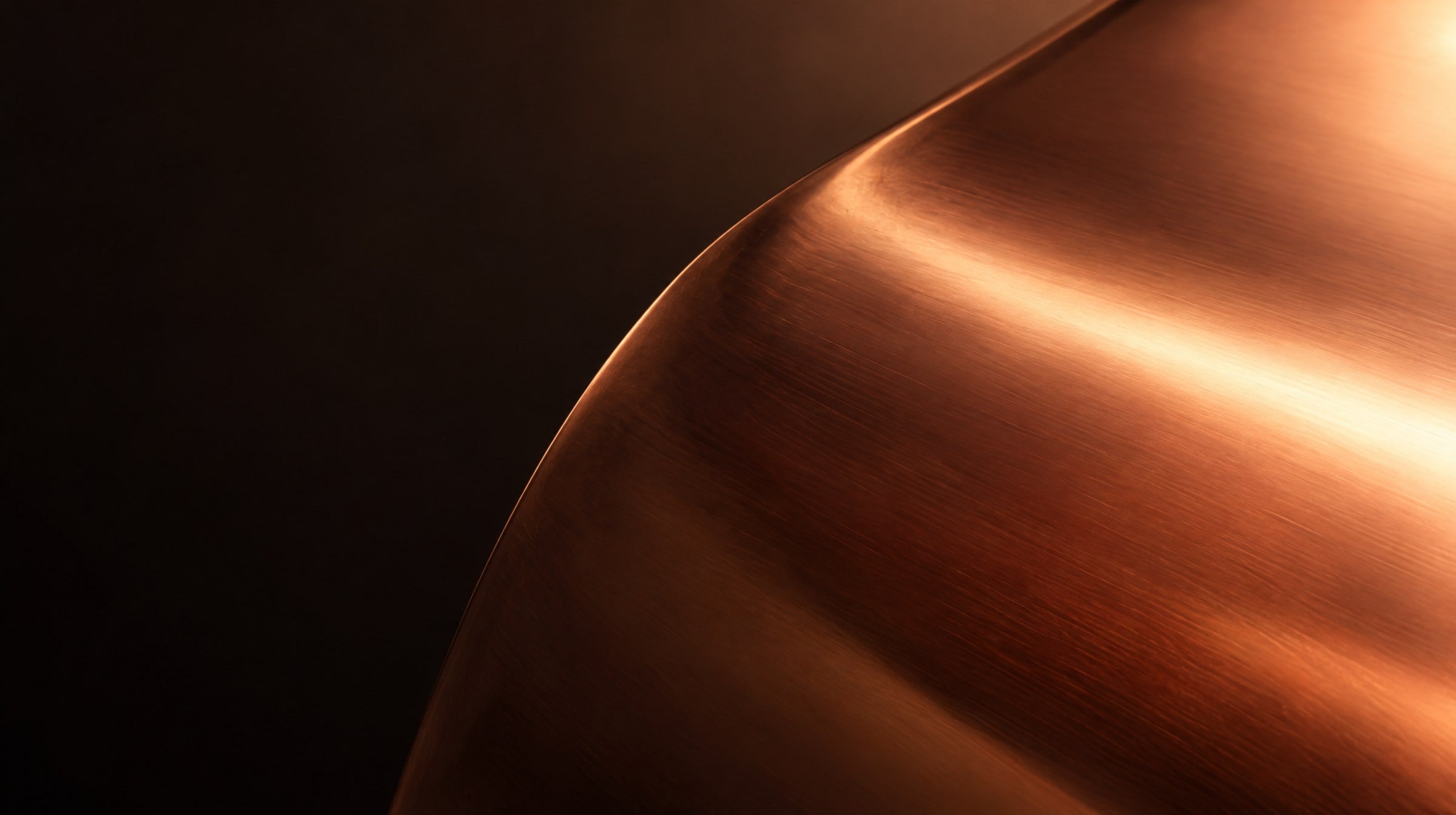
Exposed to the air, copper first takes on a dark brown to almost black layer, which on a roof is largely even after about two to three years. Over many years this usually becomes the green of old copper roofs.
This patina protects the metal beneath it, and it is not verdigris.
Patina makes copper more beautiful with age.
The piece
The eagle brooch of Domagnano
The motif side quotes the first commemorative coin of the Federal Republic, the 5 DM Germanisches Museum of 1952. In the middle sits the Ostrogothic eagle brooch of Domagnano with fine cell work and a round rosette, and around it runs GERMANISCHES MUSEUM EIGENTHUM DER DEUTSCHEN NATION and NÜRNBERG, with 1852 on the left and 1952 on the right.
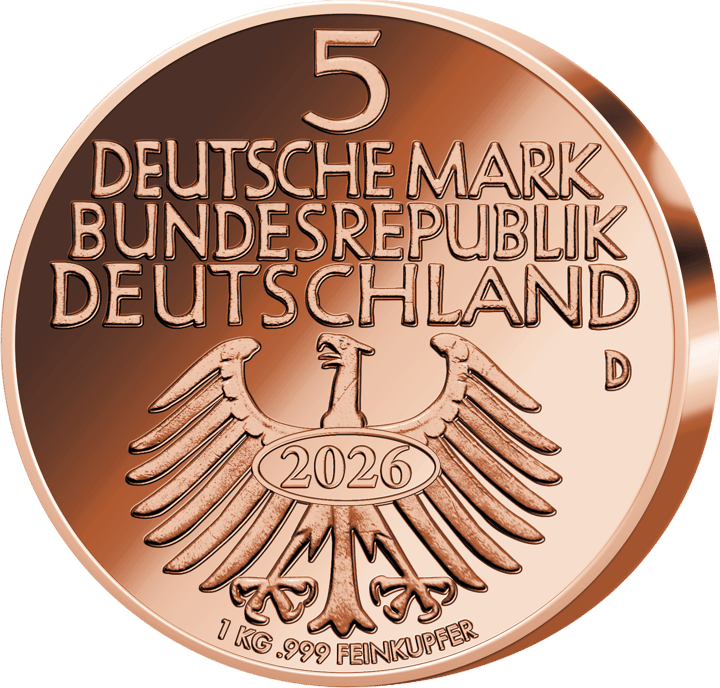
The other side names 5 DEUTSCHE MARK and BUNDESREPUBLIK DEUTSCHLAND. Below stands the federal eagle with the year 2026 in an oval, the letter D on the right and 1 KG .999 FEINKUPFER at the bottom.
The medal measures 100 mm and weighs 1,000 g. Struck in proof quality, its relief stands out against a mirror field. Lettering and value quote the old coin: the medal has no face value and is not legal tender.
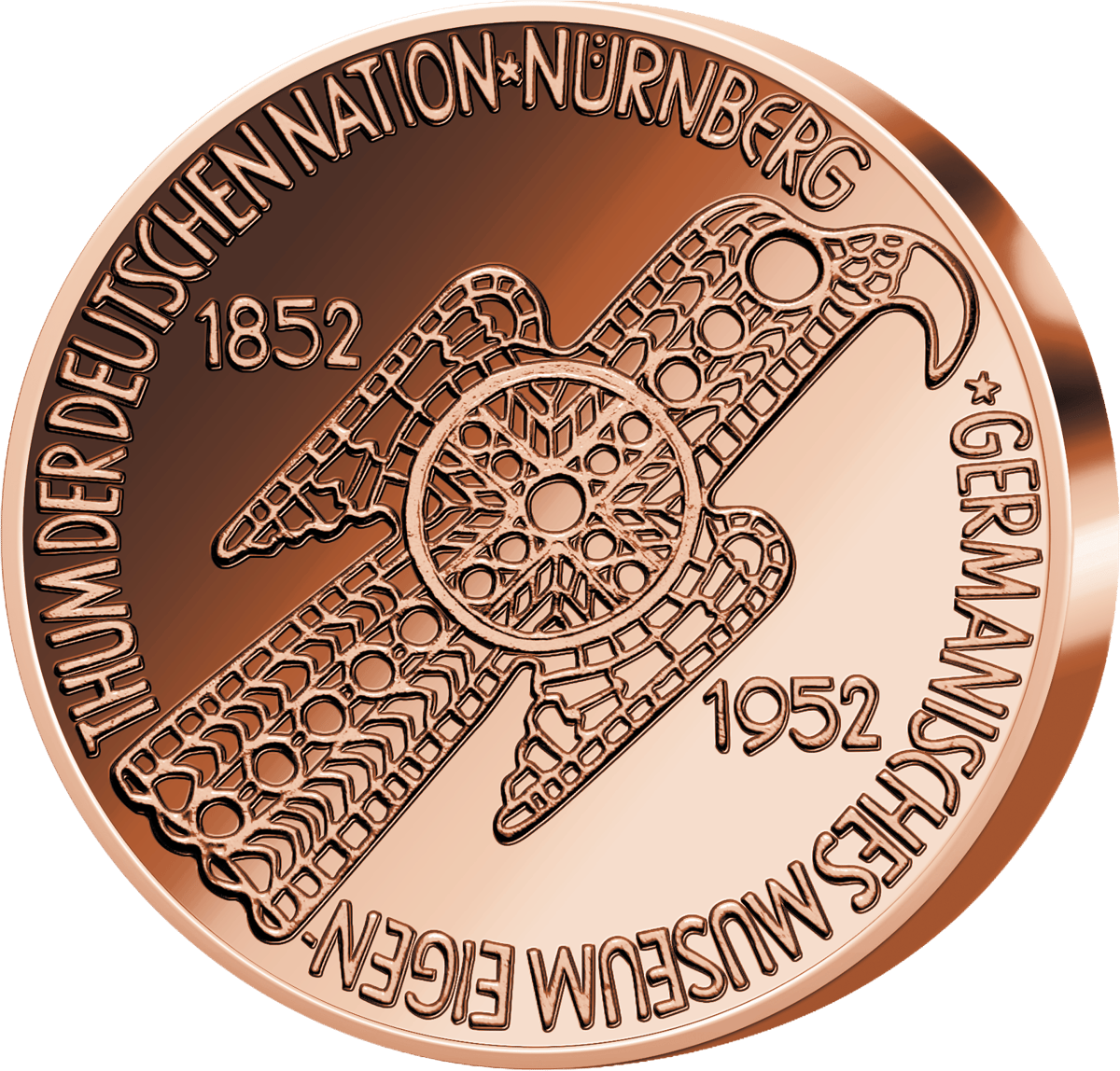
RosetteThe rosette of the brooch
EagleThe eagle’s head
18521852, the year the museum was founded
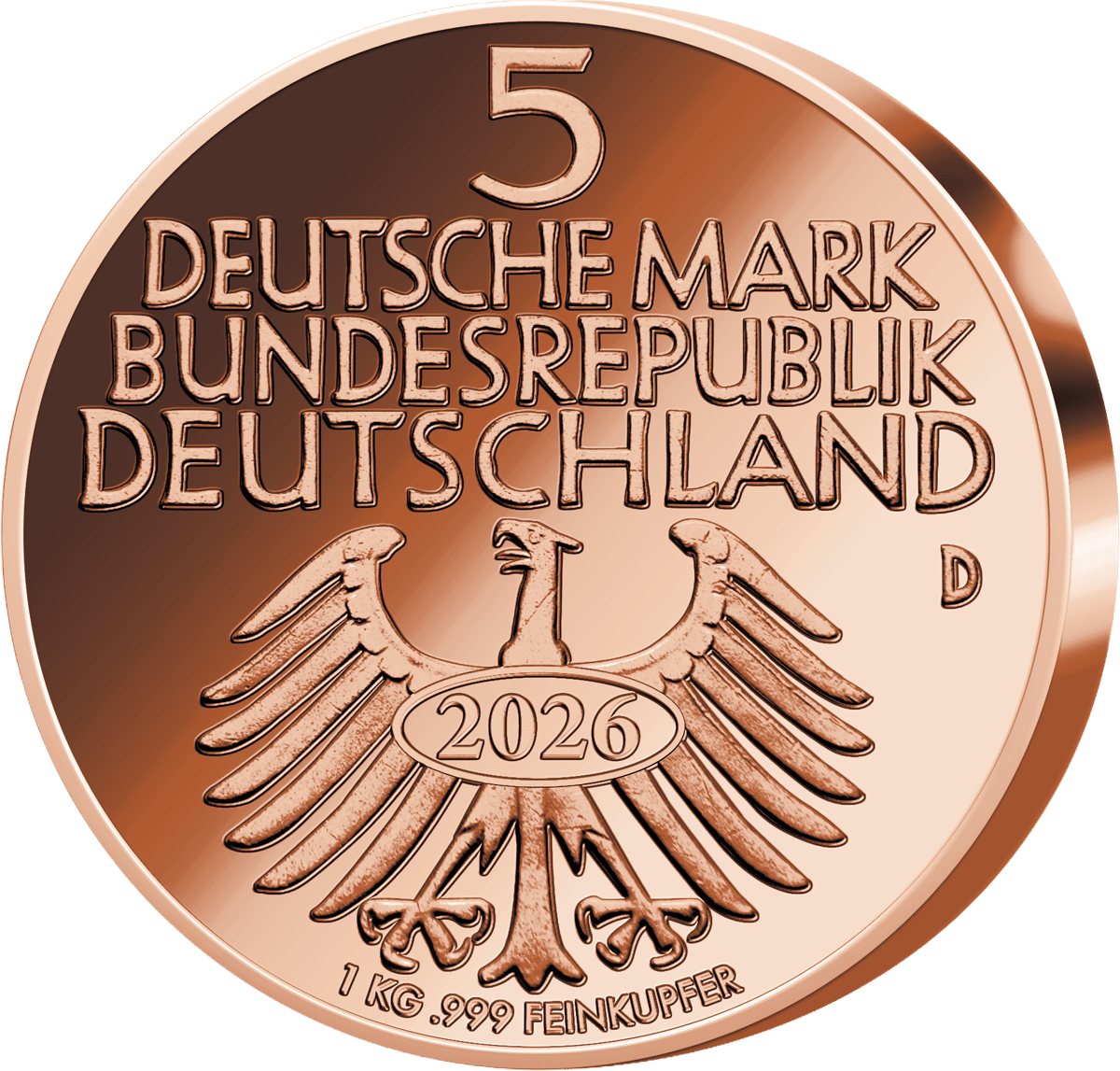
Fine copper1 KG .999 FEINKUPFER at the rim
The image up close
At a glance
- Year
- 2026
- Metal
- Copper
- Fineness
- 999/1,000
- Weight
- 1,000 g
- Quality
- Proof

A showpiece for the cabinet: Germanisches Museum 2026 in 1 kg of copper.
1 kg Copper Germanisches Museum 2026: The First Commemorative Coin of the Federal Republic as a Kilo Giant
- Minting quality: The highest possible quality level "Proof" (PP) with mirrored field and finely set relief
- Imposing format: A full kilogram of copper at 100 mm diameter
- High degree of purity: Fine copper with a fineness of 999/1,000
- Legendary model: A tribute to the 5-DM commemorative coin "Germanisches Museum" from 1952
- Elegantly presented: Delivered in a high-quality case
Some coins make history. The 5-DM commemorative coin "Germanisches Museum" undoubtedly belongs to this group, as it was the very first commemorative coin of the young Federal Republic of Germany. With this medal from the 2026 minting year, the famous design returns. And not in the modest format of 29 millimeters, but as a massive kilo giant made of 999 fine copper, struck in Proof quality.
A piece of post-war history: the 1952 original
The occasion for the historic issue was the centenary celebration of the Germanisches Museum in Nuremberg, today known as the Germanisches Nationalmuseum, founded in 1852. Although the coin bears the year 1952, it was not actually issued until September 1953. It was struck by the Bavarian Main Mint Office in Munich, hence the mint mark "D". The mintage was 200,000 pieces. Only a small portion of these were struck in mirror finish. For this reason, the silver coin in this condition remains a sought-after rarity in German numismatics to this day.
The original consisted of a silver alloy with 625 parts per thousand silver and weighed 11.2 grams. Around the edge it bore the inscription "Einigkeit und Recht und Freiheit" (Unity and Justice and Freedom). The design was created by the Munich artist Karl Roth.
The Domagnano Eagle Fibula: a work of art in large format
At the center of the design side sits the Ostrogothic eagle fibula of Domagnano. This piece of jewelry was created around 500 AD and was discovered in San Marino at the end of the 19th century. Today it is one of the highlights of the permanent exhibition "Prehistory and Early History" at the Germanisches Museum Nuremberg. The original is made of gold and set with red almandines. It was presumably once worn by a lady at the court of the Ostrogothic king Theodoric.
At 100 millimeters, the filigree cellwork of the fibula is wonderfully showcased. Every cell, every feather, the circular chest ornament: everything appears sculptural and clear. Along the edge runs the historic inscription "Germanisches Museum Eigenthum der deutschen Nation · Nürnberg" (Germanisches Museum Property of the German Nation · Nuremberg), alongside the years 1852 and 1952.
The value side in detail
- The face value "5 Deutsche Mark" and the inscription "Bundesrepublik Deutschland"
- The classic federal eagle with the minting year 2026 in an oval chest field
- The mint mark "D" as a reminder of the Munich mint of the original
- The inscription "1 KG .999 Fine Copper" at the bottom edge
Good to know: This piece is a medal. The face value is part of the historic design and is not legal tender.
Proof: Mirror finish on one kilogram of copper
For the Proof minting, polished dies and specially prepared blanks are used. The result is a mirrored field against which the relief stands out clearly. On the warm, reddish tone of the copper, this creates a beautiful play of light and shadow. To preserve this shine for a long time, it is best to handle the medal only with cotton gloves and store it in the included case. A certificate of authenticity is not included with the delivery.
Collecting copper: design variety and the joy of your own collection
Copper coins and copper medals offer a huge selection of designs. Especially in the USA, many copper rounds are minted with very different designs, from historical coin images to modern themes. For beginners, copper is ideal for getting to know the feel and look of coins and bars. Most buyers, however, are classic collectors who build their own collection piece by piece. The genuine metal in hand is a large part of the appeal.
Compared to a 1-ounce copper medal, this piece plays in a completely different league. Its weight and diameter make it an eye-catcher in any display case. Smaller formats require less space, and allow you to collect many different designs. Anyone looking for a single, impressive highlight, however, is making the right choice with the kilo format. And the silver original? It remains a treasure for specialists. The copper edition, on the other hand, brings the design into every collection in an impressive size, as a fitting addition to the classic DM commemorative coins from Schiller to Leibniz.
One kilogram of fine copper, a design with over 1,500 years of art history, and the first commemorative coin of the Federal Republic as its model: this medal is one you'll enjoy holding.
Technical data at a glance
- Material: Copper, fineness 999/1,000
- Weight: 1,000 g (1 kg)
- Diameter: 100.00 mm
- Minting year: 2026
- Condition: Proof (PP)
- Type: Medal, Symbolism series
- Country of origin: China
- Packaging: Case (without certificate)
Product image may differ from the actual product.
