





12g Gold Mark 1 DM 2001
€1,800.13
VAT-free and excl. shipping
Available in 2–3 business days
 +49 7930-2699

 More than 300,000
 Over 30 years
 Secure shipping
 Google: 4.9/5
A farewell in gold.
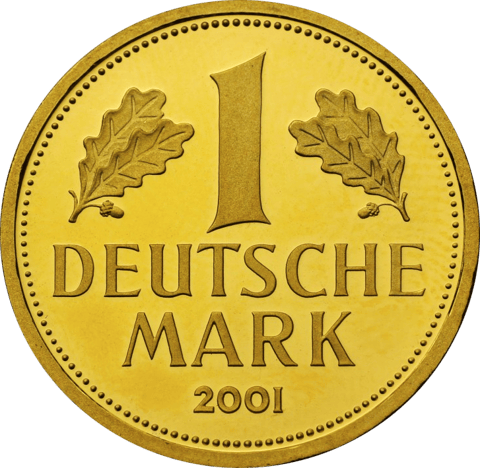
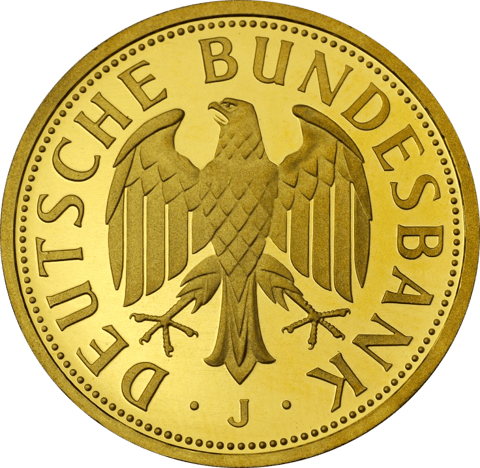
In 2001, the Bundesbank issued the one‑mark piece with the two oak branches in gold.

The end of the Deutsche Mark was marked by the turn of the year from 2001 to 2002. This is why the Goldmark also bears the mint year 2001 and serves as a commemorative piece of Germany's "old currency". Exactly 1,000,000 times was the gold coin minted in Germany and it sold out within just a few days. Thanks to the active trading of the coin, we repeatedly have the opportunity to offer you the Goldmark. The collector's value has risen significantly in recent years.


1950 to 2001
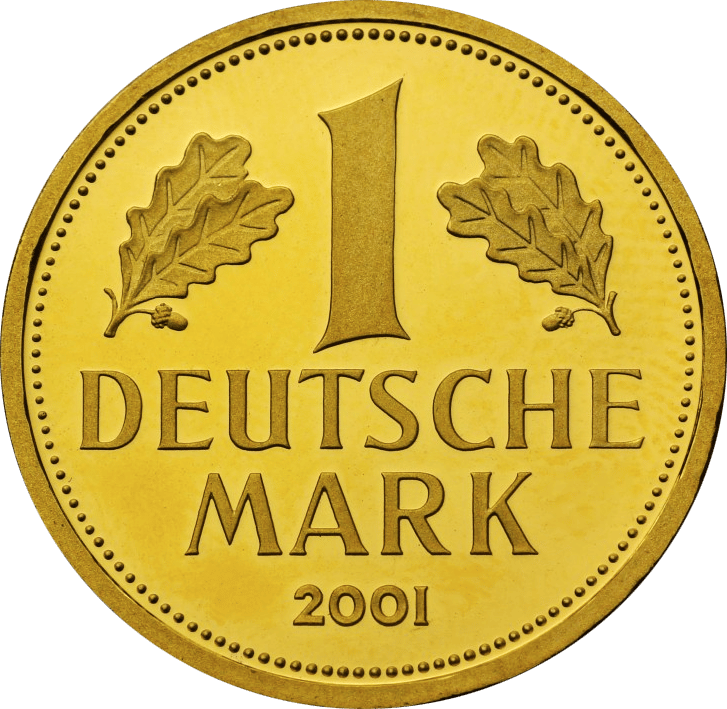
The one‑mark piece with the two oak branches came out in 1950, designed by Josef Bernhart of Munich. Everyone held it in their hand, at the baker’s, at the kiosk, in the piggy bank.
A special law allowed the Bundesbank, as a farewell, to issue the same design in gold, in its own name. That is why the eagle side reads DEUTSCHE BUNDESBANK instead of BUNDESREPUBLIK DEUTSCHLAND. It is the only official D‑Mark coin in gold: 12 grams, 999.9 fine.
June 1948
20
Sunday
The currency reform
The Deutsche Mark arrives in the three Western zones. Each person receives a per-capita allowance of 40 D‑Marks, and later another 20.
July 1990
1
Sunday
The monetary union
Even before reunification, the D‑Mark becomes the currency of the GDR. Wages and salaries are converted one to one.
December 2001
31
Monday
The last day
The D‑Mark is legal tender for the last time. To this day, the Bundesbank exchanges it for euros free of charge and with no time limit.
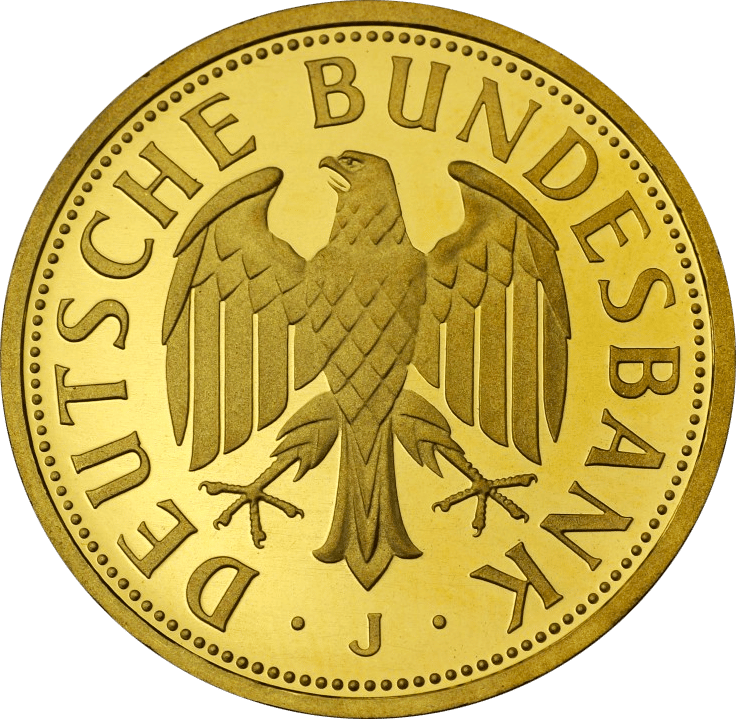
The 2001 gold mark was struck at all five German mints, 200,000 pieces at each. The letter below the eagle shows which one it was.
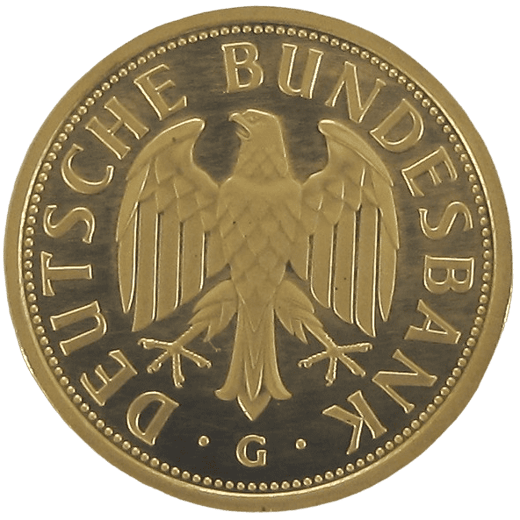
The original
The Bundesbank’s gold mark of 2001, 12 grams, 999.9 fine.
View the 2001 gold mark
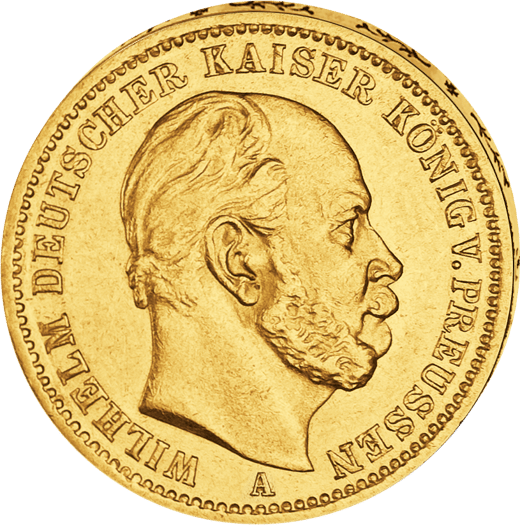
The beginning
Ten marks in gold from Prussia, with Emperor Wilhelm I. The mark began with gold coins like this in 1871.
View the Prussian 10‑mark piece
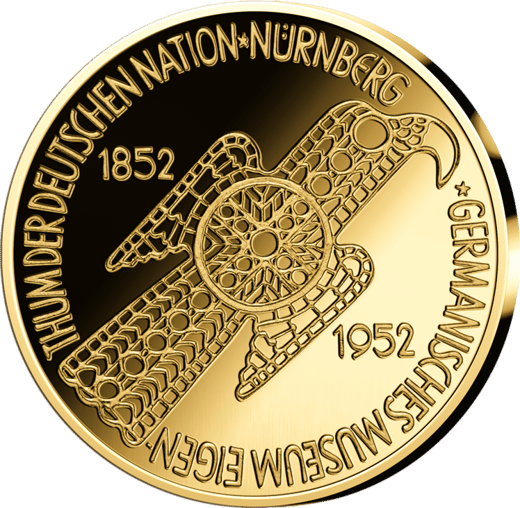
The restrike
The design of the Federal Republic’s first commemorative coin of 1952, restruck as a quarter ounce of gold. A collector’s piece, not legal tender.
View the restrike
The D‑Mark came in 1948. It went in 2001. In gold, it stayed.
Details based on the Act on the Minting of a 1-DM Gold Coin of 27 December 2000, the Deutsche Bundesbank’s press release of 15 June 2001, its pages on the currency reform, on DM circulation and commemorative coins, and on exchanging marks, its Monthly Report of March 2002, the act ending the legal tender status of the DM, the Federal Agency for Civic Education, the Imperial Act concerning the Minting of Imperial Gold Coins of 4 December 1871, the Decree on the Naming of the Imperial Gold Coins of 17 February 1875 and photographs of the pieces shown. Image: Caspar David Friedrich, The Lonely Tree, 1822, Alte Nationalgalerie, Berlin.
 Gold Mark
Stay informed with product launches, financial news and exclusive offers. Sign up for our free newsletter today.
By entering your email address and clicking the "Submit" button, you give the following consent: "I agree to be informed by email about new products, financial news and exclusive offers, and therefore consent to the processing of my email address for the purpose of sending the newsletter. I can revoke this consent at any time without giving reasons, with effect for the future. The lawfulness of processing carried out prior to revocation remains unaffected."


